 Pocket Botanist
Plant guide
Wild sarsaparilla.
Aralia nudicaulis
Pronounced uh-RAY-lee-uh noo-dih-KAW-liss
Also known as American-sarsaparilla, Rabbitroot, Shotbush, Small-spikenard, Virginia-sarsaparilla, Wild Licorice, Wild Sarsaparilla



Scan with your phone's camera to get the app
Or go to pocketbotanist.app/get on your phone
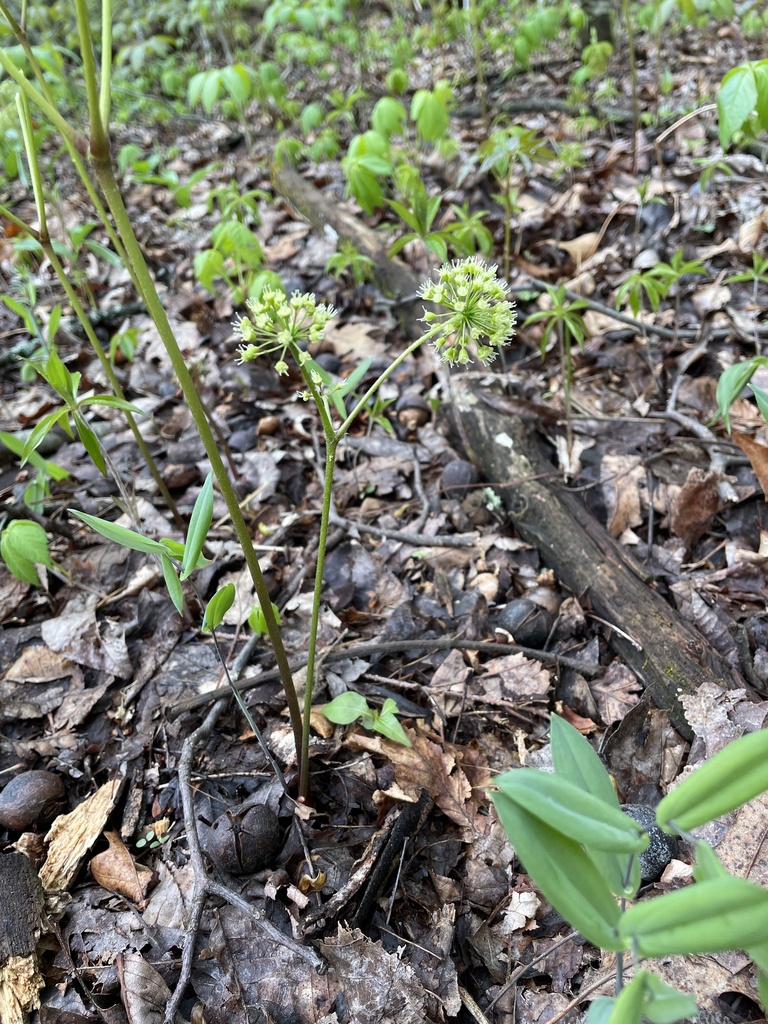
This charming woodland perennial is native to North America and grows from a creeping rhizome. It typically features a single leaf stalk and a separate flowering stalk that emerge from the ground. It's a wonderful choice for shaded garden spots where it can spread naturally.
At a glance
- Care level
- Easy
- Plant type
- Perennial herb
- Light
- Partial shade to full shade
- Indoor light
- Medium light
- Water
- Every 3 to 7 days
- Mature size
- 1 to 2 feet
- Growth rate
- Medium
- Hardiness
- USDA 3 to 7
- Bloom time
- Late spring
Care
Keep the soil consistently moist to mimic its natural forest floor habitat. Watch for wilting during dry spells, which indicates it needs more water. It prefers cool, shaded areas and will struggle in hot, direct sun.
- Watering
- Keep the soil evenly moist but never waterlogged.
- Feeding
- Apply a light layer of organic compost in early spring.
- Pruning
- Trim back dead foliage in late autumn after the plant goes dormant.
- Repotting
- Repot only if the rhizomes become too crowded in their container.
- Soil
- Moist, humus rich, well draining soil
- Soil pH
- Acidic to neutral
- Temperature
- -35 to 25°C
- Humidity
- 40 to 70%
- Drought tolerance
- Low
- Lifespan
- Perennial, typically many years if undisturbed.
- Deer and rabbits
- Moderate
Signs it needs repotting
- Roots circling the bottom of the pot
- Stunted growth during the spring season
Safety
- People
- The plant is generally considered non toxic, though raw consumption of large quantities is not recommended.
- Children
- There are no specific safety concerns for children, though as with any wild plant, ingestion of berries should be discouraged.
- Contact allergens
- Some individuals may experience mild skin irritation from handling the foliage.
- Airborne allergens
- Pollen is not typically a significant airborne allergen.
- Edibility
- The roots are edible but should be harvested sustainably and identified with absolute certainty to avoid confusion with toxic lookalikes.
How to identify it
- Single compound leaf divided into three parts, each with three to five leaflets
- Small greenish white flowers in clusters
- Dark purple to black berry fruits
- Creeping underground rhizome system
- Height
- 0.2 to 0.5m
- Spread
- 0.3 to 0.6m
- Leaves
- green, deciduous
- Flowers
- greenish white, 0.5 to 1cm
- Fruit
- dark purple, black, Late summer
Problems to watch for
- Leaf SpotCommon
- Slugs and SnailsCommon
- DeerUncommon
- Root RotUncommon
Check your wild sarsaparilla from a photo
Pocket Botanist looks at a photo of your plant and tells you what's wrong and what to try first.
Scan with your phone's camera to get the app
Or go to pocketbotanist.app/get on your phone
Growing it
- Propagation
- division, seed
- When to plant
- spring, autumn
- Overwintering
- The plant dies back to the ground in autumn, so simply leave the leaf litter in place to provide natural insulation for the dormant rhizomes.
- In containers
- It is not well suited for containers as it requires the stable cool soil temperatures found in the ground.
Division
- Carefully dig up the rhizome clump in early spring.
- Use a sharp knife to cut the rhizome into sections with at least one bud.
- Replant the sections immediately in moist, rich soil.
Group this plant with other shade loving woodland perennials to create a naturalistic forest floor effect.
Grows well with
- Trillium · They share similar light and moisture requirements in woodland settings.
- Maidenhair Fern · The delicate textures of both plants complement each other in shade gardens.
Similar species
- Spikenard · It is a larger relative that also enjoys woodland conditions.
Science
- Family
- Araliaceae
- Genus
- Aralia
- Order
- Apiales
- Class
- Magnoliopsida
- Native range
- Temperate forests across North America.
- Conservation
- This plant is widespread and not currently of conservation concern.
It thrives in the cool, moist understory of deciduous forests where it relies on rich leaf litter for nutrients.
- Value to wildlife
- nectar source, provides food for birds
- Pollinators
- bees
- Uses
- woodland garden groundcover, culinary flavoring, traditional herbal tea
Through the year
Ecological indicators
- Salinity
- 1/9
- Soil reaction
- 5/9
- Light
- 2/9
- Temperature
- 3/9
- Moisture
- 6/9
- Nutrients
- 5/9
Taxonomy resolved against GBIF.
Questions people ask
- Does it need full sun?
- No, it prefers partial to full shade and will struggle in direct sun.
- How do I propagate it?
- The easiest way is to divide the rhizomes in early spring.
Where the name comes from
The name nudicaulis means naked stem, referring to the way the flower stalk rises directly from the base separate from the leaves.
Good to know
- It is a member of the ginseng family.
- The plant spreads slowly via underground rhizomes.
- It is a classic indicator species for healthy, undisturbed deciduous forests.
Also in
Keep your wild sarsaparilla growing
This page is a general guide. Save your plant in Pocket Botanist and you get care reminders timed for this plant, plus a care history that shows what worked.
Scan with your phone's camera to get the app
Or go to pocketbotanist.app/get on your phone
This guide was generated with AI on and checked against GBIF taxonomy. It is general information, not horticultural or veterinary advice. Read about how we build these guides.