 Pocket Botanist
Plant guide
Ornamental Pineapple.
Ananas comosus var. bracteatus 'Variegatus'
Pronounced uh-NAY-nus ko-MO-sus
Also known as Ananas comosus var. bracteatus 'Variegatus', ornamental pineapple, red pineapple, wild pineapple



Scan with your phone's camera to get the app
Or go to pocketbotanist.app/get on your phone
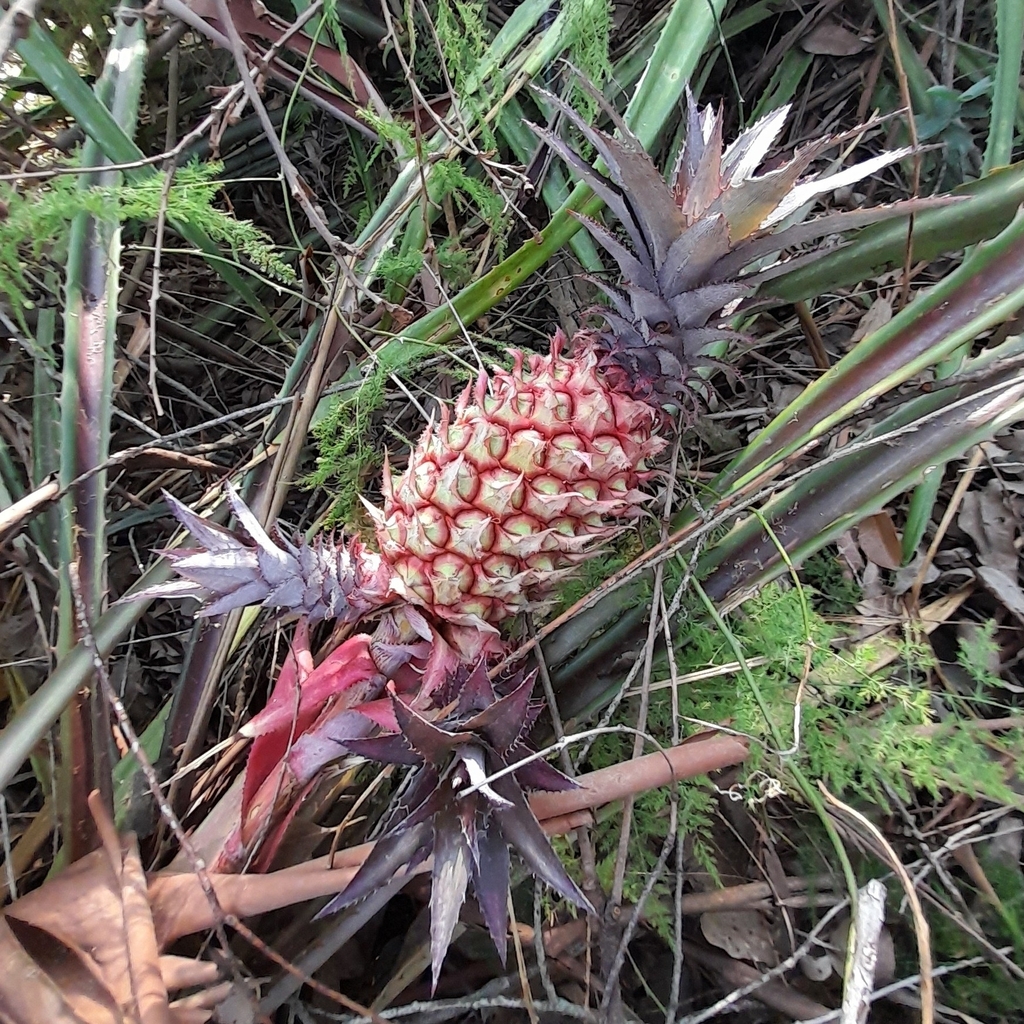
The ornamental pineapple is a striking tropical plant known for its vibrant, spiky foliage and small, decorative fruit. It thrives in warm environments and makes a fantastic statement piece for a sunny indoor space. While it produces a pineapple, it is primarily grown for its dramatic appearance rather than culinary use.
At a glance
- Care level
- Moderate
- Plant type
- Tropical perennial
- Light
- Bright, indirect light is best, though it can handle some direct morning sun.
- Indoor light
- Bright indirect
- Water
- Every 5 to 10 days
- Mature size
- 90cm to 120cm tall
- Growth rate
- Medium
- Hardiness
- USDA 10 to 12
- Bloom time
- Late spring to early summer
Care
Keep the soil consistently moist but never soggy, and ensure the plant receives plenty of bright light to maintain its vibrant colors. Watch for brown, crispy leaf tips which often signal low humidity or underwatering. Wipe the leaves occasionally to keep them free of dust so the plant can photosynthesize efficiently.
- Watering
- Water when the top few centimeters of soil feel dry to the touch.
- Feeding
- Use a balanced liquid fertilizer diluted to half strength during the active growing season.
- Pruning
- Trim away any dead or damaged lower leaves to keep the plant looking tidy.
- Repotting
- Repot only when the plant has clearly outgrown its current container.
- Soil
- Well-draining, sandy, acidic potting mix.
- Soil pH
- 4.5 to 6.5
- Temperature
- 15 to 35°C
- Humidity
- 60 to 90%
- Drought tolerance
- Moderate
- Lifespan
- Perennial, typically 5 to 7 years
- Deer and rabbits
- Moderate
Signs it needs repotting
- Roots growing out of the drainage holes
- Plant becomes top heavy
- Soil dries out very rapidly
Safety
- People
- The raw sap can cause skin irritation and the fruit contains bromelain which may cause mouth sensitivity.
- Pets
- This plant is generally considered non-toxic to cats and dogs, though the sharp leaves can cause physical irritation.
- Children
- Keep children away from the sharp, serrated edges of the leaves to prevent cuts.
- Contact allergens
- The stiff, serrated leaf margins can cause mechanical skin abrasions.
- Airborne allergens
- There are no significant airborne allergens associated with this plant.
- Edibility
- The fruit is edible but often quite fibrous and less sweet than the common pineapple.
How to identify it
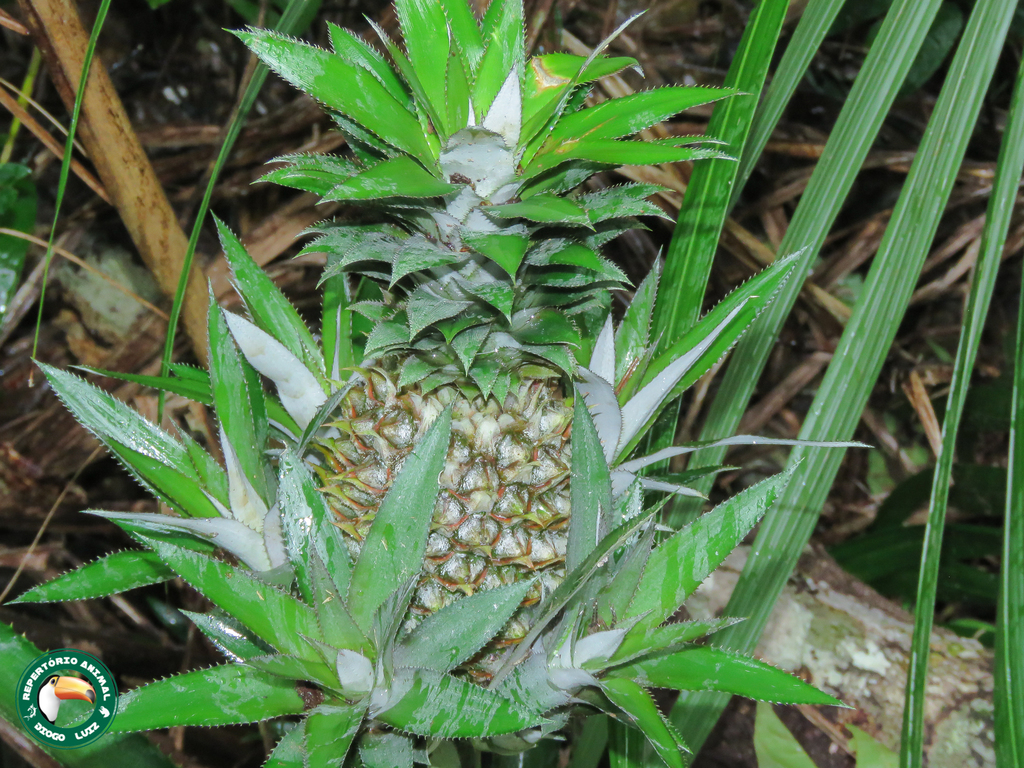
- Sharp, serrated leaf margins
- Variegated green and cream foliage
- Bright pink or red bracts
- Small, edible but mainly decorative fruit
- Rosette growth habit
- Height
- 0.9 to 1.2m
- Spread
- 0.9 to 1.2m
- Leaves
- green, red, cream, evergreen
- Flowers
- pink, purple, 2 to 3cm
- Fruit
- red, pink, Late summer to autumn
Problems to watch for
- MealybugsCommon
- Root RotCommon
- Brown Leaf EdgesUncommon
- Fungus GnatsUncommon
- Scale InsectsUncommon
- Spider MitesRare
Check your ornamental pineapple from a photo
Pocket Botanist looks at a photo of your plant and tells you what's wrong and what to try first.
Scan with your phone's camera to get the app
Or go to pocketbotanist.app/get on your phone
Growing it
- Propagation
- offsets, crown cuttings
- When to plant
- Spring, Summer
- Overwintering
- Move to a frost free location if temperatures drop below 10 degrees Celsius. Reduce watering significantly during the cooler months to prevent rot.
- In containers
- It is excellent for containers, requiring at least a 30 centimeter pot with excellent drainage.
Offsets
- 1. Wait for the offset to reach one third the size of the parent.
- 2. Carefully twist or cut the offset from the base.
- 3. Let the cut end dry for two days.
- 4. Pot in well draining soil.
Group with other tropical plants to create a microclimate that boosts ambient humidity.
Grows well with
- Bird of Paradise · They share similar requirements for bright light and consistent moisture.
- Croton · Their colorful foliage complements the variegated leaves of the pineapple.
Similar species
- Common Pineapple · It is the primary species from which this variety was derived.
Science
- Family
- Bromeliaceae
- Genus
- Ananas
- Order
- Poales
- Class
- Liliopsida
- Native range
- South America
- Conservation
- Not currently of conservation concern.
It survives in tropical regions by storing water in its tightly packed, succulent leaf bases.
- Value to wildlife
- nectar source
- Pollinators
- hummingbirds
- Uses
- ornamental container plant, tropical garden accent, edible fruit
Through the year
Ecological indicators
- Salinity
- 2/9
- Soil reaction
- 6/9
- Moisture
- 5/9
- Light
- 8/9
- Temperature
- 9/9
- Nutrients
- 6/9
Taxonomy resolved against GBIF.
Questions people ask
- Does it need full sun?
- Yes, it thrives in bright, direct light to maintain its vibrant leaf colors.
- Can I grow it indoors?
- It grows well indoors if placed in a very sunny window and provided with high humidity.
Where the name comes from
Ananas is derived from the Tupi word for the fruit, while bracteatus highlights the showy bracts.
Good to know
- The name bracteatus refers to the prominent, colorful bracts surrounding the fruit.
- It is a close relative of the commercial pineapple.
- The leaves are often variegated with creamy white or pink stripes.
Keep your ornamental pineapple growing
This page is a general guide. Save your plant in Pocket Botanist and you get care reminders timed for this plant, plus a care history that shows what worked.
Scan with your phone's camera to get the app
Or go to pocketbotanist.app/get on your phone
This guide was generated with AI on and checked against GBIF taxonomy. It is general information, not horticultural or veterinary advice. Read about how we build these guides.