 Pocket Botanist
Plant guide
Common ragweed.
Ambrosia artemisiifolia
Pronounced am-BRO-zee-uh ar-te-mis-ee-oh-FO-lee-uh
Also known as Annual Ragweed, Bitterweed, Common Ragweed, Low Ragweed, Ragweed, Roman Wormwood, Roman Wormwood, Ragweed, Hog-weed, Roman-wormwood



Scan with your phone's camera to get the app
Or go to pocketbotanist.app/get on your phone
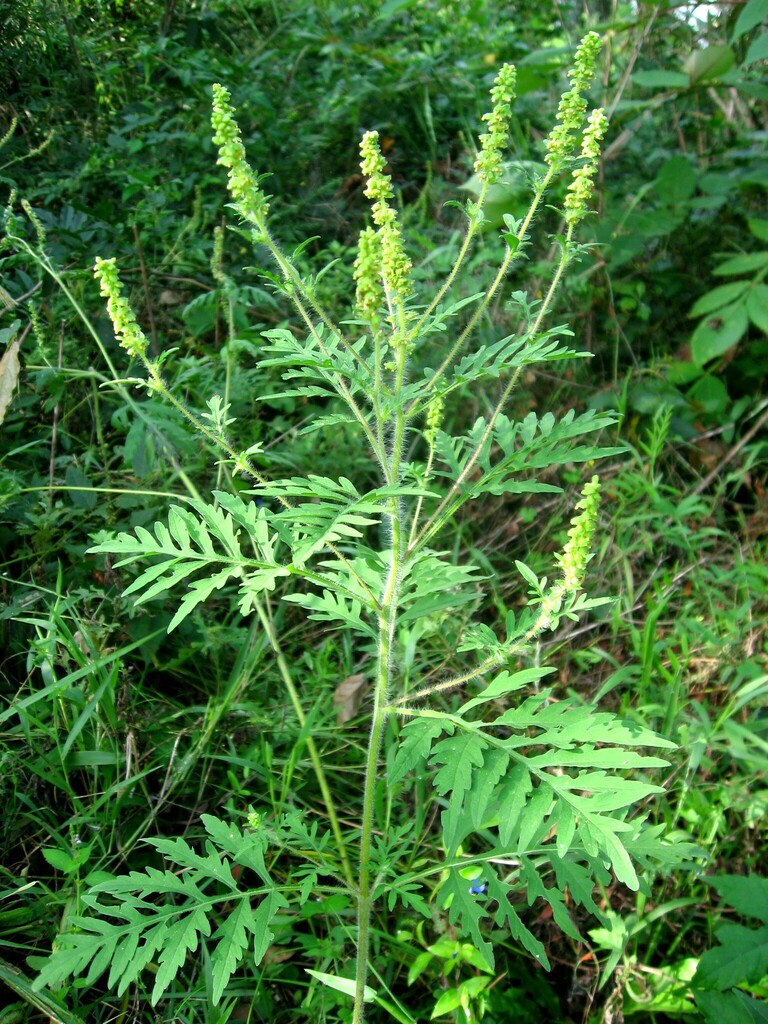
Common ragweed is a hardy annual plant often found in disturbed soils and open fields. It is widely recognized for its role as a major allergen due to its windborne pollen. While it is considered a weed in many areas, it plays a role in local ecosystems.

At a glance
- Care level
- Easy
- Plant type
- Annual herb
- Light
- Full sun
- Indoor light
- Direct sun
- Water
- Every 7 to 14 days
- Mature size
- 3 to 5 feet
- Growth rate
- Fast
- Hardiness
- USDA 2 to 11
- Bloom time
- Mid summer to late autumn
Care
This plant thrives in full sun and requires very little maintenance to establish itself. Keep an eye out for rapid spread in garden beds, as it can quickly outcompete other plants. It is generally not cultivated as an ornamental plant.
- Watering
- Water only during extended dry spells to keep the soil slightly moist.
- Feeding
- Fertilizer is not necessary as this plant is highly adaptable to poor soil conditions.
- Pruning
- Remove flower spikes before they go to seed to prevent unwanted spread.
- Repotting
- This plant is an annual and is not typically grown in containers.
- Soil
- Well draining, disturbed soil
- Soil pH
- 6.0 to 7.5
- Temperature
- -20 to 35°C
- Humidity
- 30 to 70%
Safety
- People
- The plant can cause contact dermatitis in sensitive individuals due to sesquiterpene lactones.
- Children
- Keep children away as the plant is a known allergen and may cause skin irritation upon contact.
- Contact allergens
- Handling the foliage can cause skin irritation or rashes in some people.
- Airborne allergens
- The windborne pollen is a highly potent allergen that triggers severe hay fever symptoms.
- Edibility
- This plant is not considered edible and may cause gastrointestinal distress if ingested.
How to identify it
- Deeply lobed, fern like leaves
- Small greenish yellow flower spikes
- Hairy stems and foliage
- Grows in branching upright stems
- Height
- 0.2 to 1.5m
- Spread
- 0.15 to 0.6m
- Leaves
- green, deciduous
- Flowers
- green, yellow, 0.2 to 0.5cm
Problems to watch for
- AphidsCommon
- Powdery MildewCommon
- White RustCommon
- RustUncommon
Check your common ragweed from a photo
Pocket Botanist looks at a photo of your plant and tells you what's wrong and what to try first.
Scan with your phone's camera to get the app
Or go to pocketbotanist.app/get on your phone
Growing it
- Propagation
- seed
- When to plant
- spring
This plant is generally considered a weed and is best managed by removal rather than integration into garden beds.
Grows well with
- Common Sunflower · Both species often grow together in disturbed prairie environments.
Similar species
- Giant Ragweed · It is a much larger relative with distinct three-lobed leaves.
Science
- Family
- Asteraceae
- Genus
- Ambrosia
- Order
- Asterales
- Class
- Magnoliopsida
- Native range
- North America
- Conservation
- It is considered a widespread invasive weed in many parts of the world outside its native range.
It thrives in disturbed habitats like roadsides and agricultural fields where it outcompetes other vegetation for light.
- Value to wildlife
- larval host plant, seed source for birds
- Pollinators
- bees, butterflies
- Uses
- ecological restoration, wildlife habitat
Through the year
Ecological indicators
- Salinity
- 2/9
- Soil reaction
- 5/9
- Light
- 8/9
- Temperature
- 6/9
- Moisture
- 4/9
- Nutrients
- 5/9
Taxonomy resolved against GBIF.
Questions people ask
- Is ragweed the same as goldenrod?
- No, they are different plants that often bloom at the same time, but goldenrod pollen is heavy and sticky, not windborne.
- How do I get rid of it?
- Pulling the plants before they flower is the most effective way to prevent seed spread.
Where the name comes from
The name Ambrosia comes from the Greek word for food of the gods, though this plant is certainly not edible. The specific epithet artemisiifolia refers to the leaves resembling those of the Artemisia genus.
Good to know
- A single plant can produce over a billion pollen grains in one season.
- Ragweed seeds are a vital food source for many songbirds during winter.
- It is a pioneer species that quickly colonizes disturbed soil.
Keep your common ragweed growing
This page is a general guide. Save your plant in Pocket Botanist and you get care reminders timed for this plant, plus a care history that shows what worked.
Scan with your phone's camera to get the app
Or go to pocketbotanist.app/get on your phone
This guide was generated with AI on and checked against GBIF taxonomy. It is general information, not horticultural or veterinary advice. Read about how we build these guides.