 Pocket Botanist
Plant guide
Cape Aloe.
Aloe ferox
Pronounced AL-oh-ee FEH-rox
Also known as Cape Aloe, Cape prickly aloe, bitter aloe, common aloe, cultivated aloe, medicinal aloe, new aloes, red aloe



Scan with your phone's camera to get the app
Or go to pocketbotanist.app/get on your phone
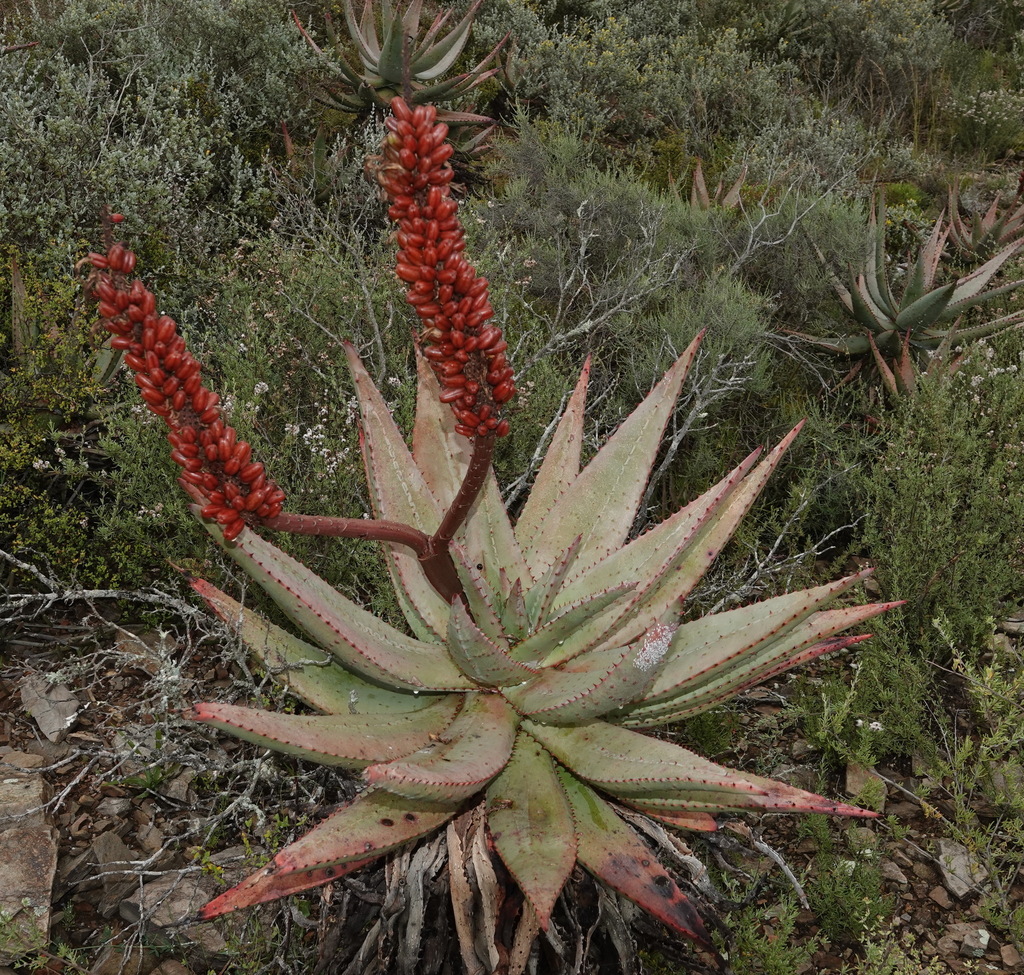
Aloe ferox is a striking, tree-like succulent native to South Africa. It features a thick, woody stem topped with a large rosette of spiny, blue-green leaves. This plant is a fantastic choice if you want a bold, architectural statement in your garden or sunny room.

At a glance
- Care level
- Easy
- Plant type
- Succulent
- Light
- Full sun
- Indoor light
- Direct sun
- Water
- Every 14 to 30 days
- Mature size
- 10 feet
- Growth rate
- Slow
- Hardiness
- USDA 9 to 11
- Bloom time
- Mid winter to early spring
Care
Give this plant plenty of sun and ensure the soil dries out completely between waterings. Watch for mushy leaves, which often signal that the plant is getting too much water. It thrives on neglect, so don't worry if you forget about it for a while.
- Watering
- Allow the soil to dry out entirely before providing a deep soak.
- Feeding
- Apply a balanced liquid fertilizer diluted to half strength during the active growing season.
- Pruning
- Remove dead or damaged lower leaves once a year to keep the plant tidy.
- Repotting
- Repot only when the plant becomes top-heavy or clearly outgrows its container.
- Soil
- Well-draining sandy or gritty cactus mix
- Soil pH
- 6.0 to 7.5
- Temperature
- -2 to 40°C
- Humidity
- 20 to 50%
- Drought tolerance
- High
- Lifespan
- Perennial, typically 20 to 50 years.
- Deer and rabbits
- High
Signs it needs repotting
- Roots growing out of the drainage holes.
- The plant becomes top-heavy and unstable.
- Water runs straight through without soaking in.
Safety
- People
- The plant is generally safe to touch, but the bitter sap is a strong purgative if ingested.
- Pets
- This plant is toxic to cats and dogs if ingested, potentially causing vomiting or diarrhea.
- Children
- The sharp, rigid spines on the leaf edges pose a significant puncture risk to small children.
- Contact allergens
- The sharp spines on the leaf margins can cause mechanical skin irritation.
- Airborne allergens
- The pollen may cause mild irritation for sensitive individuals during the peak flowering season.
- Edibility
- The bitter yellow sap found just beneath the leaf skin can cause severe gastrointestinal distress if consumed.
How to identify it
- Large, thick, blue-green succulent leaves
- Spiny, reddish teeth on leaf margins
- Single, tall, woody central stem
- Tall, candle-like orange flower spikes
- Height
- 2 to 3m
- Spread
- 1 to 1.5m
- Leaves
- blue-green, grey-green, evergreen
- Flowers
- orange, red, yellow, 3 to 5cm
- Fruit
- brown, Late spring
Problems to watch for
- Root RotCommon
- Scale InsectsCommon
- MealybugsUncommon
- Spider MitesUncommon
Check your cape aloe from a photo
Pocket Botanist looks at a photo of your plant and tells you what's wrong and what to try first.
Scan with your phone's camera to get the app
Or go to pocketbotanist.app/get on your phone
Growing it
- Propagation
- seed, cuttings, offsets
- When to plant
- spring, summer
- Overwintering
- Move to a frost-free location if temperatures drop below freezing. Keep the plant dry during the winter months to prevent rot.
- In containers
- It grows well in containers, provided you use a large pot with excellent drainage and a sandy cactus mix.
Seed
- 1. Sow seeds in a well-draining sandy mix.
- 2. Keep the soil lightly moist in a warm spot.
- 3. Transplant seedlings once they develop true leaves.
Offsets
- 1. Carefully remove the small pups from the base of the parent plant.
- 2. Let the cut end callous for a few days.
- 3. Plant in a small pot with gritty soil.
Group this plant with other succulents that prefer well-draining soil to avoid accidental overwatering.
Grows well with
- Blue Fescue · Its fine texture contrasts beautifully with the bold, architectural leaves of the aloe.
- Sedum · These low-growing succulents share the same water and sun requirements.
- Agave · They create a cohesive desert-themed landscape with similar care needs.
Similar species
- Aloe arborescens · It is a smaller, multi-stemmed aloe with similar flower colors.
- Aloe vera · It is a smaller, clumping species often grown for its soothing gel.
Science
- Family
- Asphodelaceae
- Genus
- Aloe
- Order
- Asparagales
- Class
- Liliopsida
- Native range
- Southern Africa, specifically South Africa and Lesotho.
- Conservation
- It is not currently endangered, but wild harvesting is regulated in some regions to prevent over-collection.
It survives in arid, rocky landscapes by storing water in its thick, succulent leaves.
- Value to wildlife
- nectar source, nesting habitat
- Pollinators
- bees, butterflies, birds
- Uses
- ornamental, skincare, traditional medicine, xeriscaping
Through the year
Ecological indicators
- Salinity
- 2/9
- Soil reaction
- 6/9
- Light
- 8/9
- Temperature
- 7/9
- Moisture
- 2/9
- Nutrients
- 3/9
Taxonomy resolved against GBIF.
Questions people ask
- How often should I water it?
- Water sparingly, allowing the soil to dry out completely between waterings.
- Does it need full sun?
- Yes, it thrives in full sun and will become leggy in the shade.
Where the name comes from
The name ferox is Latin for fierce, referring to the sharp spines on the leaves. Aloe is derived from the Arabic word alloeh, meaning bitter.
Good to know
- It is often called the bitter aloe because of its medicinal sap.
- The plant can grow up to 3 meters tall in its native habitat.
- It is one of the most common aloes used in the commercial aloe industry.
- The flower spikes are tall and branched, looking like candelabras.
- It is highly drought-tolerant once established.
Also in
Keep your cape aloe growing
This page is a general guide. Save your plant in Pocket Botanist and you get care reminders timed for this plant, plus a care history that shows what worked.
Scan with your phone's camera to get the app
Or go to pocketbotanist.app/get on your phone
This guide was generated with AI on and checked against GBIF taxonomy. It is general information, not horticultural or veterinary advice. Read about how we build these guides.