 Pocket Botanist
Plant guide
Prickly Aloe.
Aloe aculeata
Pronounced AL-oh ak-yoo-lee-AY-tuh
Also known as Tent Cent Aloe, prickly aloe, red hot poker aloe, white-thorn aloe



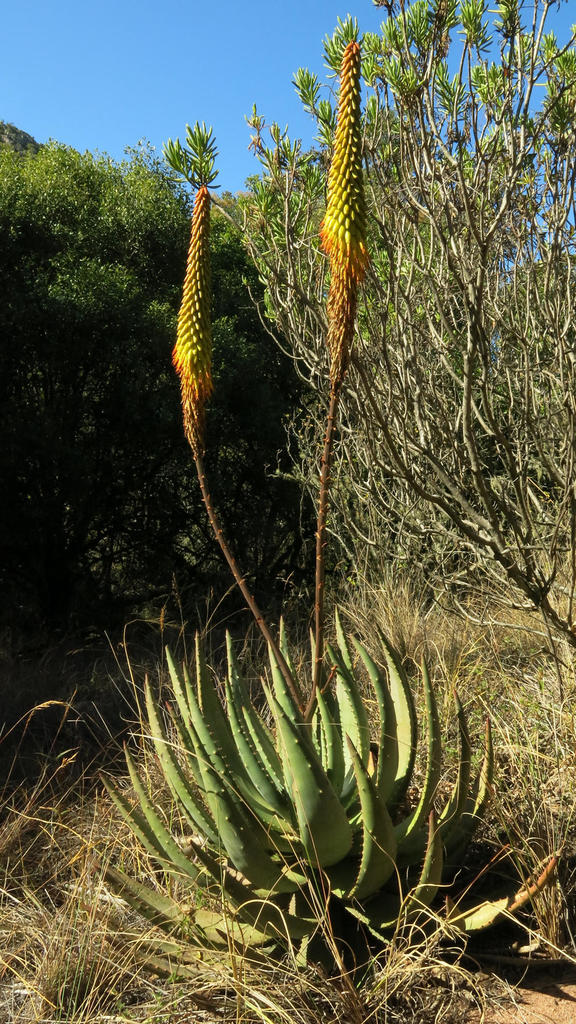
The Prickly Aloe is a striking succulent known for its unique, spiny appearance. It forms a solitary rosette that adds a bold architectural element to any dry garden. You will love how its textured leaves catch the light.
At a glance
- Care level
- Easy
- Plant type
- Succulent
- Light
- Full sun
- Indoor light
- Direct sun
- Water
- Every 14 to 21 days
- Mature size
- 3 feet tall
- Growth rate
- Slow
- Hardiness
- USDA 9 to 11
- Bloom time
- Mid winter to early spring
Care
Plant this aloe in well draining soil to prevent root rot. Watch for soft or mushy leaves, which often indicate the plant is sitting in too much moisture. Give it plenty of sun to keep the leaves compact and healthy.
- Watering
- Allow the soil to dry out completely between waterings.
- Feeding
- Feed with a balanced liquid fertilizer diluted to half strength during the growing season.
- Pruning
- Remove dead or damaged leaves at the base as needed.
- Repotting
- Repot only when the plant has clearly outgrown its current container.
- Soil
- Sandy or gritty cactus mix
- Soil pH
- 6.0 to 7.5
- Temperature
- 0 to 40°C
- Humidity
- 10 to 40%
- Drought tolerance
- High
- Lifespan
- Perennial, typically 10 to 20 years
- Deer and rabbits
- High
Signs it needs repotting
- Roots growing out of the drainage holes
- Plant becoming top-heavy and unstable
- Soil no longer draining well
Safety
- People
- The sap can be a skin irritant for sensitive individuals.
- Pets
- This plant is toxic to cats and dogs if ingested.
- Children
- Keep this plant away from small children due to the sharp, rigid spines on the leaf margins.
- Contact allergens
- The sharp spines can cause mechanical skin irritation or minor puncture wounds.
- Airborne allergens
- There are no known significant airborne allergens associated with this plant.
- Edibility
- This plant is not intended for consumption and may cause digestive distress.
How to identify it
- Thick fleshy leaves with spines
- Spines present on both leaf surfaces
- Solitary rosette growth habit
- Yellow to orange tubular flowers
- Distinctive rough leaf texture
- Height
- 0.6 to 1m
- Spread
- 0.6 to 1m
- Leaves
- blue-green, grey-green, evergreen
- Flowers
- yellow, orange, 2 to 3cm
- Fruit
- brown, Late spring
Problems to watch for
- MealybugsCommon
- Root RotCommon
- Scale InsectsUncommon
- Spider MitesUncommon
Check your prickly aloe from a photo
Pocket Botanist looks at a photo of your plant and tells you what's wrong and what to try first.
Growing it
- Propagation
- seed, offsets
- When to plant
- spring, summer
- Overwintering
- Move containers indoors or to a frost-free area if temperatures drop near freezing. Keep the soil very dry during the winter months to prevent rot.
- In containers
- It grows well in containers if provided with a fast-draining cactus mix and a pot with large drainage holes.
Offsets
- 1. Carefully remove the plant from its pot.
- 2. Gently detach small offsets from the base of the parent.
- 3. Allow the cut ends to callous for a few days.
- 4. Plant in a well-draining succulent mix.
Group this aloe with other drought tolerant succulents to ensure consistent watering needs across the bed.
Grows well with
- Blue Chalk Sticks — It shares similar water and light requirements in a rock garden setting.
- Jade Plant — Both plants provide structural interest and thrive in dry, sunny conditions.
Similar species
- Aloe marlothii — It has a similar spiny appearance but grows significantly larger.
- Aloe ferox — It shares the same general form and habitat preferences.
Science
- Family
- Asphodelaceae
- Genus
- Aloe
- Order
- Asparagales
- Class
- Liliopsida
- Native range
- South Africa and Zimbabwe
- Conservation
- This species is not currently listed as endangered or threatened in its native habitat.
It survives in rocky, well-drained soils by storing water in its thick, fleshy leaves.
- Value to wildlife
- nectar source
- Pollinators
- bees, butterflies, hummingbirds
- Uses
- ornamental succulent, xeriscaping, rock garden specimen
Through the year
Ecological indicators
- Salinity
- 2/9
- Soil reaction
- 6/9
- Light
- 8/9
- Temperature
- 7/9
- Moisture
- 2/9
- Nutrients
- 3/9
Taxonomy resolved against GBIF.
Questions people ask
- How often should I water it?
- Water deeply but infrequently, allowing the soil to dry out completely between sessions.
- Does it need full sun?
- Yes, it thrives in bright, direct sunlight for most of the day.
Where the name comes from
The name Aloe is derived from the Arabic word alloeh, while aculeata comes from Latin meaning prickly.
Good to know
- The name aculeata refers to the prickly spines found on the leaves.
- It is a slow growing succulent that forms a solitary rosette.
- This plant is highly adapted to arid environments in Southern Africa.
- The flowers are arranged in tall, branched spikes.
Also in
Keep your prickly aloe growing
This page is a general guide. Save your plant in Pocket Botanist and you get care reminders timed for this plant, plus a care history that shows what worked.
This guide was generated with AI and checked against GBIF taxonomy. It is general information, not horticultural or veterinary advice. Read about how we build these guides.