 Pocket Botanist
Plant guide
Aeonium.
Aeonium
Pronounced ee-OH-nee-um
Also known as tree houseleeks


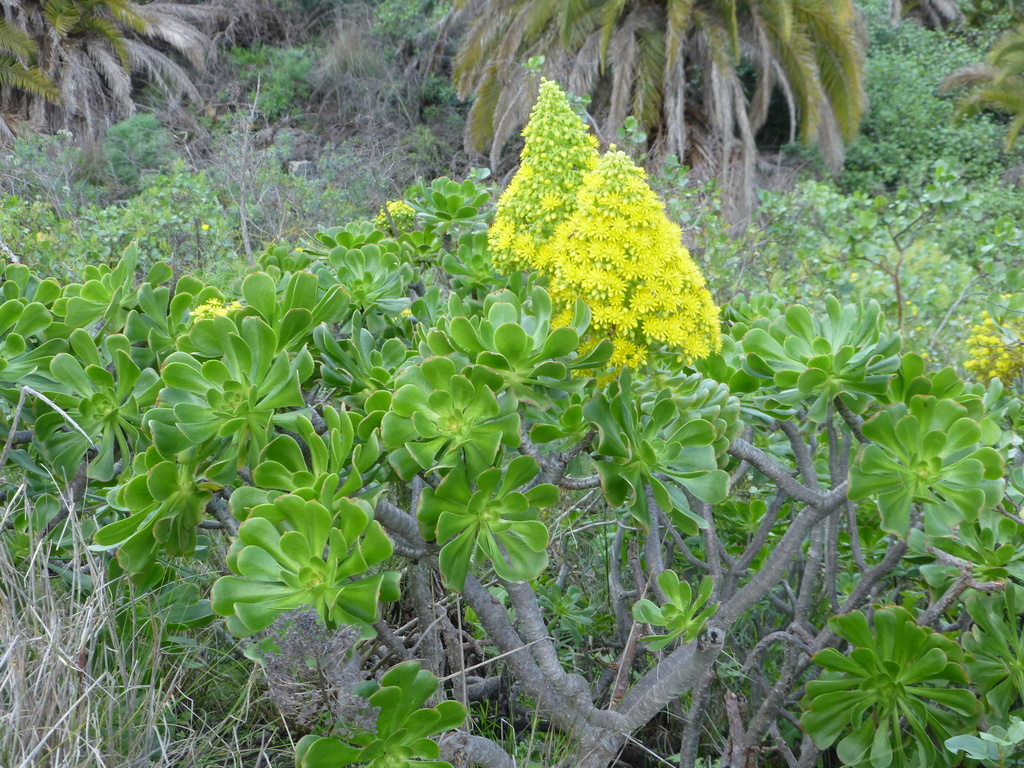
Aeoniums are beautiful succulents known for their rosette shapes that look like flowers. They thrive in mild climates and grow best when they get plenty of sunshine. These plants are quite easy to care for if you keep them in well draining soil.
At a glance
- Care level
- Easy
- Plant type
- Succulent
- Light
- Full sun to partial shade
- Indoor light
- bright-indirect
- Water
- Every 10 to 21 days
- Mature size
- 30 to 100 cm
- Growth rate
- medium
- Hardiness
- USDA 9 to 11
- Bloom time
- Late winter to spring
Care
Keep your aeonium in bright light to maintain its compact shape and color. Let the soil dry out completely between waterings to prevent root rot. Watch for shriveling leaves which indicate the plant needs a drink.
- Watering
- Water deeply but allow the soil to dry out entirely between sessions.
- Feeding
- Feed with a balanced liquid fertilizer diluted to half strength during the growing season.
- Pruning
- Snip off dead or damaged rosettes to keep the plant looking tidy.
- Repotting
- Repot only when the plant has clearly outgrown its current container.
- Soil
- Well draining cactus mix
- Soil pH
- 6.0 to 7.5
- Temperature
- 5 to 30°C
- Humidity
- 20 to 50%
- Drought tolerance
- high
- Lifespan
- Perennial, typically 3 to 5 years.
- Deer and rabbits
- moderate
Signs it needs repotting
- Roots growing out of the drainage holes.
- The plant has become top heavy and unstable.
- Water runs straight through the pot without soaking in.
Safety
- People
- The plant is generally considered non-toxic, but the sap can cause mild skin irritation in sensitive individuals.
- Pets
- Aeoniums are generally considered non toxic to cats and dogs.
- Children
- Keep this plant out of reach of small children to prevent accidental ingestion or damage to the succulent leaves.
- Contact allergens
- The sap may cause mild contact dermatitis for people with sensitive skin.
- Airborne allergens
- There are no significant reports of respiratory allergies associated with this plant.
- Edibility
- While not considered highly toxic, ingestion is not recommended as it can cause gastrointestinal distress in pets and humans.
How to identify it
- succulent rosettes on woody stems
- fleshy leaves arranged in spirals
- often displays vibrant purple or red
- small star shaped yellow flowers
- Height
- 0.15 to 1m
- Spread
- 0.15 to 0.6m
- Leaves
- green, purple, red, variegated, evergreen
- Flowers
- yellow, white, 1 to 2cm
Common problems
- Root rot — This occurs when the soil stays too wet for too long, causing the roots to decay.
- Mealybugs — These small white insects hide in the crevices of the rosettes and suck plant sap.
Growing it
- Propagation
- cuttings, offsets
- When to plant
- spring, autumn
- Overwintering
- Bring containers indoors before the first frost, as they are not frost tolerant. Place them in a bright window and reduce watering significantly during the winter months.
- In containers
- They thrive in containers with excellent drainage, requiring at least a 6 inch pot for most common varieties.
Stem Cuttings
- Cut a healthy rosette from the main stem with a clean knife.
- Let the cutting dry in a shaded area for 3 to 5 days until the end callouses over.
- Place the calloused end into well draining succulent soil.
- Keep the soil barely moist until roots develop.
Group succulents with similar water needs together to ensure no single plant stays too wet.
Grows well with
- Echeveria — They share similar water and light requirements for a cohesive succulent display.
- Sedum — These low growing plants act as a great ground cover beneath taller Aeonium rosettes.
- Aloe — Their contrasting textures and similar care needs make them excellent partners in containers.
Similar species
- Echeveria — They look very similar but Echeveria rosettes are typically more compact and do not grow on woody stems.
- Sempervivum — Often called hens and chicks, they share the rosette form but are much more cold hardy.
Science
- Family
- Crassulaceae
- Genus
- Aeonium
- Order
- Saxifragales
- Class
- Magnoliopsida
- Native range
- Canary Islands, Madeira, and parts of North Africa.
- Conservation
- Most species are not currently under threat, though some rare island endemics are protected in their native habitats.
They store water in their fleshy leaves to survive long periods of drought in rocky, volcanic soils.
- Value to wildlife
- nectar source
- Pollinators
- bees, beetles
- Uses
- container gardening, rock gardens, drought tolerant landscaping
Through the year
Ecological indicators
- Salinity
- 2/9
- Soil reaction
- 6/9
- Light
- 7/9
- Temperature
- 6/9
- Moisture
- 2/9
- Nutrients
- 3/9
Taxonomy resolved against GBIF.
Questions people ask
- How often should I water my Aeonium?
- Water only when the top inch of soil is completely dry.
- Do they need direct sun?
- They prefer bright, indirect light but can handle some direct morning sun.
Where the name comes from
The name comes from the Greek word aionios, which means everlasting. It reflects the plant's ability to survive in harsh, rocky environments.
Good to know
- Many species are monocarpic, meaning they die after flowering.
- They are native to the Canary Islands and parts of North Africa.
- The rosettes often close up during the heat of the day to conserve moisture.
- They are closely related to Sedum and Echeveria.
Is your aeonium looking unwell?
This page is a general guide. Pocket Botanist diagnoses problems from a photo of your actual plant, works out watering for your light and conditions, and reminds you when care is due.
This guide was generated with AI and checked against GBIF taxonomy. It is general information, not horticultural or veterinary advice. Read about how we build these guides.