 Pocket Botanist
Plant guide
Delta maidenhair fern.
Adiantum raddianum
Pronounced ad-ee-AN-tum rad-ee-AY-num
Also known as Delta Maidenhair, Delta Maidenhair-fern, Delta maidenhair fern, Fine Maidenhair Fern



This delicate fern is a favorite for its airy, lacy fronds that add a soft touch to any indoor space. It thrives in humid environments and brings a lush, tropical feel to your home. You will love how its dark, wiry stems contrast with the bright green foliage.
At a glance
- Care level
- Difficult
- Plant type
- Fern
- Light
- Bright indirect light
- Indoor light
- Medium light
- Water
- Every 3 to 7 days
- Mature size
- 1 to 2 feet
- Growth rate
- Medium
- Hardiness
- USDA 10 to 12
Care
Keep the soil consistently moist and provide high humidity to prevent the fronds from drying out. If you notice brown, crispy edges, it is likely a sign that the air is too dry or the plant needs more water. Avoid placing it in direct sun, as the delicate leaves burn very easily.
- Watering
- Keep the soil evenly moist but never waterlogged.
- Feeding
- Use a balanced liquid fertilizer diluted to half strength during the growing season.
- Pruning
- Trim away any dead or yellowing fronds at the base to keep the plant tidy.
- Repotting
- Repot only when the roots have filled the container.
- Soil
- Peat based, well draining potting mix
- Soil pH
- 6.0 to 7.0
- Temperature
- 15 to 24°C
- Humidity
- 60 to 90%
- Drought tolerance
- Low
- Lifespan
- Perennial, typically 3 to 5 years with proper care.
- Deer and rabbits
- Moderate
Signs it needs repotting
- Roots growing out of the drainage holes
- Water running straight through the pot
- Stunted growth
Safety
- People
- It is generally considered non toxic to humans.
- Pets
- This plant is considered non toxic to cats and dogs.
- Children
- The thin stems are fragile and can be easily crushed by small children.
- Contact allergens
- The fronds are soft and do not typically cause skin irritation.
- Airborne allergens
- Spores released from the undersides of fronds may cause minor respiratory irritation in sensitive individuals.
- Edibility
- This plant is not intended for consumption.
How to identify it
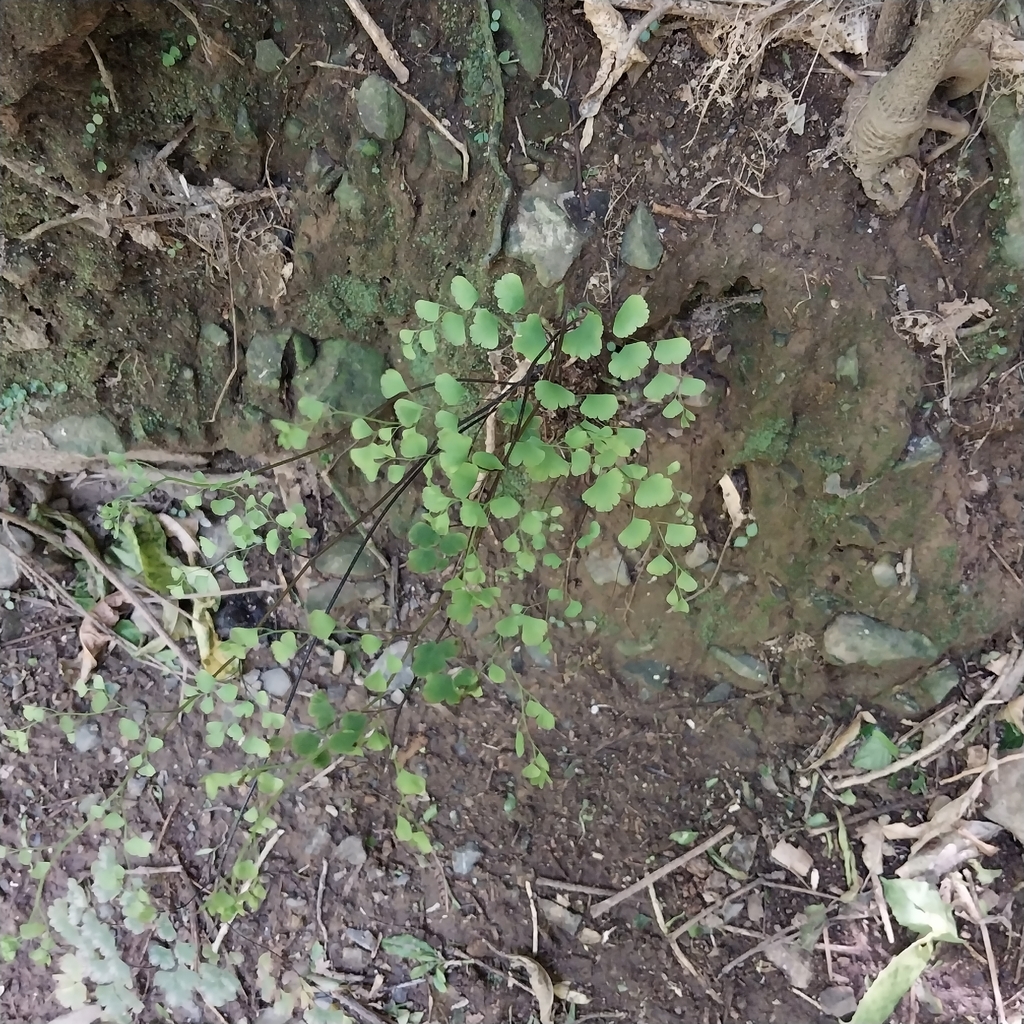
- Delicate, fan shaped leaflets
- Dark, wiry, black stems
- Triangular, arching fronds
- Lacy, fine textured appearance
- Height
- 0.3 to 0.6m
- Spread
- 0.3 to 0.6m
- Leaves
- bright green, evergreen
- Flowers
- 0cm
Problems to watch for
- Brown Leaf EdgesCommon
- Frond BrowningCommon
- Scale InsectsCommon
- Fungus GnatsUncommon
- Root RotUncommon
- Spider MitesUncommon
By symptom
Check your delta maidenhair fern from a photo
Pocket Botanist looks at a photo of your plant and tells you what's wrong and what to try first.
Growing it
- Propagation
- division, spores
- When to plant
- spring, summer
- Overwintering
- Keep the plant away from cold drafts and heating vents. Ensure the soil remains damp throughout the winter months.
- In containers
- It grows well in pots, provided the container has drainage and the soil is kept consistently moist.
Division
- Gently remove the plant from its pot.
- Use a clean knife to divide the root ball into smaller sections.
- Repot each section into fresh, peat based potting mix.
- Water thoroughly and keep in a humid spot.
Group moisture loving plants together to create a localized humid microclimate.
Grows well with
- Peace Lily — They share similar requirements for shade and high moisture.
- African Violet — They thrive in the same warm, humid indoor environments.
Similar species
- Southern Maidenhair Fern — It has a similar delicate appearance but is slightly more cold tolerant.
Science
- Family
- Pteridaceae
- Genus
- Adiantum
- Order
- Polypodiales
- Class
- Polypodiopsida
- Native range
- Tropical and subtropical regions of South America.
- Conservation
- It is not currently listed as a threatened species.
It grows in the moist, shaded understory of tropical forests.
- Uses
- indoor houseplant, terrarium specimen, shaded patio plant
Through the year
Ecological indicators
- Salinity
- 1/9
- Nutrients
- 4/9
- Soil reaction
- 5/9
- Light
- 2/9
- Temperature
- 8/9
- Moisture
- 8/9
Taxonomy resolved against GBIF.
Questions people ask
- Why are the leaves turning brown?
- The air is likely too dry or the soil has been allowed to dry out completely.
- Can I grow this in direct sun?
- No, direct sunlight will quickly scorch the delicate foliage.
Where the name comes from
The name Adiantum refers to the water repellent nature of the leaves. Raddianum honors the Italian botanist Giuseppe Raddi.
Good to know
- The genus name Adiantum comes from the Greek word for unwetted.
- It is commonly called the Delta Maidenhair fern.
- These ferns thrive in the high humidity of bathrooms.
Also in
Keep your delta maidenhair fern growing
This page is a general guide. Save your plant in Pocket Botanist and you get care reminders timed for this plant, plus a care history that shows what worked.
This guide was generated with AI and checked against GBIF taxonomy. It is general information, not horticultural or veterinary advice. Read about how we build these guides.