 Pocket Botanist
Plant guide
Sugar Maple.
Acer saccharum
Pronounced AY-ser sa-KAHR-um
Also known as hard maple, rock maple, sugar maple



Scan with your phone's camera to get the app
Or go to pocketbotanist.app/get on your phone

The sugar maple is a majestic tree famous for its brilliant fall colors and sweet sap. It thrives in cool, moist climates and serves as a vital part of North American forests. You will love how it provides dense shade throughout the summer months.
At a glance
- Care level
- Moderate
- Plant type
- Deciduous tree
- Light
- Full sun to partial shade
- Indoor light
- Bright indirect
- Water
- Every 7 to 14 days
- Mature size
- 80 to 115 feet
- Growth rate
- Medium
- Hardiness
- USDA 3 to 8
- Bloom time
- Early to mid spring
Care
Keep the soil consistently moist but well drained to prevent root stress. Watch for scorched leaf edges during hot, dry spells which indicate a need for more water. Mulching around the base helps retain moisture and protects the roots.
- Watering
- Water deeply during dry periods to keep the root zone consistently moist.
- Feeding
- Apply a balanced slow release fertilizer in early spring before new growth begins.
- Pruning
- Prune in late spring or early summer, after the leaves have fully expanded, to avoid heavy sap bleeding.
- Repotting
- Repotting is generally only necessary for young container specimens every few years.
- Soil
- Deep, fertile, well drained loam
- Soil pH
- 6.0 to 7.3
- Temperature
- -40 to 35°C
- Humidity
- 40 to 70%
- Drought tolerance
- Moderate
- Lifespan
- Perennial, typically 200 to 300 years.
- Deer and rabbits
- Low
Signs it needs repotting
- Roots growing out of drainage holes
- Stunted growth despite proper care
Safety
- People
- It is not considered toxic to humans.
- Children
- The winged seeds are a choking hazard if ingested by small children.
- Contact allergens
- The sap can cause mild skin irritation in sensitive individuals.
- Airborne allergens
- The pollen is a known allergen for many people during the spring bloom.
- Edibility
- The sap is edible when processed into syrup, but raw consumption of other plant parts is not recommended.
How to identify it
- Five lobed leaves with smooth edges
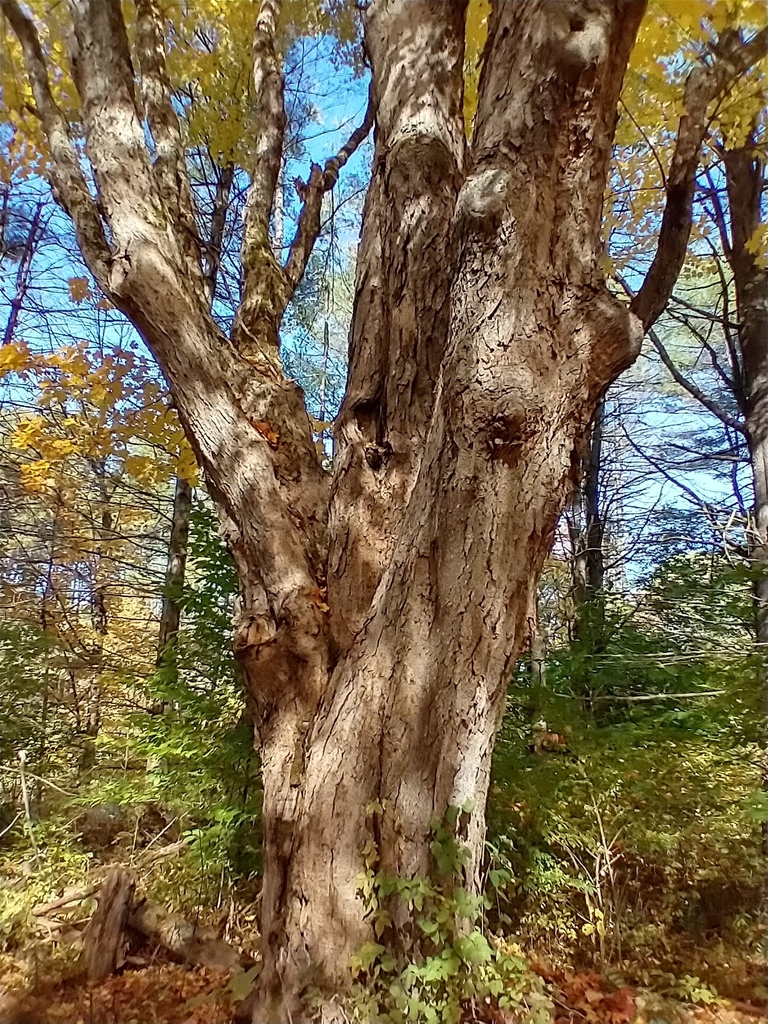
- Grayish brown bark with vertical furrows
- Brilliant orange and red fall foliage
- U shaped sinuses between leaf lobes
- Height
- 18 to 35m
- Spread
- 12 to 25m
- Leaves
- green, deciduous
- Flowers
- yellow, green, 0.5 to 1cm
- Fruit
- brown, Autumn
Problems to watch for
- Verticillium wilt · A soil-borne fungus that causes branch dieback and yellowing leaves.
- Maple scale · Small insects that suck sap and weaken the tree.
Check your sugar maple from a photo
Pocket Botanist looks at a photo of your plant and tells you what's wrong and what to try first.
Scan with your phone's camera to get the app
Or go to pocketbotanist.app/get on your phone
Growing it
- Propagation
- seed
- When to plant
- spring, autumn
- Overwintering
- No special care is needed as it is fully hardy in its native range. Ensure the soil remains moist but not waterlogged before the ground freezes.
- In containers
- It is not suitable for long term container growth due to its massive size.
Seed
- Collect seeds in autumn when they turn brown.
- Store seeds in a cool, dry place until winter.
- Cold stratify seeds in the refrigerator for 90 days.
- Sow seeds in pots in early spring.
- Keep soil moist until germination occurs.
Plant in groups with other native hardwoods to mimic natural forest conditions.
Grows well with
- American Beech · They naturally occur together in climax forest communities.
- Eastern Hemlock · They share similar soil and moisture requirements in woodland settings.
Similar species
- Red Maple · It is a common relative that tolerates wetter soil conditions.
- Norway Maple · It looks similar but is considered invasive in many parts of North America.
Science
- Family
- Sapindaceae
- Genus
- Acer
- Order
- Sapindales
- Class
- Magnoliopsida
- Native range
- Eastern North America
- Conservation
- It is not currently listed as endangered or threatened.
It thrives in deep, fertile, well-drained soils and is a climax species in many hardwood forests.
- Value to wildlife
- nectar source, nesting site
- Pollinators
- bees
- Uses
- shade tree, ornamental, syrup production, lumber
Through the year
Ecological indicators
- Salinity
- 1/9
- Soil reaction
- 6/9
- Light
- 5/9
- Temperature
- 4/9
- Moisture
- 5/9
- Nutrients
- 6/9
Taxonomy resolved against GBIF.
Questions people ask
- How fast does it grow?
- It is a slow to moderate grower, typically adding 1 to 2 feet per year.
- Does it need full sun?
- It prefers full sun but can tolerate partial shade when young.
Where the name comes from
The name saccharum comes from the Latin word for sugar, referring to the sweet sap. The common name sugar maple describes this same characteristic.
Good to know
- Sugar maples can live for over 300 years.
- The leaves turn brilliant shades of orange and red in autumn.
- It takes about 40 gallons of sap to make one gallon of syrup.
- The wood is prized for making bowling alley lanes and basketball courts.
Keep your sugar maple growing
This page is a general guide. Save your plant in Pocket Botanist and you get care reminders timed for this plant, plus a care history that shows what worked.
Scan with your phone's camera to get the app
Or go to pocketbotanist.app/get on your phone
This guide was generated with AI on and checked against GBIF taxonomy. It is general information, not horticultural or veterinary advice. Read about how we build these guides.