 Pocket Botanist
Plant guide
Field Maple.
Acer campestre
Pronounced AY-ser kam-PES-tree
Also known as Field Maple, Hedge maple



Scan with your phone's camera to get the app
Or go to pocketbotanist.app/get on your phone
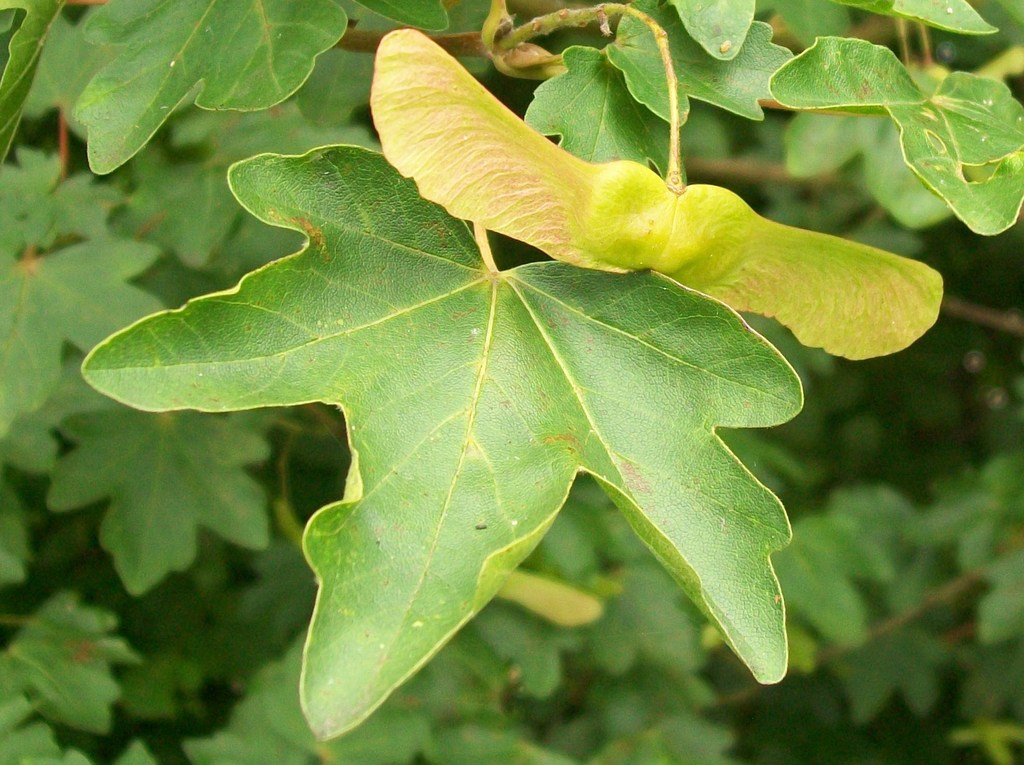
The field maple is a lovely, hardy tree native to much of Europe and parts of Asia. It is well known for its small, lobed leaves that turn a beautiful golden yellow in the autumn. It is a fantastic choice for hedging or as a standalone specimen in a garden.

At a glance
- Care level
- Easy
- Plant type
- Deciduous tree
- Light
- Full sun to partial shade
- Indoor light
- Bright indirect
- Water
- Every 7 to 14 days
- Mature size
- 6 to 15 meters
- Growth rate
- Medium
- Hardiness
- USDA 5 to 8
- Bloom time
- Mid to late spring
Care
Plant in a spot with good drainage and plenty of space for its roots to spread. Keep an eye out for aphids or mildew during humid spells. Regular mulching helps keep the soil moist and healthy.
- Watering
- Water deeply during the first few years until the tree is established.
- Feeding
- Apply a balanced slow release fertilizer in early spring.
- Pruning
- Prune during the dormant winter season to maintain shape or density.
- Repotting
- Only necessary for container grown specimens when they become root bound.
- Soil
- Chalk, clay, or loam
- Soil pH
- Neutral to alkaline
- Temperature
- -30 to 35°C
- Humidity
- 40 to 70%
- Drought tolerance
- Moderate
- Lifespan
- Long lived, often over 100 years.
- Deer and rabbits
- Moderate
Signs it needs repotting
- Roots circling the bottom of the pot.
- Water draining through the pot very quickly.
Safety
- People
- The plant is not considered toxic to humans.
- Children
- There are no specific safety concerns for children regarding this tree.
- Contact allergens
- The sap can cause mild skin irritation in sensitive individuals.
- Airborne allergens
- The pollen may cause mild seasonal allergies.
- Edibility
- The foliage and seeds are not considered edible for humans.
How to identify it
- Small, five lobed leaves
- Corked bark on younger stems
- Winged seeds in pairs
- Golden yellow autumn foliage
- Height
- 6 to 15m
- Spread
- 4 to 10m
- Leaves
- dark green, yellow, deciduous
- Flowers
- greenish yellow, 0.5 to 1cm
- Fruit
- brown, Autumn
Problems to watch for
- AphidsCommon
- Powdery MildewCommon
- CankerUncommon
- Leaf ScorchUncommon
- Sooty MoldUncommon
- Verticillium WiltUncommon
Check your field maple from a photo
Pocket Botanist looks at a photo of your plant and tells you what's wrong and what to try first.
Scan with your phone's camera to get the app
Or go to pocketbotanist.app/get on your phone
Growing it
- Propagation
- seed, cuttings
- When to plant
- spring, autumn
- Overwintering
- No special protection is needed as it is fully hardy.
- In containers
- It is well suited for containers when kept as a bonsai, requiring a pot at least 30 cm wide.
Seed
- Collect seeds in autumn.
- Sow in pots outdoors to allow natural cold stratification.
- Transplant seedlings in spring.
Plant in groups to create a naturalistic woodland edge effect.
Grows well with
- English Oak · They share similar woodland habitat requirements.
- Common Hazel · These species often grow together in natural hedgerows.
Similar species
- Norway Maple · It has larger leaves and a more upright growth habit.
Science
- Family
- Sapindaceae
- Genus
- Acer
- Order
- Sapindales
- Class
- Magnoliopsida
- Native range
- Europe, Western Asia, and North Africa.
- Conservation
- This species is widespread and not of conservation concern.
It thrives in hedgerows and woodland edges where it provides shelter for many small birds.
- Value to wildlife
- nectar source, nesting site
- Pollinators
- bees, butterflies
- Uses
- ornamental tree, hedging, bonsai, urban screening
Through the year
Ecological indicators
- Salinity
- 3/9
- Soil reaction
- 7/9
- Light
- 6/9
- Temperature
- 5/9
- Moisture
- 5/9
- Nutrients
- 6/9
Taxonomy resolved against GBIF.
Questions people ask
- How fast does it grow?
- It is a slow to moderate grower.
- Can I grow it in a pot?
- Yes, it makes an excellent bonsai subject.
Where the name comes from
The name campestre means of the fields, referring to its common occurrence in open rural landscapes.
Good to know
- It is the only maple native to the United Kingdom.
- The wood is very dense and was historically used for carving.
- It is often used as a formal hedge because it responds well to pruning.
Keep your field maple growing
This page is a general guide. Save your plant in Pocket Botanist and you get care reminders timed for this plant, plus a care history that shows what worked.
Scan with your phone's camera to get the app
Or go to pocketbotanist.app/get on your phone
This guide was generated with AI on and checked against GBIF taxonomy. It is general information, not horticultural or veterinary advice. Read about how we build these guides.