 Pocket Botanist
Guide botanique
Souci.
Tagetes
Prononciation TAH-geh-teez EH-rek-tuh
Aussi appelée Marigolds, Mexican Marigolds, marigold



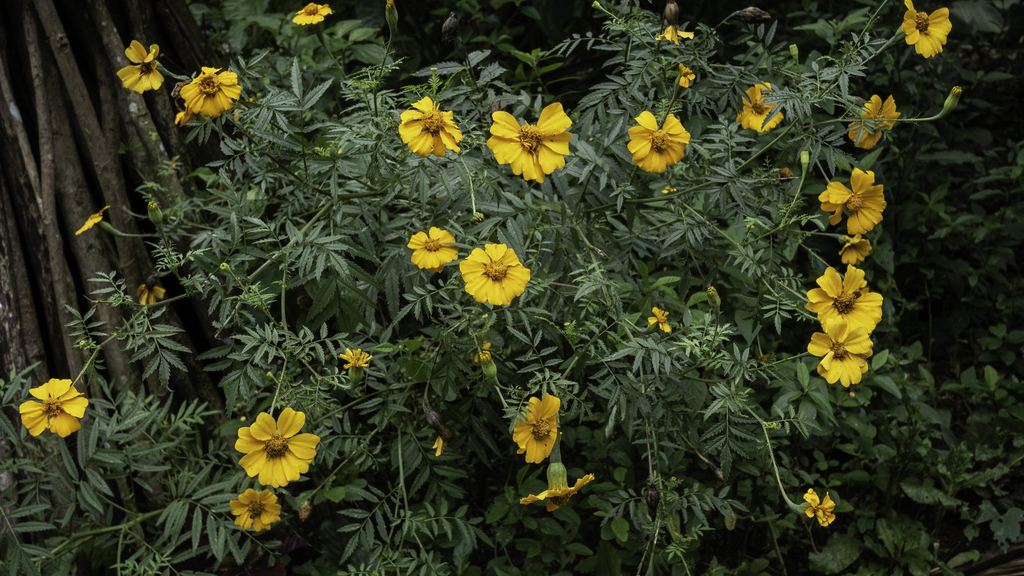
Les soucis sont des annuelles joyeuses et rustiques, connues pour leurs fleurs aux couleurs vives et ensoleillées, et leur parfum distinctif. Ils sont incroyablement faciles à cultiver et offrent une longue saison de couleur dans les jardins et les contenants.
En un coup d'œil
- Niveau d'entretien
- Facile
- Type de plante
- Plante à fleurs annuelle
- Lumière
- Plein soleil
- Lumière en intérieur
- Soleil direct
- Arrosage
- Tous les 3 à 7 jours
- Taille adulte
- Jusqu'à 3 pieds de hauteur et 2 pieds de largeur
- Croissance
- Rapide
- Rusticité
- USDA 2 à 11
- Floraison
- Fin du printemps jusqu'à l'automne
Entretien
Plantez dans un sol bien drainé et exposez-les au plein soleil pour de meilleurs résultats. Supprimez régulièrement les fleurs fanées pour encourager une floraison continue. Ils tolèrent relativement bien la sécheresse une fois établis, mais prospèrent mieux avec une humidité constante.
- Arrosage
- Arrosez lorsque le premier centimètre de terre est sec au toucher. Évitez l'excès d'eau, car cela peut entraîner la pourriture des racines.
- Engrais
- Fertilisez toutes les 3 à 4 semaines avec un engrais liquide équilibré, ou utilisez un engrais à libération lente au moment de la plantation.
- Taille
- Pincez les jeunes plants pour favoriser une croissance plus touffue. Enlevez régulièrement les fleurs fanées pour encourager plus de fleurs.
- Rempotage
- Annuelles, généralement cultivées à partir de graines ou transplantées à l'état de jeunes plants ; le rempotage n'est généralement pas nécessaire.
- Sol
- Sol de jardin moyen, bien drainé
- pH du sol
- Légèrement acide à neutre (6.0-7.0)
- Température
- 10 à 35°C
- Humidité
- 40 à 70%
- Résistance à la sécheresse
- Moyenne
- Durée de vie
- Annual, typically one growing season
- Parfum
- Fort
- Résistance aux chevreuils et lapins
- Élevée
Signes qu'il faut rempoter
- Roots growing out of the drainage holes
- Water running straight through the pot without soaking in
Sécurité
- Humains
- The plant is generally non-toxic, but contact with the foliage can cause skin irritation in sensitive individuals.
- Animaux
- Non toxique pour les animaux de compagnie.
- Enfants
- The plant is not considered dangerous, but the foliage can be irritating if handled excessively by small children.
- Allergènes de contact
- The sap and foliage can cause dermatitis in people with sensitive skin.
- Allergènes aéroportés
- The pollen is generally not considered a significant airborne allergen.
- Comestibilité
- While some species are used in culinary contexts, ensure you have correctly identified the specific variety as non-toxic before consumption.
Comment l'identifier
- Fleurs aux couleurs vives, ressemblant à des marges
- Pétales frisés ou ondulés
- Feuillage finement divisé et aromatique
- Formes de fleurs variables (simples, doubles)
- Parfum distinct et pénétrant
- Hauteur
- 0,15 à 1,2m
- Envergure
- 0,15 à 0,6m
- Feuilles
- vert, vert foncé, evergreen
- Fleurs
- jaune, orange, rouge, or, 2 à 10cm
Problèmes à surveiller
- BotrytisCourant
- PuceronsCourant
- TétranyquesCourant
- Jaunisse de l'asterPeu courant
- OïdiumPeu courant
- Pourriture des racinesPeu courant
Par symptôme
Vérifie la santé de ta plante en photo
Pocket Botanist analyse une photo de ta plante et te dit ce qui ne va pas et quoi essayer en premier.
La cultiver
- Multiplication
- Graine
- Quand planter
- Printemps, Été
- Hivernage
- These are annuals and will die with the first hard frost, so no special winter care is needed.
- En pot
- They are excellent for containers and perform best in pots at least 20 centimeters wide.
Seed Sowing
- 1. Sow seeds in a seed tray with moist potting mix.
- 2. Cover lightly with soil.
- 3. Keep in a warm, bright spot until germination.
- 4. Transplant seedlings outdoors after the last frost.
Plant marigolds around the perimeter of your vegetable patch to create a natural barrier against certain garden pests.
Bonnes associations
Espèces similaires
- Tagetes patula — A smaller, bushier species often used for borders.
- African Marigold — A taller species with large, showy blooms.
Science
- Famille
- Asteraceae
- Genre
- Tagetes
- Ordre
- Asterales
- Classe
- Magnoliopsida
- Région d'origine
- North and South America
- Préservation
- This plant is not of conservation concern and is widely cultivated.
These plants are opportunistic colonizers that thrive in disturbed soils with high light exposure.
- Intérêt pour la faune
- source de nectar
- Pollinisateurs
- abeilles, papillons, coléoptères
- Utilisations
- ornamental bedding, container gardens, vegetable garden companion, cut flowers
Au fil des saisons
Repères écologiques
- Salinité
- 2/9
- Réaction du sol
- 6/9
- Lumière
- 8/9
- Humidité
- 4/9
- Température
- 6/9
- Nutriments
- 5/9
Taxonomie vérifiée avec le GBIF.
Ce qu'on demande souvent
- Do marigolds need deadheading?
- Yes, removing spent blooms encourages the plant to produce more flowers throughout the season.
- Can I grow marigolds in pots?
- They thrive in containers as long as they have good drainage and plenty of sunlight.
D'où vient le nom
The name Tagetes is derived from Tages, an Etruscan deity known for his wisdom. The common name marigold refers to Mary's gold.
Bon à savoir
- Marigolds were once used to dye fabrics.
- They are named after the Virgin Mary.
- The scent is often described as pungent or spicy.
- They are a staple in many traditional festivals.
Aussi dans
Garde ta plante en pleine forme
Cette page est un guide général. Enregistre ta plante dans Pocket Botanist et tu reçois des rappels d'entretien adaptés à cette plante, ainsi qu'un historique d'entretien qui montre ce qui a marché.
Ce guide a été généré par IA et vérifié avec la taxonomie du GBIF. Il s'agit d'informations générales, et non de conseils horticoles ou vétérinaires. Découvre comment nous concevons ces guides.