 Pocket Botanist
Guide botanique
Common sowthistle.
Sonchus oleraceus
Prononciation SON-kus oh-ler-AY-see-us
Aussi appelée Common Sow-Thistle, Common Sowthistle


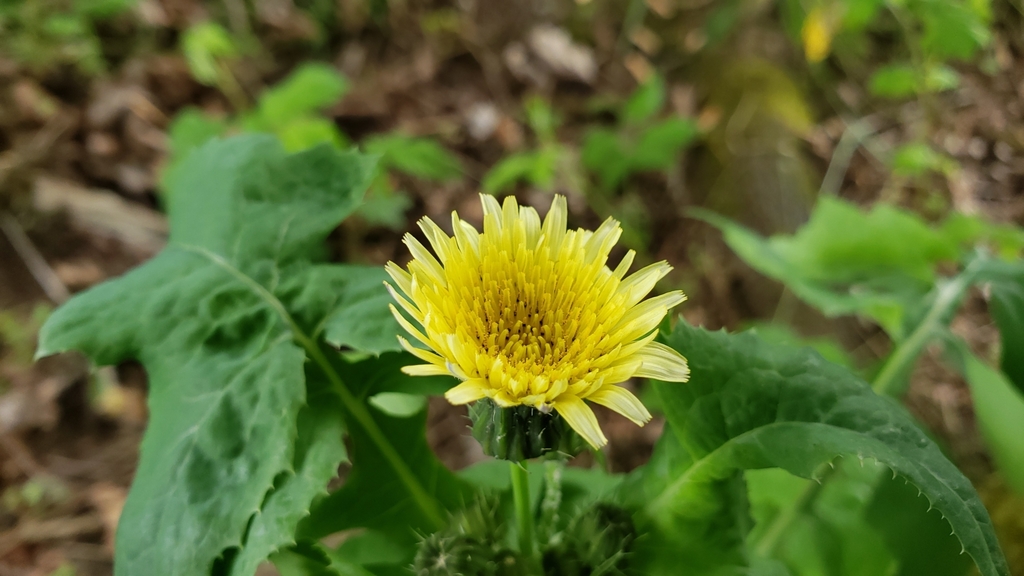
This common plant is a hardy annual that often pops up as a weed in gardens and disturbed soil. It produces yellow, dandelion-like flowers and has milky sap inside its stems. While many consider it a nuisance, it is actually edible and has a long history of use in foraging.
En un coup d'œil
- Niveau d'entretien
- Facile
- Type de plante
- Annual herb
- Lumière
- Full sun to partial shade
- Lumière en intérieur
- Soleil direct
- Arrosage
- Tous les 3 à 7 jours
- Taille adulte
- 3 to 4 feet
- Croissance
- Rapide
- Rusticité
- USDA 6 à 10
- Floraison
- Spring to autumn
Entretien
This plant is quite resilient and typically manages itself in most outdoor environments. Watch for aphids or powdery mildew if you are growing it in a container. It thrives best when it has plenty of space and consistent access to sunlight.
- Arrosage
- Keep the soil consistently moist but not waterlogged for best growth.
- Engrais
- A balanced liquid fertilizer can be applied occasionally if the soil is poor.
- Taille
- Deadhead spent flowers to prevent unwanted seed spread throughout your garden.
- Rempotage
- Since it is an annual, you will generally be replanting it from seed each season.
- Sol
- Well-draining, fertile soil
- pH du sol
- 6.0 to 7.5
- Température
- -5 à 35°C
- Humidité
- 30 à 80%
- Résistance à la sécheresse
- Moyenne
- Durée de vie
- Annual, typically 6 to 9 months.
- Résistance aux chevreuils et lapins
- Moyenne
Signes qu'il faut rempoter
- Roots growing out of the drainage holes.
- Stunted growth despite regular watering.
Sécurité
- Humains
- It is generally considered non toxic to humans.
- Enfants
- There are no specific safety concerns for children, though the milky sap can be messy.
- Allergènes de contact
- The milky sap can cause mild skin irritation in sensitive individuals.
- Allergènes aéroportés
- Pollen may cause mild allergic reactions in susceptible people.
- Comestibilité
- While young leaves are edible, older leaves become bitter and may contain high levels of nitrates if grown in nitrogen rich soil.
Comment l'identifier
- Yellow dandelion like flower heads
- Leaves with prickly, toothed margins
- Hollow, brittle stems with milky sap
- Basal rosette of lobed leaves
- Hauteur
- 0,3 à 1m
- Envergure
- 0,2 à 0,5m
- Feuilles
- green, blue-green, deciduous
- Fleurs
- yellow, 1,5 à 2,5cm
- Fruits
- brown, Summer to autumn
Problèmes courants
- Aphids — Small insects that cluster on new growth and flower buds.
- Powdery mildew — A fungal infection causing white dusty patches on leaves.
La cultiver
- Multiplication
- seed
- Quand planter
- spring, autumn
- Hivernage
- It usually dies back after the first hard frost, so no special care is needed.
- En pot
- It grows easily in pots, but is rarely cultivated intentionally due to its weedy nature.
Seed
- Collect seeds from mature flower heads once they turn fluffy.
- Scatter seeds on moist soil in early spring.
- Keep the soil lightly moist until germination occurs.
Keep it away from your primary vegetable beds to prevent it from becoming a nuisance.
Bonnes associations
- Lettuce — They share similar growing requirements.
Espèces similaires
- Pissenlit — Both have yellow flowers and similar rosette growth habits.
- spiny sowthistle — It looks very similar but has sharper, pricklier leaf edges.
Science
- Famille
- Asteraceae
- Genre
- Sonchus
- Ordre
- Asterales
- Classe
- Magnoliopsida
- Région d'origine
- Europe, North Africa, and Western Asia.
- Préservation
- It is a widespread weed and is not of conservation concern.
It thrives in disturbed habitats like roadsides and gardens where it quickly outcompetes other plants for light.
- Intérêt pour la faune
- nectar source, larval host plant
- Pollinisateurs
- abeilles, papillons, coléoptères
- Utilisations
- edible greens, poultry feed, medicinal tea
Au fil des saisons
Repères écologiques
- Salinité
- 2/9
- Réaction du sol
- 6/9
- Lumière
- 7/9
- Température
- 6/9
- Humidité
- 5/9
- Nutriments
- 7/9
Taxonomie vérifiée avec le GBIF.
Ce qu'on demande souvent
- Is Sonchus oleraceus a weed?
- Yes, it is widely considered an agricultural and garden weed due to its rapid growth.
- Can I eat it?
- Yes, young leaves are often eaten raw in salads or cooked like spinach.
D'où vient le nom
The genus name Sonchus comes from the Greek word for hollow, referring to the stems, while oleraceus means vegetable or garden herb.
Bon à savoir
- Commonly known as sow thistle because it was traditionally fed to nursing sows.
- The leaves are often compared to dandelion greens in flavor.
- It is a highly successful colonizer of disturbed soils worldwide.
- The plant contains a milky latex sap that flows when stems are broken.
Ta plante a mauvaise mine ?
Cette page est un guide général. Pocket Botanist diagnostique les problèmes directement à partir d'une photo de ta plante, adapte l'arrosage à sa luminosité et te prévient quand il faut t'en occuper.
Ce guide a été généré par IA et vérifié avec la taxonomie du GBIF. Il s'agit d'informations générales, et non de conseils horticoles ou vétérinaires. Découvre comment nous concevons ces guides.