 Pocket Botanist
Guide botanique
Portulaca.
Portulaca grandiflora Hook.
Prononciation por-tyoo-LAH-kuh gran-dih-FLOR-uh
Aussi appelée Bunga Pukul Sembilan, Onze-heures, Rose du Mexique, Portulaca, Portulaca, Portulaca, Rose Moss, Rose-moss [a Purslane]



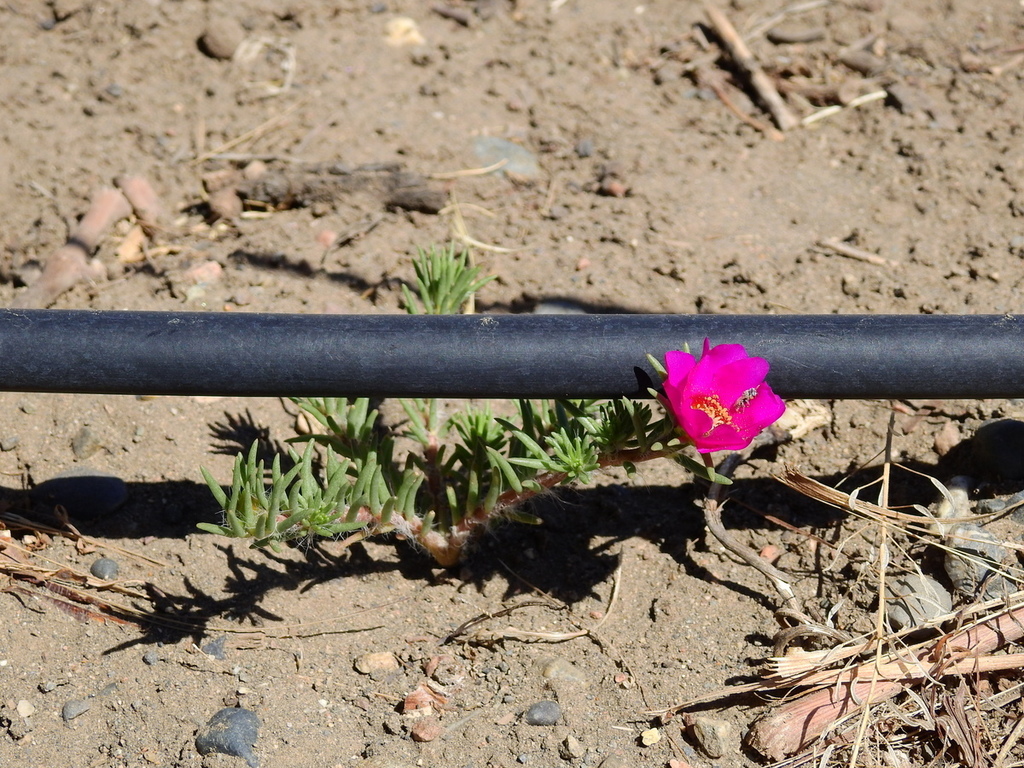
La Portulaca est une charmante succulente à croissance lente qui adore la chaleur. Elle produit des fleurs vibrantes, semblables à des roses, dans une variété de couleurs vives. Vous la trouverez prospérer dans les endroits ensoleillés où d'autres plantes pourraient avoir du mal.
En un coup d'œil
- Niveau d'entretien
- Facile
- Type de plante
- Succulente annuelle
- Lumière
- Plein soleil
- Lumière en intérieur
- Soleil direct
- Arrosage
- Tous les 5 à 10 jours
- Taille adulte
- 6 à 8 pouces de hauteur
- Croissance
- Rapide
- Rusticité
- USDA 9 à 11
- Floraison
- Début de l'été jusqu'aux premières gelées
Entretien
Plantez-les dans un sol bien drainé pour éviter la pourriture des racines. Surveillez le jaunissement des feuilles, qui signale souvent que la plante reçoit trop d'eau. Assurez-vous qu'elle reçoive beaucoup de soleil, sinon elle ne fleurira pas bien.
- Arrosage
- Laissez le sol sécher complètement entre les arrosages.
- Engrais
- Appliquez un engrais liquide équilibré une fois par mois pendant la saison de croissance.
- Taille
- Pincez les fleurs fanées pour encourager la production de nouvelles fleurs.
- Rempotage
- Comme elles sont généralement cultivées comme annuelles, le rempotage est rarement nécessaire.
- Sol
- Sol sableux, bien drainé
- pH du sol
- 6,0 à 7,5
- Température
- 10 à 35°C
- Humidité
- 20 à 50%
- Résistance à la sécheresse
- Élevée
- Durée de vie
- Annuelle dans la plupart des climats, bien qu'elle puisse se ressemer.
- Résistance aux chevreuils et lapins
- Moyenne
Signes qu'il faut rempoter
- Les racines sortent des trous de drainage.
- L'eau traverse directement le pot sans être absorbée.
Sécurité
- Humains
- La plante est généralement considérée comme non toxique, mais l'ingestion peut provoquer de légers maux d'estomac en raison des oxalates solubles.
- Animaux
- Cette plante est considérée comme toxique pour les chats et les chiens en cas d'ingestion.
- Enfants
- Les petites graines et les tiges succulentes ne présentent pas de risque d'étouffement important, mais elles ne doivent pas être ingérées.
- Allergènes de contact
- Aucun allergène de contact significatif n'est noté.
- Allergènes aéroportés
- Le pollen peut provoquer une légère irritation respiratoire chez les personnes sensibles.
- Comestibilité
- Bien que pas très toxique, la plante contient des oxalates qui peuvent être nocifs si consommés en grandes quantités.
Comment l'identifier
- Feuillage succulent, semblable à une aiguille
- Fleurs vives, à plusieurs pétales
- Habitude de croissance basse et étalée
- Les fleurs se ferment la nuit
- Hauteur
- 0,1 à 0,2m
- Envergure
- 0,2 à 0,4m
- Feuilles
- vert, caduc
- Fleurs
- rouge, rose, jaune, orange, blanc, 2 à 5cm
Problèmes à surveiller
- Pourriture des racinesCourant
- PuceronsCourant
- BotrytisPeu courant
- Pourriture de la tigePeu courant
Vérifie la santé de ta plante en photo
Pocket Botanist analyse une photo de ta plante et te dit ce qui ne va pas et quoi essayer en premier.
La cultiver
- Multiplication
- semis, bouturage
- Quand planter
- printemps
- Hivernage
- Dans les climats froids, cette plante est traitée comme une annuelle et meurt au premier gel. Vous pouvez récolter des graines à la fin de l'été pour les semer au printemps suivant.
- En pot
- Elle est excellente pour les conteneurs, à condition que le pot ait des trous de drainage et un diamètre minimum de 15 centimètres.
Semis
- 1. Semez les graines en surface dans un mélange bien drainant au début du printemps.
- 2. Pressez légèrement les graines dans le sol sans les couvrir.
- 3. Gardez le sol légèrement humide jusqu'à la germination.
Bouturage de tige
- 1. Prélevez une bouture de 5 centimètres sur une tige saine.
- 2. Laissez l'extrémité coupée cicatriser pendant un jour.
- 3. Insérez la bouture dans un sol humide et sablonneux.
Associez cette plante à d'autres espèces tolérantes à la sécheresse pour assurer des besoins en eau constants dans votre plate-bande.
Bonnes associations
Espèces similaires
- Pourpier commun — C'est un proche parent avec un feuillage succulent similaire mais des fleurs plus petites et moins voyantes.
Science
- Famille
- Portulacaceae
- Genre
- Portulaca
- Ordre
- Caryophyllales
- Classe
- Magnoliopsida
- Région d'origine
- Amérique du Sud, notamment l'Argentine, le sud du Brésil et l'Uruguay.
- Préservation
- Cette plante est largement cultivée et ne pose pas de problème de conservation.
Elle survit dans des environnements rudes et secs en stockant de l'eau dans ses feuilles et tiges succulentes.
- Intérêt pour la faune
- source de nectar
- Pollinisateurs
- abeilles, papillons
- Utilisations
- couvre-sol, jardinières, jardins de rocaille, paniers suspendus
Au fil des saisons
Repères écologiques
- Salinité
- 3/9
- Humidité
- 2/9
- Réaction du sol
- 6/9
- Lumière
- 8/9
- Température
- 7/9
- Nutriments
- 2/9
Taxonomie vérifiée avec le GBIF.
Ce qu'on demande souvent
- Dois-je retirer les fleurs fanées de ma rose mousse ?
- Il n'est pas strictement nécessaire de retirer les fleurs fanées car la plante s'auto-nettoie, mais cela peut encourager plus de floraisons.
- Pourquoi mes fleurs sont-elles fermées ?
- Elles ont probablement besoin de plus de soleil direct, car elles ne s'ouvrent que lorsque le soleil brille intensément.
D'où vient le nom
L'épithète spécifique grandiflora signifie 'à grandes fleurs', soulignant la nature voyante des fleurs par rapport aux autres espèces.
Bon à savoir
- Elle est communément appelée 'rose mousse' à cause de ses feuilles ressemblant à des aiguilles.
- La plante est extrêmement tolérante à la chaleur et à la sécheresse.
- Elle prospère dans les sols pauvres et sableux où d'autres plantes peinent.
- Le nom du genre Portulaca vient du mot latin pour porte ou portail, faisant référence à la façon dont la capsule de graines s'ouvre.
Aussi dans
Garde ta plante en pleine forme
Cette page est un guide général. Enregistre ta plante dans Pocket Botanist et tu reçois des rappels d'entretien adaptés à cette plante, ainsi qu'un historique d'entretien qui montre ce qui a marché.
Ce guide a été généré par IA et vérifié avec la taxonomie du GBIF. Il s'agit d'informations générales, et non de conseils horticoles ou vétérinaires. Découvre comment nous concevons ces guides.