 Pocket Botanist
Guide botanique
Laurier noble.
Laurus nobilis
Prononciation LAW-rus NO-bi-lis
Aussi appelée Laurier, Laurier d'Apollon, Laurier sauce, Laurier, Baie, Laurier doux


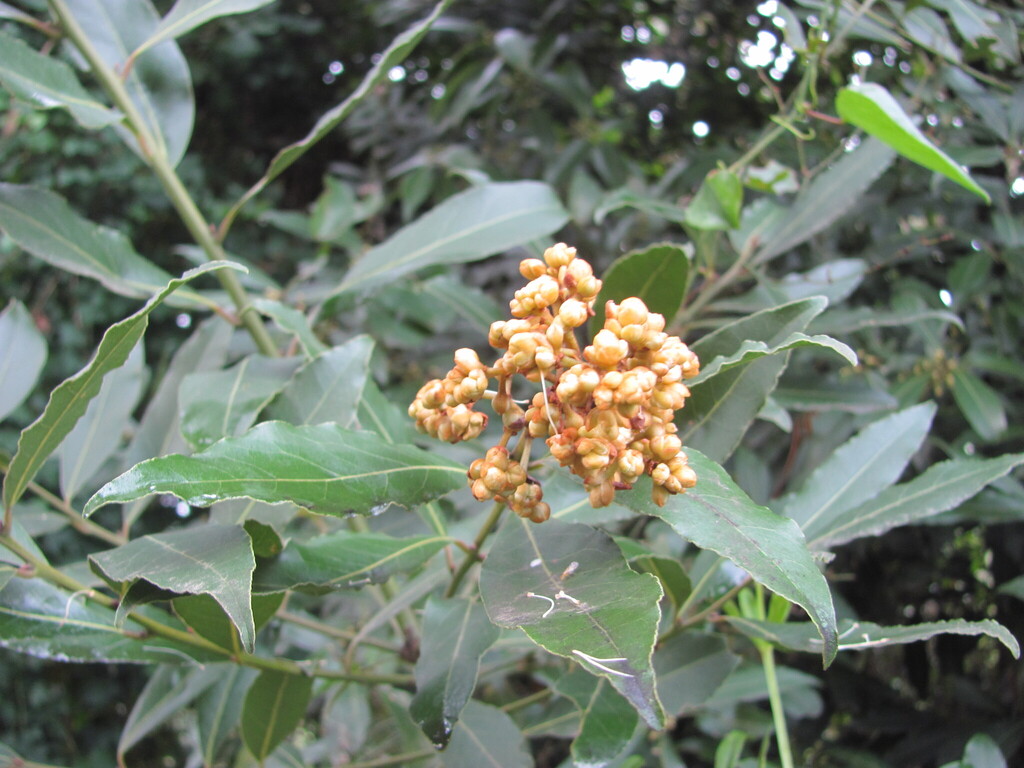
Le Laurier noble est un arbuste ou un petit arbre à feuillage persistant classique, très apprécié pour ses feuilles aromatiques. Il pousse lentement et constitue une merveilleuse plante en pot. Il est essentiel dans de nombreuses cuisines pour son usage culinaire.

En un coup d'œil
- Niveau d'entretien
- Moyenne
- Type de plante
- Arbuste ou arbre à feuillage persistant
- Lumière
- Plein soleil à mi-ombre
- Lumière en intérieur
- Lumière vive indirecte
- Arrosage
- Tous les 5 à 10 jours
- Taille adulte
- 12 à 18 mètres
- Croissance
- Lente
- Rusticité
- USDA 8 à 10
- Floraison
- Fin du printemps au début de l'été
Entretien
Maintenez le sol constamment humide, mais jamais détrempé, pour éviter la pourriture des racines. Surveillez le jaunissement des feuilles, qui signale souvent un arrosage excessif ou un mauvais drainage. Taillez légèrement pour maintenir la forme désirée pendant la saison de croissance.
- Arrosage
- Arrosez lorsque les quelques centimètres supérieurs du sol sont secs au toucher.
- Engrais
- Nourrissez avec un engrais liquide équilibré pendant les mois de croissance active.
- Taille
- Raccourcissez les branches longues pour encourager une forme plus touffue et dense.
- Rempotage
- Rempotez dans un pot légèrement plus grand une fois que les racines remplissent le pot actuel.
- Sol
- Terre franche bien drainée
- pH du sol
- 6,0 à 7,5
- Température
- -10 à 35°C
- Humidité
- 40 à 60%
- Résistance à la sécheresse
- Moyenne
- Durée de vie
- Vivace, peut vivre plusieurs décennies.
- Parfum
- Fort
- Résistance aux chevreuils et lapins
- Élevée
Signes qu'il faut rempoter
- Les racines sortent des trous de drainage.
- L'eau traverse directement le pot.
- Croissance ralentie pendant la saison active.
Sécurité
- Humains
- Les feuilles sont généralement sans danger pour un usage culinaire, mais l'ingestion de grandes quantités peut causer des troubles digestifs.
- Animaux
- La plante est considérée comme non toxique pour les chats et les chiens, bien que l'ingestion de grandes quantités puisse causer de légers troubles digestifs.
- Enfants
- Les feuilles rigides et pointues peuvent présenter un léger risque d'étouffement si elles sont avalées par de jeunes enfants.
- Allergènes de contact
- Les feuilles peuvent provoquer une légère irritation cutanée chez les personnes sensibles.
- Allergènes aéroportés
- Le pollen peut déclencher de légères allergies saisonnières chez certaines personnes.
- Comestibilité
- Assurez-vous d'utiliser le vrai Laurus nobilis, car d'autres plantes étiquetées comme laurier peuvent être très toxiques.
Comment l'identifier
- Feuilles coriaces vert foncé brillantes
- Feuillage aromatique lorsqu'il est froissé
- Petites fleurs jaunes au printemps
- Baies ovales d'un violet foncé
- Port dense et dressé
- Hauteur
- 3 à 12m
- Envergure
- 2 à 6m
- Feuilles
- vert foncé, persistant
- Fleurs
- jaune pâle, 0,5 à 1cm
- Fruits
- noir, Automne
Problèmes à surveiller
- CochenillesCourant
- Taches foliairesCourant
- Brûlures du feuillagePeu courant
- FumaginePeu courant
- Pourriture des racinesPeu courant
- PuceronsPeu courant
Par symptôme
Vérifie la santé de ta plante en photo
Pocket Botanist analyse une photo de ta plante et te dit ce qui ne va pas et quoi essayer en premier.
La cultiver
- Multiplication
- boutures, semis
- Quand planter
- printemps, automne
- Hivernage
- Déplacez les conteneurs dans un endroit abrité ou à l'intérieur si les températures descendent bien en dessous de zéro. Protégez les jeunes plants des vents forts.
- En pot
- Il est excellent pour les conteneurs, nécessitant un pot d'au moins 40 cm de large pour accommoder la croissance des racines.
Boutures semi-aoûtées
- Prélevez une bouture de 10 cm à la fin de l'été.
- Retirez les feuilles inférieures et trempez la base dans de l'hormone de bouturage.
- Placez dans un pot avec un sol humide et sableux.
- Couvrez d'un sac en plastique pour maintenir l'humidité.
- Conservez à la lumière vive et indirecte jusqu'à l'enracinement.
Regroupez les herbes méditerranéennes pour créer un microclimat constant qui favorise leurs besoins communs.
Bonnes associations
Espèces similaires
- Laurier cerise — Souvent confondu avec le laurier, mais il est toxique et non destiné à un usage culinaire.
Science
- Famille
- Lauraceae
- Genre
- Laurus
- Ordre
- Laurales
- Classe
- Magnoliopsida
- Région d'origine
- Région méditerranéenne
- Préservation
- Cette plante est commune et ne présente aucune préoccupation en matière de conservation.
Il pousse naturellement sur les pentes méditerranéennes rocailleuses et arbustives où il tolère les étés secs et les hivers doux.
- Intérêt pour la faune
- source de nectar, abri pour les petits oiseaux
- Pollinisateurs
- abeilles, papillons
- Utilisations
- herbe culinaire, topiaire, haie ornementale, production d'huiles essentielles
Au fil des saisons
Repères écologiques
- Salinité
- 3/9
- Réaction du sol
- 6/9
- Lumière
- 7/9
- Nutriments
- 5/9
- Température
- 7/9
- Humidité
- 4/9
Taxonomie vérifiée avec le GBIF.
Ce qu'on demande souvent
- Puis-je cultiver du laurier noble en pot ?
- Oui, il prospère dans les conteneurs et est souvent taillé en topiaire.
- Comment faire sécher les feuilles ?
- Accrochez simplement les branches dans un endroit frais, sombre et aéré jusqu'à ce qu'elles soient cassantes.
D'où vient le nom
Le nom Laurus nobilis se traduit du latin par « laurier noble », faisant référence à son statut historique de symbole d'honneur.
Bon à savoir
- Les feuilles de laurier étaient autrefois considérées comme une protection contre la foudre.
- Le terme « baccalauréat » vient du latin pour « baie de laurier ».
- Les feuilles de laurier séchées sont plus savoureuses que les feuilles fraîches.
Aussi dans
Garde ta plante en pleine forme
Cette page est un guide général. Enregistre ta plante dans Pocket Botanist et tu reçois des rappels d'entretien adaptés à cette plante, ainsi qu'un historique d'entretien qui montre ce qui a marché.
Ce guide a été généré par IA et vérifié avec la taxonomie du GBIF. Il s'agit d'informations générales, et non de conseils horticoles ou vétérinaires. Découvre comment nous concevons ces guides.