 Pocket Botanist
Guide botanique
Bottle Gourd.
Lagenaria siceraria siceraria
Prononciation la-jen-AIR-ee-uh sik-er-AIR-ee-uh
Aussi appelée Lagenaria siceraria siceraria



The bottle gourd is a fast growing annual vine famous for its unique, hard shelled fruits. It thrives in warm weather and needs plenty of space to sprawl. You will love watching these curious gourds develop throughout the summer.
En un coup d'œil
- Niveau d'entretien
- Moyenne
- Type de plante
- Annual vine
- Lumière
- Full sun
- Lumière en intérieur
- Soleil direct
- Arrosage
- Tous les 2 à 4 jours
- Taille adulte
- 15 to 30 feet
- Croissance
- Rapide
- Rusticité
- USDA 9 à 11
- Floraison
- Mid to late summer
Entretien
Provide a sturdy trellis for the vines to climb to keep the fruit off the ground. Watch for powdery mildew on the leaves if the air circulation is poor. Ensure the soil stays consistently moist but not waterlogged during the peak growing season.
- Arrosage
- Keep the soil evenly moist, especially when the plant is actively producing fruit.
- Engrais
- Apply a balanced liquid fertilizer every two weeks during the active growing season.
- Taille
- Trim back excessive growth to encourage side branching and better fruit production.
- Rempotage
- As an annual plant, this is typically grown from seed in the ground or a large container each year.
- Sol
- Rich, well draining, loamy soil
- pH du sol
- 6.0 to 7.5
- Température
- 15 à 35°C
- Humidité
- 40 à 70%
- Résistance à la sécheresse
- Faible
- Durée de vie
- Annual, grows for one season.
- Parfum
- Léger
- Résistance aux chevreuils et lapins
- Moyenne
Signes qu'il faut rempoter
- Roots growing out of the drainage holes.
- Plant growth slows significantly.
- Soil dries out very quickly.
Sécurité
- Humains
- Mature gourds are not meant for human consumption and may cause gastrointestinal distress.
- Enfants
- The large, heavy fruits can pose a hazard if they fall, and seeds should be kept away from small children.
- Allergènes de contact
- The fuzzy stems and leaves can cause mild skin irritation in sensitive individuals.
- Allergènes aéroportés
- Pollen may cause mild reactions in those with severe seasonal allergies.
- Comestibilité
- Young fruits are edible when cooked, but mature gourds are strictly for ornamental or functional use and can be bitter or toxic.
Comment l'identifier
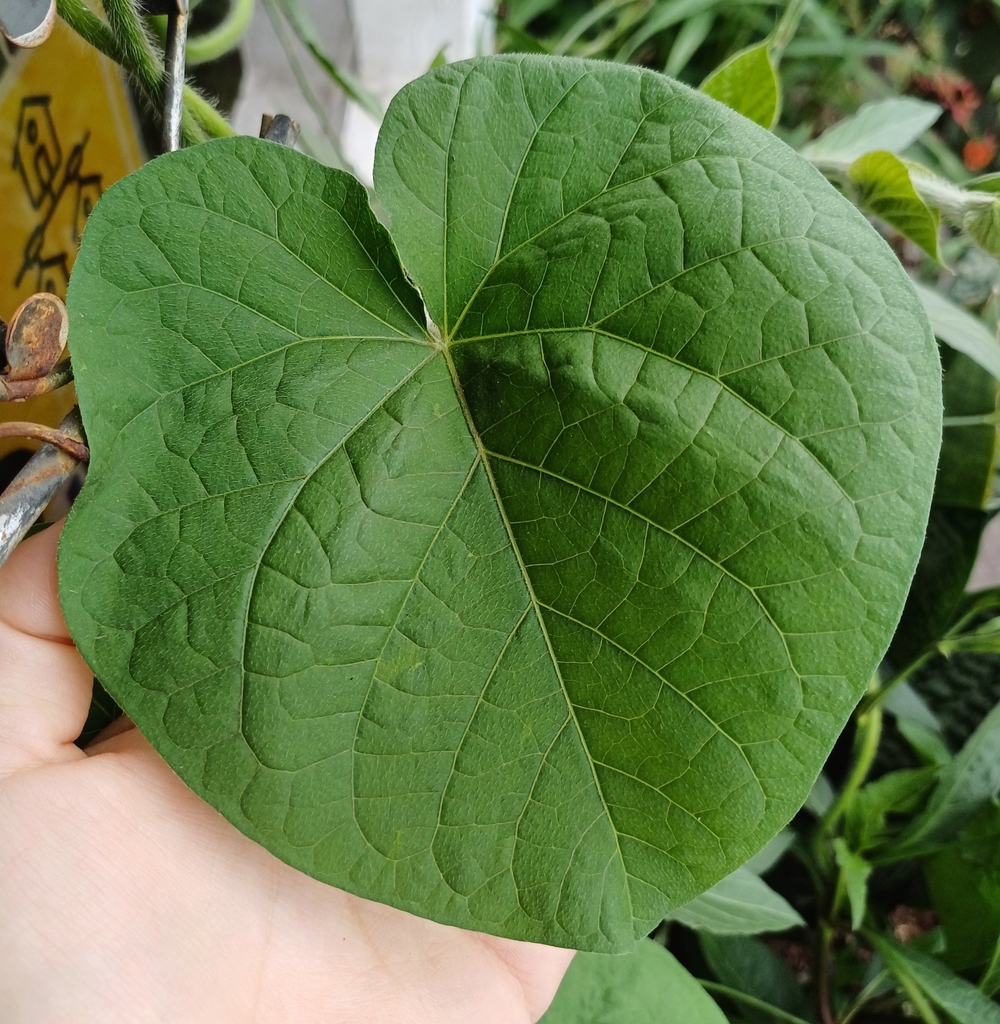
- Large, soft, heart shaped leaves
- White, star shaped nocturnal flowers
- Smooth, green, bottle shaped fruits
- Vigorous, climbing, tendril bearing vines
- Hauteur
- 3 à 9m
- Envergure
- 1,5 à 3m
- Feuilles
- green, deciduous
- Fleurs
- white, 5 à 10cm
- Fruits
- green, tan, Autumn
Problèmes courants
- Powdery mildew — A white fungal growth appears on leaves during humid weather.
- Squash vine borer — Larvae tunnel into the stems, causing the plant to wilt suddenly.
La cultiver
- Multiplication
- seed
- Quand planter
- Spring
- Hivernage
- This plant is an annual and will die with the first frost, so collect seeds for next year.
- En pot
- It grows well in large containers of at least 20 liters with a strong support system.
Seed starting
- Soak seeds in warm water for 24 hours.
- Plant in pots indoors 4 weeks before the last frost.
- Transplant into warm soil once danger of frost has passed.
Plant near a strong trellis to keep the heavy fruit off the ground.
Bonnes associations
À éloigner de
- Potato — They compete for soil nutrients and space.
Espèces similaires
- concombre — They share similar growth habits and family traits.
Science
- Famille
- Cucurbitaceae
- Genre
- Lagenaria
- Ordre
- Cucurbitales
- Classe
- Magnoliopsida
- Région d'origine
- Tropical regions of Africa and Asia.
- Préservation
- Not of conservation concern.
It is a vigorous climber that uses tendrils to scale trees and structures in its native tropical habitat.
- Intérêt pour la faune
- nectar source
- Pollinisateurs
- abeilles, papillons de nuit
- Utilisations
- ornamental, crafts, culinary
Au fil des saisons
Repères écologiques
- Salinité
- 2/9
- Réaction du sol
- 6/9
- Lumière
- 8/9
- Température
- 8/9
- Humidité
- 6/9
- Nutriments
- 7/9
Taxonomie vérifiée avec le GBIF.
Ce qu'on demande souvent
- When should I harvest?
- Harvest when the stem turns brown and the gourd feels light.
- Can I grow it in a pot?
- Yes, but it needs a very large container and a sturdy trellis.
D'où vient le nom
The genus name Lagenaria comes from the Greek word for flask, referring to the fruit shape.
Bon à savoir
- It is one of the oldest cultivated plants in the world.
- The fruits can grow into many strange shapes.
- It is often called the bottle gourd.
- The flowers open at night to attract pollinators.
Ta plante a mauvaise mine ?
Cette page est un guide général. Pocket Botanist diagnostique les problèmes directement à partir d'une photo de ta plante, adapte l'arrosage à sa luminosité et te prévient quand il faut t'en occuper.
Ce guide a été généré par IA et vérifié avec la taxonomie du GBIF. Il s'agit d'informations générales, et non de conseils horticoles ou vétérinaires. Découvre comment nous concevons ces guides.