 Pocket Botanist
Pflanzenratgeber
Bottle Gourd.
Lagenaria siceraria siceraria
Aussprache la-jen-AIR-ee-uh sik-er-AIR-ee-uh
Auch bekannt als Lagenaria siceraria siceraria



The bottle gourd is a fast growing annual vine famous for its unique, hard shelled fruits. It thrives in warm weather and needs plenty of space to sprawl. You will love watching these curious gourds develop throughout the summer.
Auf einen Blick
- Pflegestufe
- Mittel
- Pflanzenart
- Annual vine
- Licht
- Full sun
- Licht im Innenraum
- Direkte Sonne
- Gießen
- Alle 2 bis 4 Tage
- Endgröße
- 15 to 30 feet
- Wachstum
- Schnell
- Winterhärte
- USDA 9 bis 11
- Blütezeit
- Mid to late summer
Pflege
Provide a sturdy trellis for the vines to climb to keep the fruit off the ground. Watch for powdery mildew on the leaves if the air circulation is poor. Ensure the soil stays consistently moist but not waterlogged during the peak growing season.
- Gießen
- Keep the soil evenly moist, especially when the plant is actively producing fruit.
- Düngen
- Apply a balanced liquid fertilizer every two weeks during the active growing season.
- Schneiden
- Trim back excessive growth to encourage side branching and better fruit production.
- Umtopfen
- As an annual plant, this is typically grown from seed in the ground or a large container each year.
- Boden
- Rich, well draining, loamy soil
- Boden-pH
- 6.0 to 7.5
- Temperatur
- 15 bis 35°C
- Luftfeuchtigkeit
- 40 bis 70%
- Trockenheitstoleranz
- Gering
- Lebensdauer
- Annual, grows for one season.
- Duft
- Leicht
- Wildverbiss-Resistenz
- Mittel
Anzeichen fürs Umtopfen
- Roots growing out of the drainage holes.
- Plant growth slows significantly.
- Soil dries out very quickly.
Sicherheit
- Menschen
- Mature gourds are not meant for human consumption and may cause gastrointestinal distress.
- Kinder
- The large, heavy fruits can pose a hazard if they fall, and seeds should be kept away from small children.
- Kontaktallergene
- The fuzzy stems and leaves can cause mild skin irritation in sensitive individuals.
- Allergene in der Luft
- Pollen may cause mild reactions in those with severe seasonal allergies.
- Essbarkeit
- Young fruits are edible when cooked, but mature gourds are strictly for ornamental or functional use and can be bitter or toxic.
So erkennst du die Pflanze
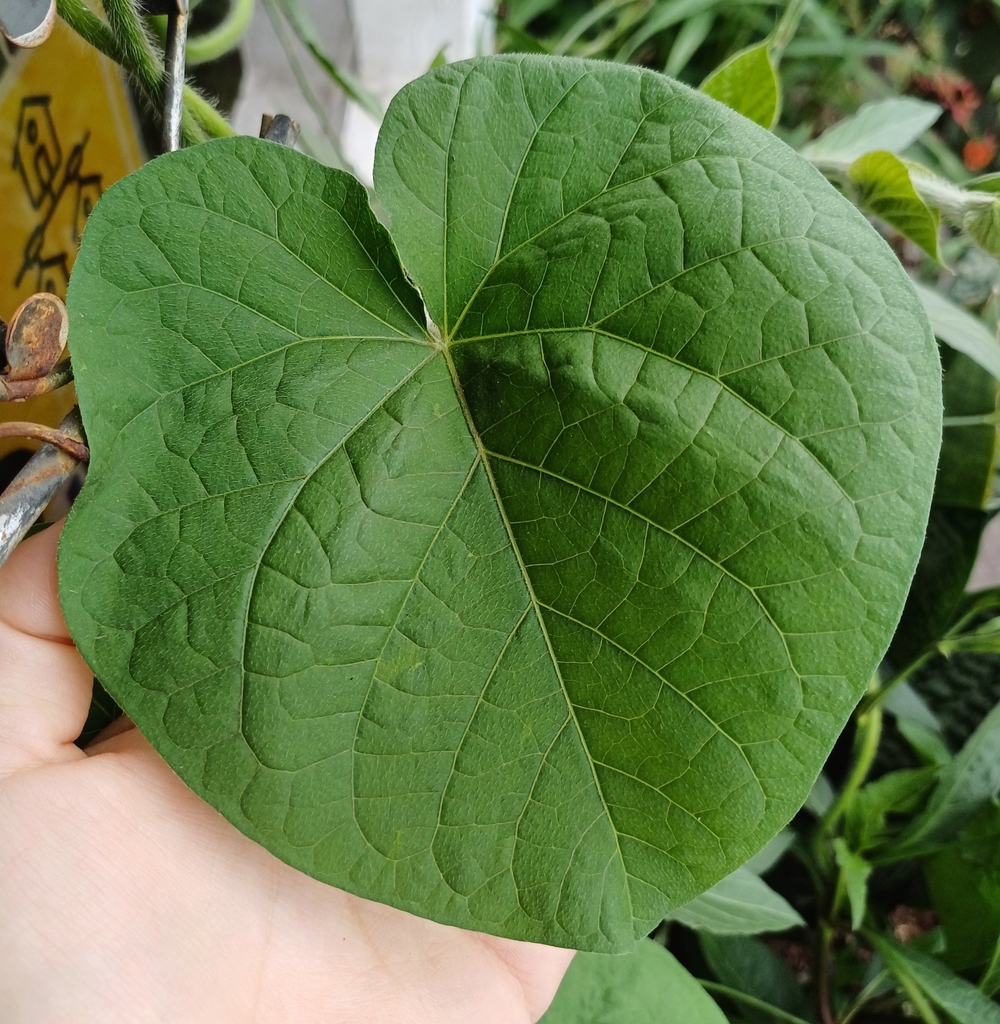
- Large, soft, heart shaped leaves
- White, star shaped nocturnal flowers
- Smooth, green, bottle shaped fruits
- Vigorous, climbing, tendril bearing vines
- Höhe
- 3 bis 9m
- Breite
- 1,5 bis 3m
- Blätter
- green, deciduous
- Blüten
- white, 5 bis 10cm
- Früchte
- green, tan, Autumn
Häufige Probleme
- Powdery mildew — A white fungal growth appears on leaves during humid weather.
- Squash vine borer — Larvae tunnel into the stems, causing the plant to wilt suddenly.
Standort und Pflege
- Vermehrung
- seed
- Pflanzzeit
- Spring
- Überwinterung
- This plant is an annual and will die with the first frost, so collect seeds for next year.
- Im Kübel
- It grows well in large containers of at least 20 liters with a strong support system.
Seed starting
- Soak seeds in warm water for 24 hours.
- Plant in pots indoors 4 weeks before the last frost.
- Transplant into warm soil once danger of frost has passed.
Plant near a strong trellis to keep the heavy fruit off the ground.
Gute Pflanzpartner
- Kapuzinerkresse — They help deter common garden pests.
- Tagetes — These flowers help repel harmful insects.
Fernhalten von
- Potato — They compete for soil nutrients and space.
Ähnliche Arten
- Gurke — They share similar growth habits and family traits.
Botanisches
- Familie
- Cucurbitaceae
- Gattung
- Lagenaria
- Ordnung
- Cucurbitales
- Klasse
- Magnoliopsida
- Ursprüngliche Heimat
- Tropical regions of Africa and Asia.
- Artenschutz
- Not of conservation concern.
It is a vigorous climber that uses tendrils to scale trees and structures in its native tropical habitat.
- Nutzen für Wildtiere
- nectar source
- Bestäuber
- Bienen, Nachtfalter
- Verwendung
- ornamental, crafts, culinary
Im Jahresverlauf
Ökologische Zeigerwerte
- Salzgehalt
- 2/9
- Bodenreaktion
- 6/9
- Licht
- 8/9
- Temperatur
- 8/9
- Feuchtigkeit
- 6/9
- Nährstoffe
- 7/9
Taxonomie abgeglichen mit GBIF.
Häufige Fragen
- When should I harvest?
- Harvest when the stem turns brown and the gourd feels light.
- Can I grow it in a pot?
- Yes, but it needs a very large container and a sturdy trellis.
Woher der Name kommt
The genus name Lagenaria comes from the Greek word for flask, referring to the fruit shape.
Gut zu wissen
- It is one of the oldest cultivated plants in the world.
- The fruits can grow into many strange shapes.
- It is often called the bottle gourd.
- The flowers open at night to attract pollinators.
Probleme mit Bottle Gourd?
Diese Seite bietet allgemeine Infos. Pocket Botanist erkennt Probleme anhand eines Fotos deiner echten Pflanze, passt das Gießen an dein Licht und deinen Standort an und erinnert dich an die Pflege.
Dieser Ratgeber wurde mit KI erstellt und mit der GBIF-Taxonomie abgeglichen. Er dient zur allgemeinen Information und ersetzt keine gärtnerische oder tierärztliche Beratung. Hier erfährst du, wie wir diese Ratgeber erstellen.