 Pocket Botanist
Guía de plantas
Rock rose.
Cistus ladanifer
Pronunciación SIS-tus la-da-NI-fer
También se conoce como Common gum cistus, Gum Rock-rose, labdanum, laudanum


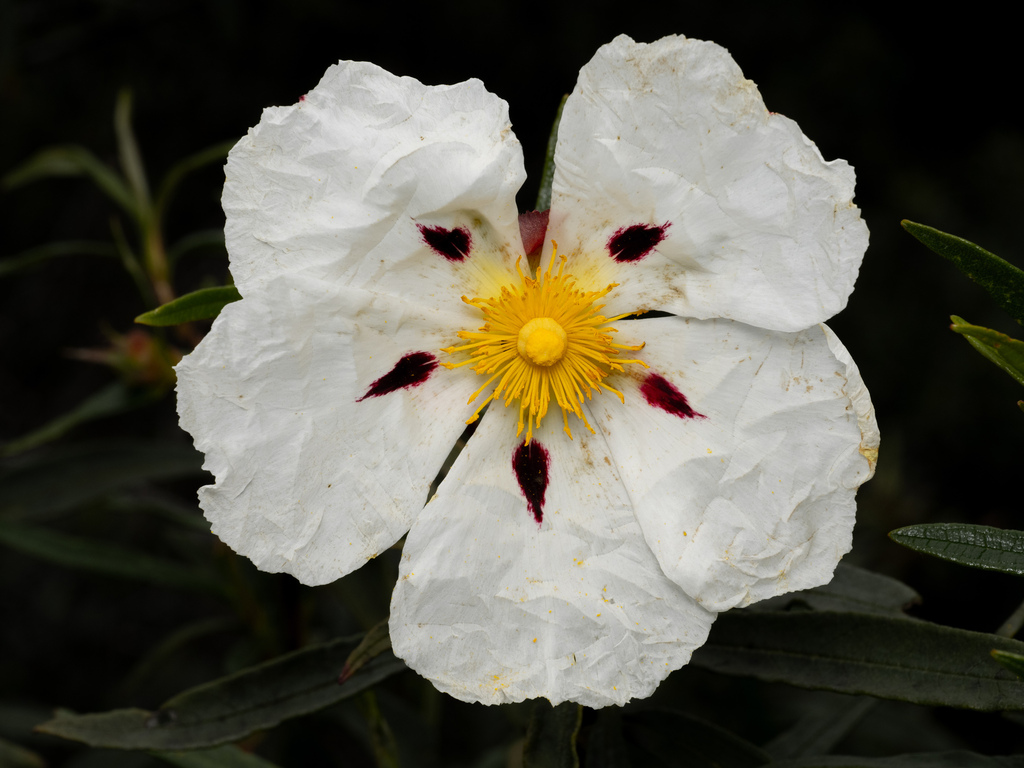
The rock rose is a beautiful, sun-loving shrub that brings a Mediterranean feel to your garden. It produces delicate, papery flowers that look lovely against its sticky, dark green foliage. You'll find it's quite hardy once it gets established in your landscape.

De un vistazo
- Nivel de cuidados
- Fácil
- Tipo de planta
- Evergreen shrub
- Luz
- Full sun
- Luz en interior
- Sol directo
- Riego
- Cada 7 a 14 días
- Tamaño adulto
- 5 to 8 feet
- Ritmo de crecimiento
- Medio
- Rusticidad
- USDA 8 a 10
- Floración
- Late spring to early summer
Cuidados
Plant this shrub in a spot with excellent drainage to keep the roots happy. Watch for yellowing leaves, which often signal that the soil is staying too wet. It thrives with minimal fuss once it settles into its permanent home.
- Riego
- Water deeply during the first year, but allow the soil to dry out significantly between waterings once established.
- Abonado
- A light application of balanced fertilizer in early spring is plenty for this hardy plant.
- Poda
- Lightly trim back the stems after flowering to keep the plant from getting too woody or leggy.
- Trasplante
- Only repot if the plant has clearly outgrown its container, as it prefers to keep its roots undisturbed.
- Suelo
- Sandy or rocky, well-draining soil
- pH del suelo
- Neutral to slightly acidic
- Temperatura
- -10 a 40°C
- Humedad
- 20 a 50%
- Tolerancia a la sequía
- Alta
- Longevidad
- Perennial, typically 10 to 20 years
- Fragancia
- Intensa
- Resistencia a ciervos y conejos
- Alta
Señales de que necesita trasplante
- Roots growing out of the drainage holes
- Water running straight through the pot
- Stunted growth
Seguridad
- Personas
- The plant is generally non-toxic, but the sticky resin can cause skin irritation in sensitive individuals.
- Niños
- The sticky resin may be messy and irritating if handled by small children.
- Alérgenos por contacto
- The sticky resin on the leaves can cause contact dermatitis in some people.
- Alérgenos en el aire
- There are no notable respiratory allergens associated with this plant.
- Comestibilidad
- This plant is not considered edible and may cause digestive upset if ingested.
Cómo identificarla
- Sticky, resinous dark green leaves
- Large white flowers with maroon spots
- Shrubby, evergreen growth habit
- Distinctive aromatic scent when touched
- Altura
- 1,5 a 2,5m
- Anchura
- 1 a 2m
- Hojas
- dark green, sticky, evergreen
- Flores
- white, maroon, 7 a 10cm
- Frutos
- brown, Late summer
Problemas frecuentes
- Root rot — Occurs when the soil stays too wet for too long.
Cómo cultivarla
- Propagación
- cuttings, seed
- Cuándo plantar
- spring, autumn
- Cuidados en invierno
- Ensure the plant is kept in a very well-draining spot to avoid winter root rot. Protect from severe, prolonged freezing winds.
- En maceta
- It grows well in large pots with excellent drainage, provided it receives plenty of sun.
Semi-ripe cuttings
- 1. Take 10 cm cuttings in late summer.
- 2. Remove lower leaves.
- 3. Dip in rooting hormone.
- 4. Place in a sandy, well-draining mix.
- 5. Keep in a bright, cool spot until rooted.
Group this plant with other Mediterranean species that prefer lean, dry soil and full sun.
Buenas compañeras
- Lavanda inglesa — They share similar requirements for sun and well-draining soil.
- Rosemary — This companion thrives in the same dry, sunny conditions.
- Thyme — It makes a great low-growing partner for the base of the shrub.
Especies parecidas
- Cistus salviifolius — A smaller relative with similar white flowers.
Ciencia
- Familia
- Cistaceae
- Género
- Cistus
- Orden
- Malvales
- Clase
- Magnoliopsida
- Distribución natural
- Western Mediterranean region.
- Conservación
- This species is widespread and not of conservation concern.
It is a fire-adapted species that often colonizes disturbed or rocky Mediterranean landscapes.
- Valor para la fauna
- nectar source
- Polinizadores
- abejas, mariposas
- Usos
- ornamental shrub, xeriscaping, fragrance industry
A lo largo del año
Indicadores ecológicos
- Salinidad
- 3/9
- Reacción del suelo
- 5/9
- Luz
- 8/9
- Temperatura
- 7/9
- Humedad
- 2/9
- Nutrientes
- 2/9
Taxonomía cotejada con GBIF.
Lo que más preguntan
- Does it need pruning?
- Light pruning after flowering helps keep the shrub compact.
- Can it grow in pots?
- It prefers the ground but can grow in large, well-draining containers.
De dónde viene el nombre
The name Cistus comes from the Greek word kistos, while ladanifer refers to its ability to bear labdanum resin.
Bueno saberlo
- The resin is highly flammable.
- It thrives in poor, rocky soils.
- The flowers typically last for only one day.
- It is a classic component of Mediterranean maquis shrubland.
También en
¿Tu rock rose tiene mal aspecto?
Esta página es una guía general. Pocket Botanist diagnostica problemas a partir de una foto de tu propia planta, calcula el riego según tu luz y tus condiciones, y te avisa cuando toca cuidarla.
Esta guía se ha generado con IA y se ha cotejado con la taxonomía de GBIF. Es información general, no asesoramiento botánico ni veterinario. Descubre cómo elaboramos estas guías.