 Pocket Botanist
Pflanzenratgeber
Rock rose.
Cistus ladanifer
Aussprache SIS-tus la-da-NI-fer
Auch bekannt als Common gum cistus, Gum Rock-rose, labdanum, laudanum


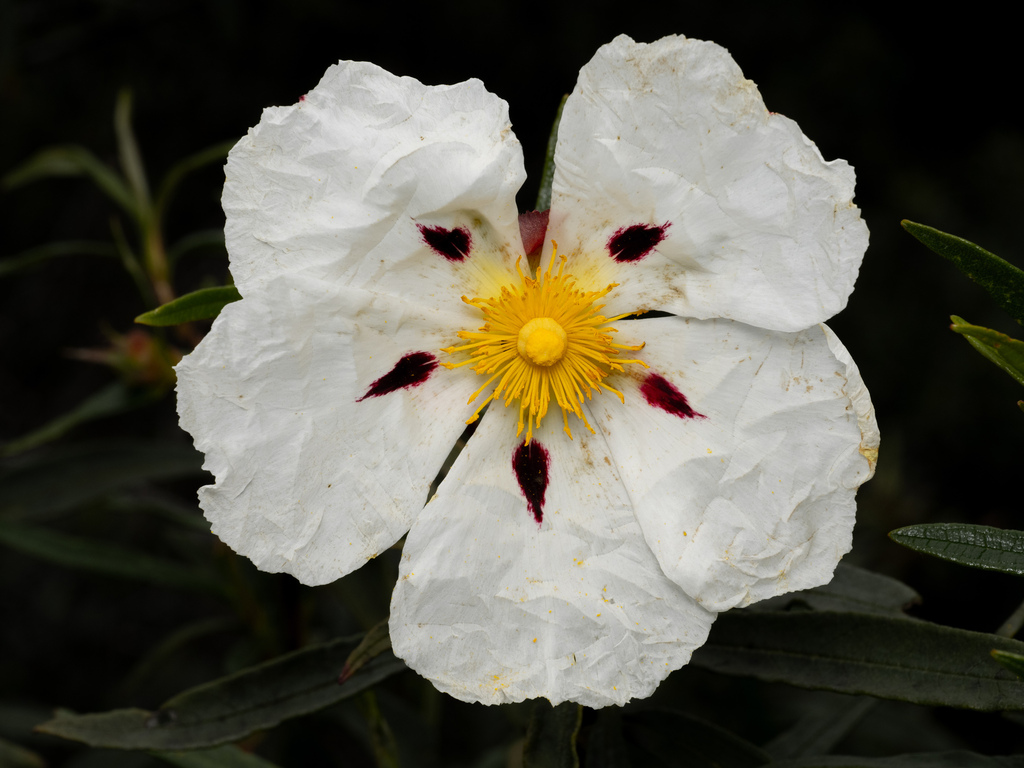
The rock rose is a beautiful, sun-loving shrub that brings a Mediterranean feel to your garden. It produces delicate, papery flowers that look lovely against its sticky, dark green foliage. You'll find it's quite hardy once it gets established in your landscape.

Auf einen Blick
- Pflegestufe
- Einfach
- Pflanzenart
- Evergreen shrub
- Licht
- Full sun
- Licht im Innenraum
- Direkte Sonne
- Gießen
- Alle 7 bis 14 Tage
- Endgröße
- 5 to 8 feet
- Wachstum
- Mittel
- Winterhärte
- USDA 8 bis 10
- Blütezeit
- Late spring to early summer
Pflege
Plant this shrub in a spot with excellent drainage to keep the roots happy. Watch for yellowing leaves, which often signal that the soil is staying too wet. It thrives with minimal fuss once it settles into its permanent home.
- Gießen
- Water deeply during the first year, but allow the soil to dry out significantly between waterings once established.
- Düngen
- A light application of balanced fertilizer in early spring is plenty for this hardy plant.
- Schneiden
- Lightly trim back the stems after flowering to keep the plant from getting too woody or leggy.
- Umtopfen
- Only repot if the plant has clearly outgrown its container, as it prefers to keep its roots undisturbed.
- Boden
- Sandy or rocky, well-draining soil
- Boden-pH
- Neutral to slightly acidic
- Temperatur
- -10 bis 40°C
- Luftfeuchtigkeit
- 20 bis 50%
- Trockenheitstoleranz
- Hoch
- Lebensdauer
- Perennial, typically 10 to 20 years
- Duft
- Stark
- Wildverbiss-Resistenz
- Hoch
Anzeichen fürs Umtopfen
- Roots growing out of the drainage holes
- Water running straight through the pot
- Stunted growth
Sicherheit
- Menschen
- The plant is generally non-toxic, but the sticky resin can cause skin irritation in sensitive individuals.
- Kinder
- The sticky resin may be messy and irritating if handled by small children.
- Kontaktallergene
- The sticky resin on the leaves can cause contact dermatitis in some people.
- Allergene in der Luft
- There are no notable respiratory allergens associated with this plant.
- Essbarkeit
- This plant is not considered edible and may cause digestive upset if ingested.
So erkennst du die Pflanze
- Sticky, resinous dark green leaves
- Large white flowers with maroon spots
- Shrubby, evergreen growth habit
- Distinctive aromatic scent when touched
- Höhe
- 1,5 bis 2,5m
- Breite
- 1 bis 2m
- Blätter
- dark green, sticky, evergreen
- Blüten
- white, maroon, 7 bis 10cm
- Früchte
- brown, Late summer
Häufige Probleme
- Root rot — Occurs when the soil stays too wet for too long.
Standort und Pflege
- Vermehrung
- cuttings, seed
- Pflanzzeit
- spring, autumn
- Überwinterung
- Ensure the plant is kept in a very well-draining spot to avoid winter root rot. Protect from severe, prolonged freezing winds.
- Im Kübel
- It grows well in large pots with excellent drainage, provided it receives plenty of sun.
Semi-ripe cuttings
- 1. Take 10 cm cuttings in late summer.
- 2. Remove lower leaves.
- 3. Dip in rooting hormone.
- 4. Place in a sandy, well-draining mix.
- 5. Keep in a bright, cool spot until rooted.
Group this plant with other Mediterranean species that prefer lean, dry soil and full sun.
Gute Pflanzpartner
- Echter Lavendel — They share similar requirements for sun and well-draining soil.
- Rosemary — This companion thrives in the same dry, sunny conditions.
- Thyme — It makes a great low-growing partner for the base of the shrub.
Ähnliche Arten
- Cistus salviifolius — A smaller relative with similar white flowers.
Botanisches
- Familie
- Cistaceae
- Gattung
- Cistus
- Ordnung
- Malvales
- Klasse
- Magnoliopsida
- Ursprüngliche Heimat
- Western Mediterranean region.
- Artenschutz
- This species is widespread and not of conservation concern.
It is a fire-adapted species that often colonizes disturbed or rocky Mediterranean landscapes.
- Nutzen für Wildtiere
- nectar source
- Bestäuber
- Bienen, Schmetterlinge
- Verwendung
- ornamental shrub, xeriscaping, fragrance industry
Im Jahresverlauf
Ökologische Zeigerwerte
- Salzgehalt
- 3/9
- Bodenreaktion
- 5/9
- Licht
- 8/9
- Temperatur
- 7/9
- Feuchtigkeit
- 2/9
- Nährstoffe
- 2/9
Taxonomie abgeglichen mit GBIF.
Häufige Fragen
- Does it need pruning?
- Light pruning after flowering helps keep the shrub compact.
- Can it grow in pots?
- It prefers the ground but can grow in large, well-draining containers.
Woher der Name kommt
The name Cistus comes from the Greek word kistos, while ladanifer refers to its ability to bear labdanum resin.
Gut zu wissen
- The resin is highly flammable.
- It thrives in poor, rocky soils.
- The flowers typically last for only one day.
- It is a classic component of Mediterranean maquis shrubland.
Auch in
Probleme mit Rock rose?
Diese Seite bietet allgemeine Infos. Pocket Botanist erkennt Probleme anhand eines Fotos deiner echten Pflanze, passt das Gießen an dein Licht und deinen Standort an und erinnert dich an die Pflege.
Dieser Ratgeber wurde mit KI erstellt und mit der GBIF-Taxonomie abgeglichen. Er dient zur allgemeinen Information und ersetzt keine gärtnerische oder tierärztliche Beratung. Hier erfährst du, wie wir diese Ratgeber erstellen.