 Pocket Botanist
Pflanzenratgeber
Rosemary.
Salvia rosmarinus
Aussprache SAHL-vee-uh ros-mah-REE-nus
Auch bekannt als Rosemary


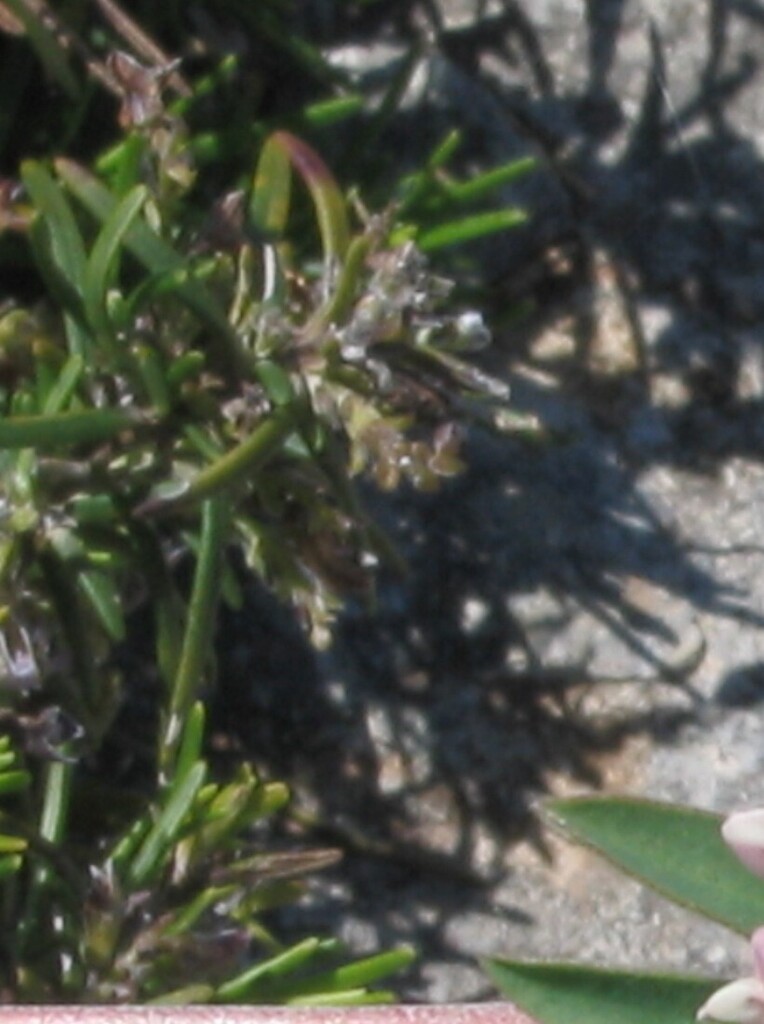
Rosemary is a woody, perennial herb with fragrant, needle-like leaves. It's a popular culinary herb and an attractive addition to gardens, especially those that are dry and sunny.
Auf einen Blick
- Care level
- Easy
- Plant type
- Herbaceous perennial / shrub
- Light
- Full sun
- Indoor light
- direct
- Water
- Every 7 to 21 days
- Mature size
- Up to 2m (6.5ft) tall and wide
- Growth rate
- medium
- Hardiness
- USDA 7 to 11
- Bloom time
- Spring to fall
Pflege
Ensure excellent drainage and full sun; avoid overwatering. Prune to maintain shape and encourage bushier growth.
- Watering
- Water thoroughly when the top inch of soil is dry; reduce watering in cooler months.
- Feeding
- Generally does not require much fertilizer; a light feeding in spring is sufficient if needed.
- Pruning
- Prune after flowering or in spring to shape and encourage growth; avoid cutting into old wood.
- Repotting
- Repot when root-bound, typically every 2-3 years, in spring.
- Soil
- Well-draining, sandy, or gravelly soil
- Soil pH
- Slightly acidic to neutral (6.0-7.0)
- Temperature
- -12 to 35°C
- Humidity
- 30 to 50%
Sicherheit
- Edibility
- Edible, but always confirm identification before consuming.
So erkennst du die Pflanze
- Needle-like, aromatic leaves
- Whorls of small flowers
- Woody, upright stems
- Evergreen foliage
- Fragrant resinous scent
- Height
- 0.6 to 2m
- Spread
- 0.6 to 2m
- Leaves
- Green, Silvery-green, evergreen
- Flowers
- Blue, Purple, White, Pink, 0.5 to 1.5cm
Häufige Probleme
- Root rot — Caused by overwatering and poor drainage, especially in cool, damp conditions.
- Powdery mildew — A fungal disease that can affect foliage in humid conditions with poor air circulation.
- Spider mites — Tiny pests that thrive in dry conditions and can cause yellowing or stippling of leaves.
Standort und Pflege
- Propagation
- Cuttings, Seed
- When to plant
- Spring, Fall
Plant rosemary with other Mediterranean herbs that prefer dry, sunny conditions.
Gute Pflanzpartner
- Lavender — Both thrive in full sun and well-drained soil, making them excellent garden companions.
- Thyme — They share similar growing conditions and culinary uses, creating a complementary herb garden.
- Sage — These herbs appreciate similar sunny, dry conditions and well-draining soil.
- Tomatoes — Rosemary is said to repel tomato hornworms, benefiting the tomato plants.
Fernhalten von
- Mint — Mint can be highly invasive and may outcompete rosemary for space and resources.
Ähnliche Arten
- Creeping Rosemary — This is a prostrate form of the same species, differing mainly in its growth habit.
- Greek Oregano — Shares similar aromatic qualities and a preference for sunny, well-drained conditions.
Botanisches
- Family
- Lamiaceae
- Genus
- Salvia
- Order
- Lamiales
- Class
- Magnoliopsida
- Native range
- Mediterranean region
It thrives in well-drained, sunny locations and is adapted to dry Mediterranean climates.
- Value to wildlife
- nectar source, pollen source
- Pollinators
- bees, butterflies, moths, hummingbirds
- Uses
- Culinary herb, Aromatic, Medicinal (traditional), Ornamental
Im Jahresverlauf
Ökologische Zeigerwerte
- Salinity
- 4/9
- Soil reaction
- 6/9
- Light
- 8/9
- Temperature
- 7/9
- Moisture
- 3/9
- Nutrients
- 3/9
Taxonomie abgeglichen mit GBIF.
Häufige Fragen
- Can rosemary be grown indoors?
- Yes, but it needs a very sunny spot, like a south-facing window, and good air circulation.
- Why is my rosemary wilting?
- This is often due to overwatering, leading to root rot, or extreme underwatering. Check the soil moisture.
- Does rosemary need fertilizer?
- Not usually. It thrives in lean soil and can be harmed by over-fertilization.
Woher der Name kommt
The name 'Rosemary' comes from the Latin 'ros marinus,' meaning 'dew of the sea,' likely due to its coastal native habitat and fragrant scent.
Gut zu wissen
- Rosemary essential oil has antimicrobial properties.
- It's often used in potpourri and sachets for its strong fragrance.
- Ancient Greeks and Romans used rosemary for remembrance.
Geht es deiner rosemary nicht gut?
Diese Seite bietet allgemeine Infos. Pocket Botanist erkennt Probleme anhand eines Fotos deiner echten Pflanze, passt das Gießen an dein Licht und deinen Standort an und erinnert dich an die Pflege.
Dieser Ratgeber wurde mit KI erstellt und mit der GBIF-Taxonomie abgeglichen. Er dient zur allgemeinen Information und ersetzt keine gärtnerische oder tierärztliche Beratung. Hier erfährst du, wie wir diese Ratgeber erstellen.