 Pocket Botanist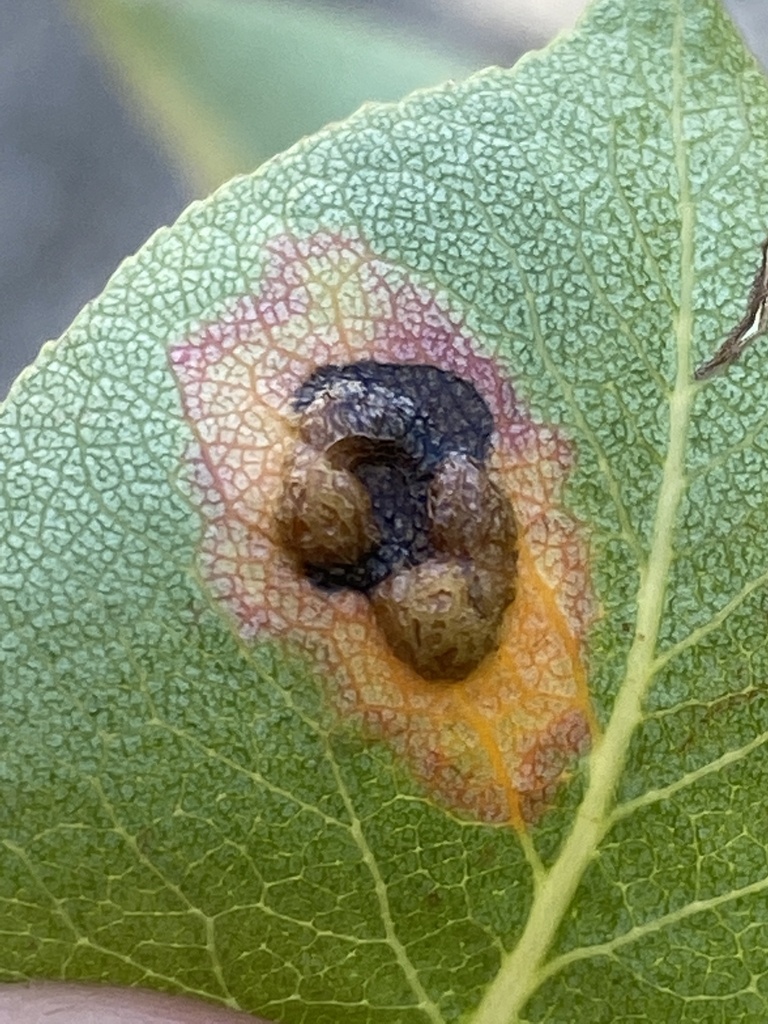
Symptoms by part
Leaves
Small, bright orange or red spots appear on the upper surface of the leaves in spring, which later develop into raised, blister like structures on the underside.
Causes
- The presence of nearby juniper plants, which act as an alternate host for the fungus.
- Wet and humid weather conditions that allow fungal spores to travel through the air.
- Poor air circulation around the tree canopy.
Could be confused with
- Pear Leaf Blister Mite · Blister mites cause small, dark, or reddish galls that do not have the bright orange, powdery spore masses characteristic of rust.
- Pear Scab · Scab appears as dark, velvety, or olive green spots rather than bright orange patches.
Treatment
- Prune away and destroy any heavily infected leaves as soon as you spot them to reduce the spread of spores.
- Remove and dispose of all fallen leaves from beneath the tree in autumn to prevent the fungus from overwintering in the debris.
- Thin out the tree canopy during the dormant season to improve airflow and reduce humidity around the foliage.
Without chemicals
- Remove any juniper plants within a few hundred meters of your pear tree to break the disease cycle.
- Plant resistant pear varieties if you are starting a new orchard.
- Ensure the tree is planted in a sunny, open spot with good natural ventilation.
Chemical options
- Sulfur, apply as a spray to the foliage when new leaves emerge in spring, follow the label.
- Potassium bicarbonate, spray on leaves at the first sign of infection, follow the label.
Preventing it
- Keep the area around the base of the tree clear of weeds and leaf litter.
- Avoid overhead watering, which keeps leaves wet and encourages fungal growth.
- Maintain a distance of at least 300 meters between your pear trees and any juniper bushes.
Season
The warm growing season, specifically from late spring through mid summer.
Spread risk
Moderate
Severity
Moderate
When to act
Act as soon as you see the first orange spots in spring to prevent the infection from spreading to the rest of the canopy. If the tree is severely weakened over several years, it may be time to consult a tree surgeon for professional assessment or removal.
Think it's Pear Rust?
This guide covers the general picture. Pocket Botanist looks at your actual plant from a photo and tells you what's really going on, how serious it is, and what to try first. Identification and a health check are free.


Questions people ask
- Will Pear Rust kill my tree?
- It rarely kills a mature, healthy tree, but it can significantly weaken it and reduce fruit production if left untreated for many years.
- Can I eat the fruit from an infected tree?
- Yes, the fruit is generally safe to eat, though it may be smaller or less flavorful if the tree has lost a significant amount of leaf surface area.
- Does the rust stay on the tree all winter?
- No, the fungus requires a juniper host to complete its life cycle, so it does not stay on the pear tree during the winter months.
Plants it affects
This guide was generated with AI and is general information, not horticultural advice. Read about how we build these guides.