 Pocket Botanist
Symptoms by part
Leaves
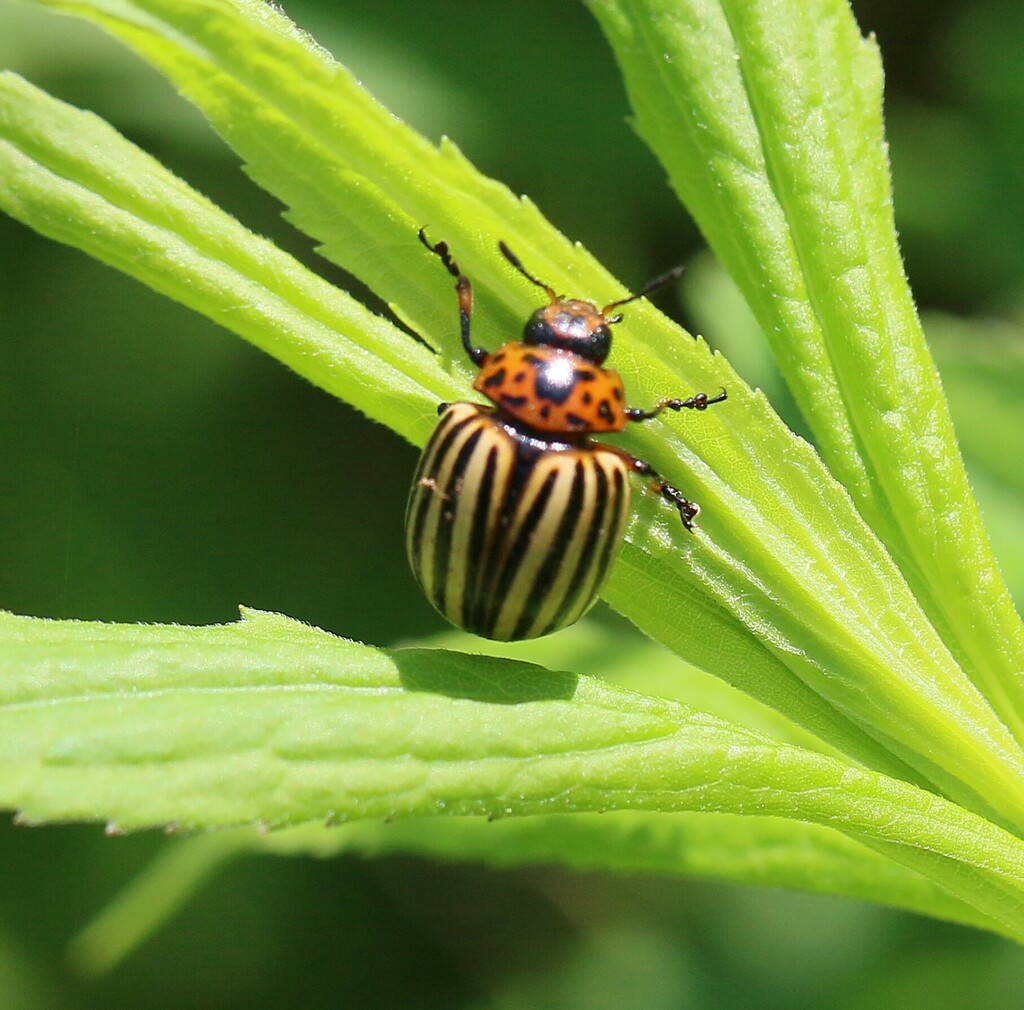
You will see clusters of bright orange eggs on the undersides of leaves, followed by reddish, humpbacked larvae and striped adult beetles chewing large, irregular holes or stripping the leaves entirely to the veins.
Causes
- Planting potatoes in the same location year after year.
- Overwintering adults emerging from the soil near host plants in early spring.
- Lack of natural predators like ladybugs or lacewings in the garden.
Could be confused with
- False Potato Beetle · The false potato beetle has different stripe patterns and prefers weeds like nightshade over potato plants.
- Flea Beetle · Flea beetles create tiny, pinprick holes rather than the large, ragged gaps caused by potato beetles.
Find out what's really wrong with your plant
Problems that look alike are easy to mix up. Pocket Botanist looks at a photo of your actual plant and tells you what's going on, how serious it is, and what to try first. Identification and a health check are free.



Scan with your phone's camera to get the app
Or go to pocketbotanist.app/get on your phone
Treatment
- Handpick adult beetles and larvae from the leaves during the early morning when they are less active.
- Drop the collected beetles into a bucket of soapy water to kill them.
- Crush any bright orange egg clusters found on the undersides of leaves.
- Apply spinosad to the foliage if the infestation is widespread, follow the label.
Without chemicals
- Use floating row covers early in the season to prevent adults from landing on your plants.
- Place straw mulch around the base of plants to hinder the movement of larvae.
- Install deep trenches lined with plastic around the garden perimeter to trap walking beetles.
Chemical options
- Spinosad, spray directly onto the foliage where larvae are feeding, follow the label.
Preventing it
- Practice strict crop rotation by moving potato plants to a different area of the garden each year.
- Plant early maturing varieties to harvest before the beetle population peaks.
- Encourage natural predators by planting diverse flowers nearby.
Season
The warm growing season.
Spread risk
High
Severity
High
When to act
Act as soon as you spot the first adult beetle or egg cluster on your plants. If the plants are completely defoliated and the tubers are not yet mature, the plant will likely not recover and should be removed.
Keep your plants healthy from here
Save your plants in Pocket Botanist and you get care reminders timed for each one, plus a care history that shows what worked. Identification and a health check are free.
Questions people ask
- Can I just pick them off?
- Yes, handpicking is highly effective for small gardens if you do it consistently every few days.
- Do these beetles bite people?
- No, they are strictly plant eaters and do not bite or sting humans.
- Will they eat my tomatoes?
- While they prefer potatoes, they will occasionally feed on tomatoes, eggplants, and peppers if they are nearby.
Plants it affects
Answers plant by plant
This guide was generated with AI on and is general information, not horticultural advice. Read about how we build these guides.