 Pocket Botanist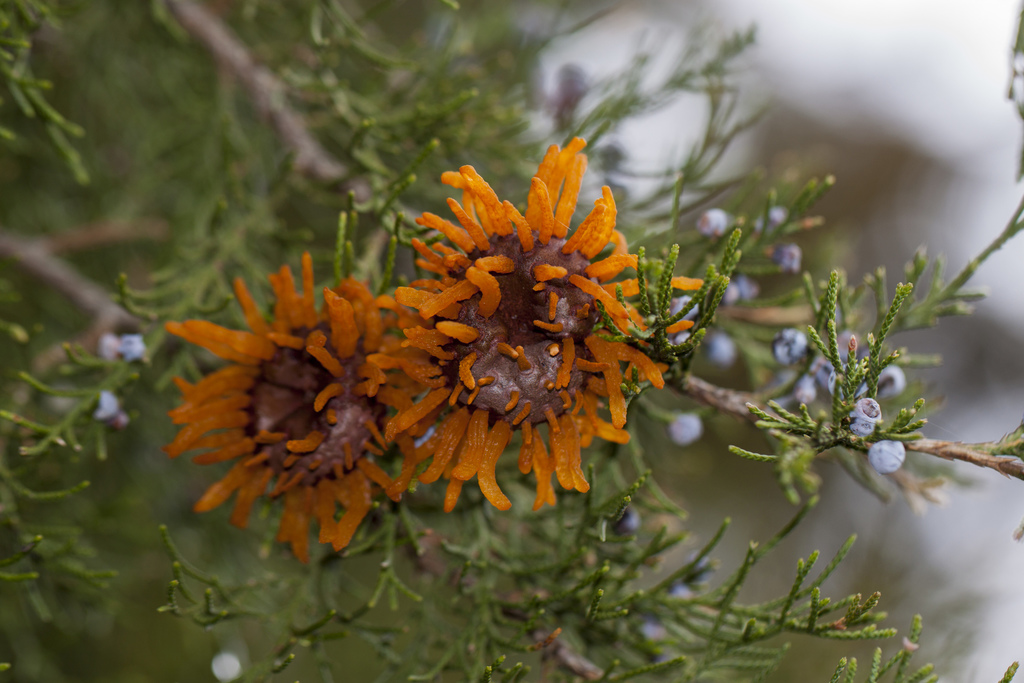
Symptoms by part
Leaves
Bright yellow or orange spots appear on the upper surface, often followed by small, tube like structures on the underside.
Fruit
Small, raised, orange or yellow lesions develop on the surface, which can lead to distorted growth or premature fruit drop.
Causes
- The presence of both juniper and apple or crabapple trees in the same landscape.
- Extended periods of wet, humid weather during the spring.
- Windborne spores traveling from nearby infected juniper galls.
Could be confused with
- Apple Scab · Apple scab creates dark, olive green to black velvety spots rather than bright orange or yellow lesions.
- Leaf Spot · Common fungal leaf spots are typically brown or gray and lack the distinct orange, tube like structures found on the undersides of rust infected leaves.
Treatment
- Prune out and destroy any visible galls on nearby juniper trees during the winter months.
- Remove and dispose of all fallen leaves and fruit from beneath the tree to reduce the amount of fungus present for the next season.
- Apply sulfur to the foliage of susceptible trees as soon as the first signs of spring growth appear, follow the label.
Without chemicals
- Plant resistant varieties of apple and crabapple trees to avoid the disease entirely.
- Maintain a physical distance of at least 100 to 200 meters between juniper trees and apple or crabapple trees.
- Prune the canopy of apple trees to improve airflow and allow leaves to dry faster after rain.
Chemical options
- Sulfur, apply to leaves early in the season to protect against spore infection, follow the label.
- Potassium bicarbonate, spray on foliage to alter the pH and inhibit fungal growth, follow the label.
Preventing it
- Choose apple and crabapple cultivars specifically labeled as rust resistant.
- Inspect juniper trees in late winter for brown, woody galls and remove them before they swell and produce orange jelly in the spring.
- Keep the area around the base of the trees clean by raking up all debris every autumn.
Season
The warm growing season, specifically during spring when temperatures are mild and moisture is frequent.
Spread risk
Moderate
Severity
Moderate
When to act
Act as soon as you see the first yellow spots on the leaves in spring. If the tree is heavily infected year after year and loses most of its leaves, consider replacing it with a more resistant variety.
Think it's Cedar Apple Rust?
This guide covers the general picture. Pocket Botanist looks at your actual plant from a photo and tells you what's really going on, how serious it is, and what to try first. Identification and a health check are free.


Questions people ask
- Will cedar apple rust kill my tree?
- It rarely kills a mature, healthy tree, but it can significantly weaken it over time if the tree loses its leaves prematurely every year.
- Can I eat fruit affected by cedar apple rust?
- Yes, the fruit is safe to eat, though it may be smaller, misshapen, or less appealing due to the spots on the skin.
- Do I have to remove my juniper tree?
- You do not have to remove it, but keeping it pruned to remove galls or planting resistant apple varieties nearby can help manage the problem.
This guide was generated with AI and is general information, not horticultural advice. Read about how we build these guides.