 Pocket Botanist
Symptoms by part
Leaves
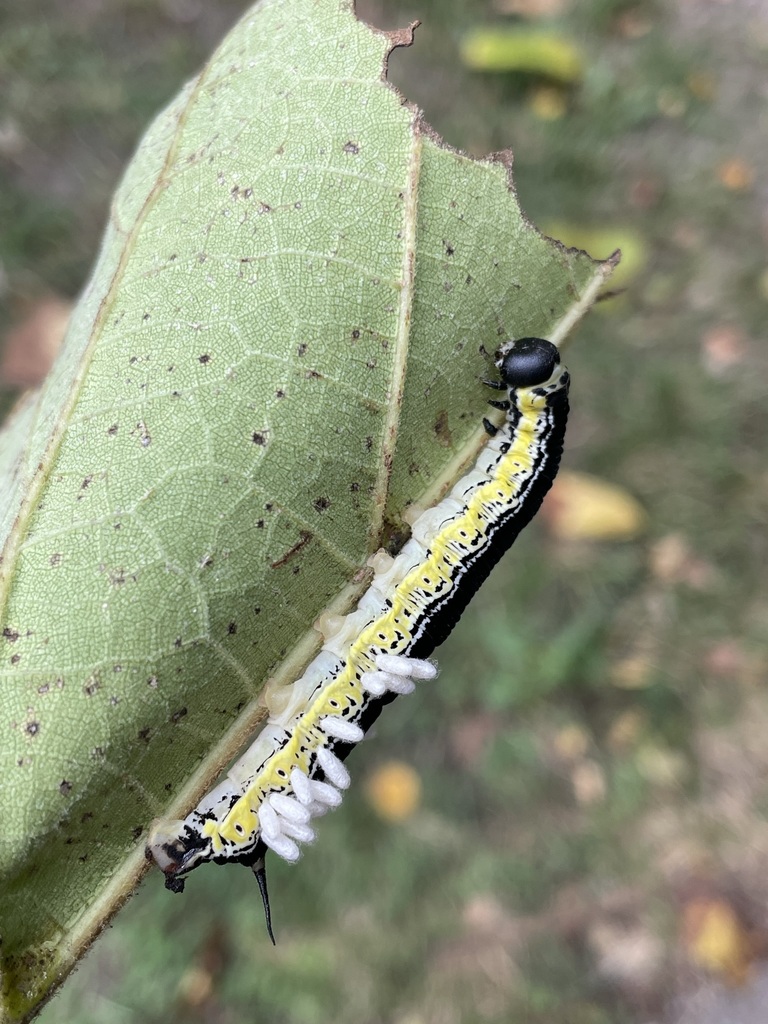
You will see irregular holes or entire leaves missing, often leaving only the main veins behind as the caterpillars consume the tissue.
Causes
- The presence of adult moths laying eggs on the undersides of catalpa leaves during the warm growing season.
- A lack of natural predators like parasitic wasps or birds in the immediate area to keep the caterpillar population in check.
Could be confused with
- Fall Webworm · Fall webworms create visible silken webs over branches, whereas Catalpa Sphinx caterpillars feed openly without spinning webs.
- Japanese Beetles · Japanese beetles leave a skeletonized, lacy appearance on leaves, while sphinx caterpillars consume the entire leaf blade.
Find out what's really wrong with your plant
Problems that look alike are easy to mix up. Pocket Botanist looks at a photo of your actual plant and tells you what's going on, how serious it is, and what to try first. Identification and a health check are free.



Scan with your phone's camera to get the app
Or go to pocketbotanist.app/get on your phone
Treatment
- Pick the caterpillars off the leaves by hand if the tree is small enough to reach.
- Shake the branches gently to dislodge the caterpillars onto a drop cloth and dispose of them.
- Apply a spray containing Bacillus thuringiensis to the foliage when caterpillars are young and actively feeding, follow the label.
- Apply a spray containing spinosad to the foliage if the infestation is heavy and caterpillars are larger, follow the label.
Without chemicals
- Hand picking caterpillars from the leaves.
- Using a drop cloth to collect and remove dislodged caterpillars.
- Encouraging natural predators like birds and parasitic wasps in the garden.
Chemical options
- Bacillus thuringiensis, apply to foliage when caterpillars are small, follow the label.
- Spinosad, apply to foliage when caterpillars are present, follow the label.
Preventing it
- Keep the area around the base of the tree clear of debris to reduce hiding spots for pupating larvae.
- Promote a diverse garden environment that attracts birds and beneficial insects which prey on caterpillars.
Season
The warm growing season.
Spread risk
Moderate
Severity
Moderate
When to act
Act as soon as you notice defoliation or see the caterpillars on the leaves. You do not need to remove the tree, as it will likely push out new growth once the caterpillars are gone.
Keep your plants healthy from here
Save your plants in Pocket Botanist and you get care reminders timed for each one, plus a care history that shows what worked. Identification and a health check are free.
Questions people ask
- Will my catalpa tree die if it loses all its leaves?
- Usually no. Catalpa trees are resilient and will often grow a new set of leaves later in the same season after the caterpillars have finished feeding.
- Are these caterpillars harmful to people or pets?
- No, they are not harmful to touch, though they are strictly interested in eating your catalpa tree.
- Do I need to spray the whole tree?
- Only if the infestation is severe. For smaller trees, hand picking is often enough to manage the population.
Plants it affects
Answers plant by plant
This guide was generated with AI on and is general information, not horticultural advice. Read about how we build these guides.