 Pocket Botanist
Plant guide
Catalpa.
Catalpa
Pronounced kuh-TAL-puh big-no-nee-OY-deez
Also known as Catalpa, Catalpas



Scan with your phone's camera to get the app
Or go to pocketbotanist.app/get on your phone
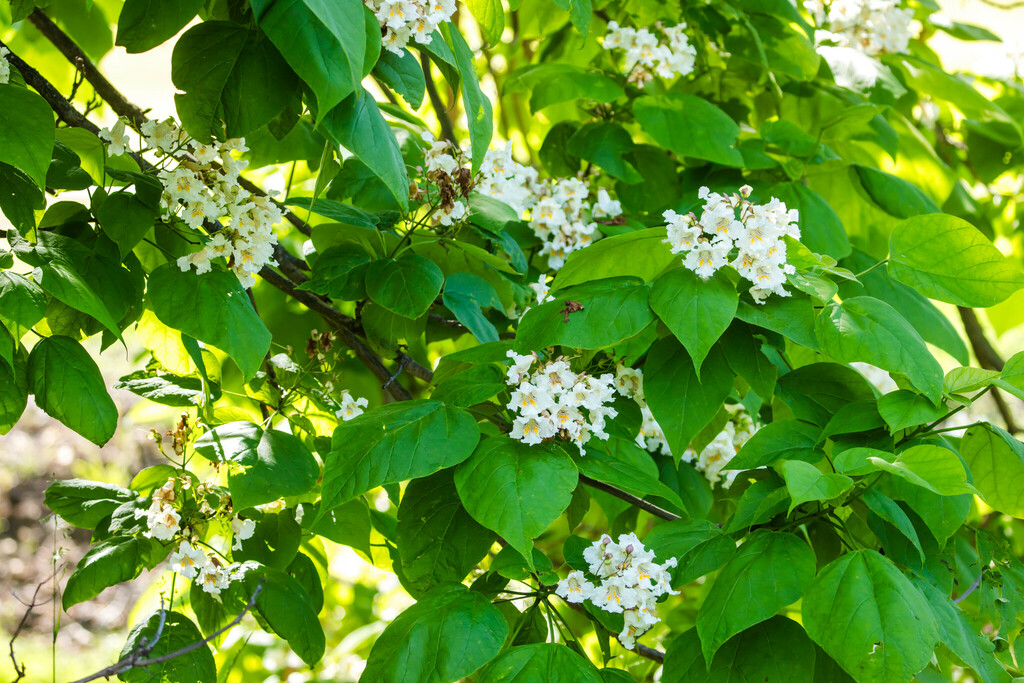
The Southern catalpa is a stunning deciduous tree known for its large, heart shaped leaves and showy clusters of white flowers. It makes a fantastic shade tree for larger landscapes. You will love the unique, long bean like seed pods that persist through the winter.

At a glance
- Care level
- Easy
- Plant type
- Deciduous tree
- Light
- Full sun to partial shade
- Indoor light
- Direct sun
- Water
- Every 7 to 14 days
- Mature size
- 12 to 18 meters
- Growth rate
- Fast
- Hardiness
- USDA 4 to 8
- Bloom time
- Late spring to early summer
Care
Plant this tree in a spot with plenty of room for its wide canopy. Keep an eye out for leaf spot or powdery mildew during humid spells. Ensure the soil stays consistently moist while the tree is establishing itself.
- Watering
- Water deeply during dry spells to keep the soil moist but not waterlogged.
- Feeding
- Apply a balanced slow release fertilizer in early spring before new growth begins.
- Pruning
- Prune in late winter while the tree is dormant to remove dead branches or shape the canopy.
- Repotting
- Repotting is generally not applicable for mature trees in the landscape.
- Soil
- Moist, well draining, fertile soil
- Soil pH
- Acidic to neutral
- Temperature
- -30 to 35°C
- Humidity
- 40 to 70%
- Drought tolerance
- Moderate
- Lifespan
- Perennial, typically 50 to 100 years
- Fragrance
- Light
- Deer and rabbits
- Moderate
Safety
- People
- All parts of the tree are considered toxic if ingested.
- Pets
- The plant is generally considered non-toxic to cats and dogs.
- Children
- The long, dangling seed pods can be a choking hazard for small children.
- Contact allergens
- The leaves and sap may cause skin irritation in sensitive individuals.
- Airborne allergens
- The pollen can be a moderate allergen for some people during the flowering season.
- Edibility
- The plant is not considered edible and ingestion may cause illness.
How to identify it
- Large heart shaped leaves
- Showy white bell shaped flowers
- Long slender bean like seed pods
- Rough grayish brown bark
- Height
- 12 to 20m
- Spread
- 9 to 15m
- Leaves
- green, deciduous
- Flowers
- white, purple, yellow, 3 to 5cm
- Fruit
- brown, Autumn
Problems to watch for
- Catalpa Sphinx MothCommon
- Leaf SpotUncommon
- Powdery MildewUncommon
- Verticillium WiltUncommon
Check your catalpa from a photo
Pocket Botanist looks at a photo of your plant and tells you what's wrong and what to try first.
Scan with your phone's camera to get the app
Or go to pocketbotanist.app/get on your phone
Growing it
- Propagation
- seed, cuttings
- When to plant
- spring, autumn
- Overwintering
- No special winter care is needed for established trees. Mulch around the base to protect roots in harsh climates.
- In containers
- Not suitable for containers due to its massive size and extensive root system.
Seed
- 1. Collect dry pods in late autumn.
- 2. Extract seeds and store in a cool, dry place.
- 3. Sow seeds in spring in well-draining soil.
Softwood Cuttings
- 1. Take cuttings in early summer.
- 2. Dip the base in rooting hormone.
- 3. Place in a moist, sandy medium until roots form.
Plant shade-loving perennials beneath the canopy to take advantage of the summer shade.
Grows well with
Similar species
- Southern Catalpa · It is a closely related species with a similar growth habit and flower structure.
Science
- Family
- Bignoniaceae
- Genus
- Catalpa
- Order
- Lamiales
- Class
- Magnoliopsida
- Native range
- Eastern North America
- Conservation
- Not currently of conservation concern.
It thrives in moist, fertile soils near riverbanks and floodplains in its native range.
- Value to wildlife
- nectar source
- Pollinators
- bees, butterflies, moths
- Uses
- shade tree, ornamental specimen, honey production
Through the year
Ecological indicators
- Salinity
- 2/9
- Soil reaction
- 6/9
- Light
- 7/9
- Temperature
- 5/9
- Moisture
- 6/9
- Nutrients
- 6/9
Taxonomy resolved against GBIF.
Questions people ask
- Is the Catalpa tree messy?
- Yes, it drops large leaves in autumn and long seed pods throughout the winter.
- How fast does it grow?
- It is a vigorous grower that can add several feet of height per year under good conditions.
Where the name comes from
The name Catalpa is derived from the Muscogee name for the tree, and the Italian botanist Giovanni Antonio Scopoli used it when he formally named the genus.
Good to know
- The wood is remarkably rot-resistant and was historically used for fence posts.
- Catalpa flowers are quite showy and resemble orchids.
- The name comes from the Muscogee word for the tree.
- It is a fast-growing tree that provides excellent summer shade.
Keep your catalpa growing
This page is a general guide. Save your plant in Pocket Botanist and you get care reminders timed for this plant, plus a care history that shows what worked.
Scan with your phone's camera to get the app
Or go to pocketbotanist.app/get on your phone
This guide was generated with AI on and checked against GBIF taxonomy. It is general information, not horticultural or veterinary advice. Read about how we build these guides.