 Pocket Botanist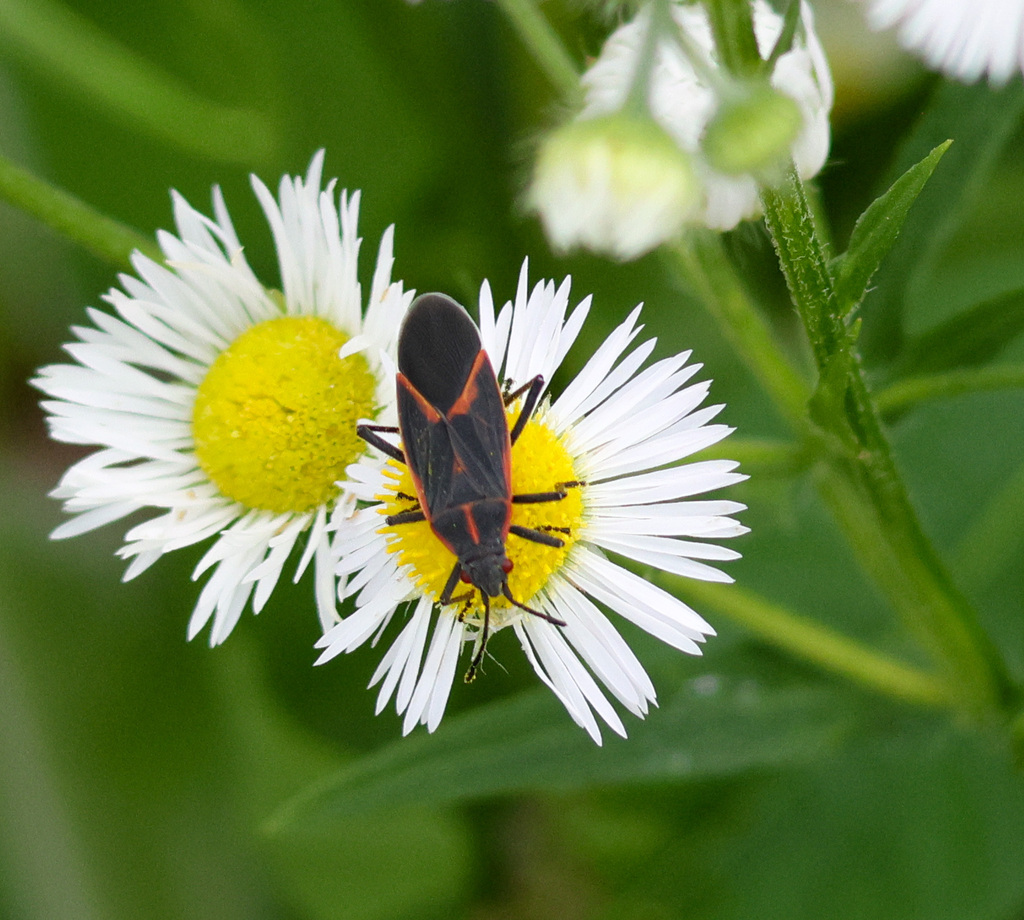
Symptoms by part
Leaves
You may see minor yellowing or stippling where the bugs have pierced the tissue to feed on sap.
Fruit
The bugs may cluster on developing seeds, causing them to shrivel or drop prematurely.
Causes
- Presence of female boxelder trees which produce the seeds the bugs feed on.
- Warm, sunny spots on the exterior of trees that provide ideal basking areas.
- Proximity to structures with cracks or crevices where the bugs seek shelter for the winter.
Could be confused with
- Red shouldered bug · These have a distinct red line across their back, whereas boxelder bugs have red lines along the edges of their wings.
- Milkweed bug · These have a black heart shape on their back and are typically found on milkweed plants rather than maples.
Treatment
- Spray the bugs directly with a strong stream of water from a garden hose to knock them off the foliage.
- Vacuum up large clusters of bugs found on the bark or nearby surfaces.
- Apply fatty acids to the bugs when they are clustered on the tree, follow the label.
Without chemicals
- Remove female boxelder trees if they are a constant source of infestation.
- Seal cracks and gaps in nearby building foundations to prevent them from entering your home.
- Clear away leaf litter and debris around the base of the tree to reduce hiding spots.
Chemical options
- Fatty acids, spray directly onto the insects, follow the label.
Preventing it
- Plant male boxelder trees instead of female ones to avoid seed production.
- Keep the area around the base of the tree clean and free of debris.
- Caulk and seal all exterior entry points on nearby buildings to discourage overwintering.
Season
The warm growing season, particularly during late summer and early autumn when populations peak.
Spread risk
Low
Severity
Low
When to act
Act when you notice large clusters of bugs causing visible distress to the tree. You do not need to remove the tree unless the infestation is overwhelming and causing structural decline.
Think it's Boxelder Bug?
This guide covers the general picture. Pocket Botanist looks at your actual plant from a photo and tells you what's really going on, how serious it is, and what to try first. Identification and a health check are free.


Questions people ask
- Do boxelder bugs kill trees?
- No, they rarely cause enough damage to harm the tree, though they can be a major nuisance when they move toward your house.
- Will these bugs bite me?
- They are not aggressive and rarely bite, though they may occasionally pierce skin if handled roughly, which feels like a tiny pinprick.
- Why are they all over my house?
- As the weather cools, they look for warm, protected places to spend the winter, and your home provides the perfect shelter.
Plants it affects
This guide was generated with AI and is general information, not horticultural advice. Read about how we build these guides.