 Pocket Botanist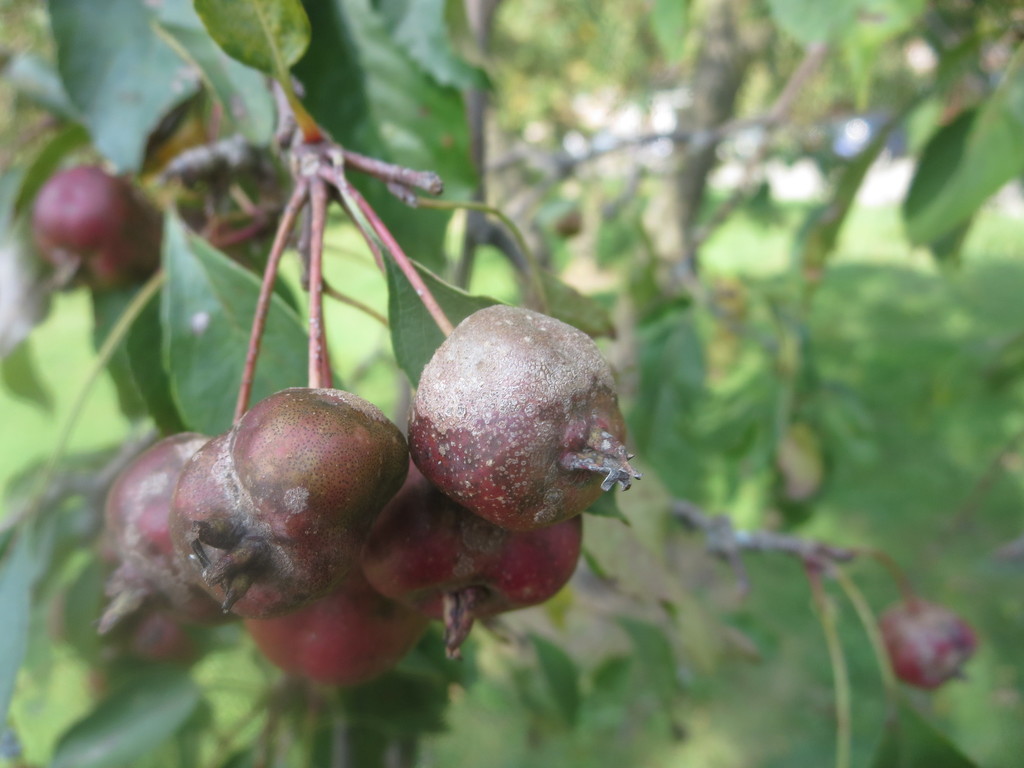
Symptoms by part
Leaves
Small, olive green or brown velvety spots appear on the undersides of leaves, eventually turning black and causing the leaf to yellow and drop prematurely.
Fruit
Circular, dark brown or black scabby lesions develop on the skin, which can cause the fruit to crack or become misshapen as it grows.
Causes
- Prolonged periods of cool, wet weather during the spring.
- Poor air circulation within the tree canopy.
- Overwintering fungal spores left in fallen leaves on the ground.
Could be confused with
- Cedar Apple Rust · Rust causes bright orange or yellow spots rather than the dark, velvety olive spots seen with scab.
- Powdery Mildew · Mildew leaves a white, dusty coating on the surface of leaves instead of dark, sunken scabs.
Treatment
- Rake and remove all fallen leaves from beneath the tree in autumn to eliminate the primary source of spores.
- Prune the tree canopy during the dormant season to improve airflow and allow sunlight to reach the inner branches.
- Apply sulfur to the foliage at the first sign of bud break to protect new growth, follow the label.
- Apply potassium bicarbonate to the leaves if symptoms appear, follow the label.
Without chemicals
- Pruning for better airflow.
- Sanitation by removing and destroying all infected fallen leaves.
- Selecting resistant varieties when planting new trees.
Chemical options
- Sulfur, apply to foliage at bud break, follow the label.
- Potassium bicarbonate, apply to leaves if symptoms appear, follow the label.
Preventing it
- Always clear away leaf litter from the base of the tree every autumn.
- Space trees properly to ensure good air movement.
- Water at the base of the tree rather than overhead to keep the foliage dry.
Season
The warm growing season, specifically during the wet spring months.
Spread risk
High
Severity
Moderate
When to act
Begin treatment as soon as buds start to open in the spring. If the tree is very large and heavily infected, you may need to hire a professional tree surgeon for proper pruning.
Think it's Apple Scab?
This guide covers the general picture. Pocket Botanist looks at your actual plant from a photo and tells you what's really going on, how serious it is, and what to try first. Identification and a health check are free.


Questions people ask
- Will my apples be safe to eat if they have scab?
- Yes, the fruit is safe to eat, though the texture of the skin may be rough or woody where the scab lesions formed.
- Does apple scab kill the tree?
- It is unlikely to kill a healthy, mature tree, but repeated infections year after year can weaken the tree and reduce its overall vigor.
Plants it affects
This guide was generated with AI and is general information, not horticultural advice. Read about how we build these guides.