 Pocket Botanist
Plant guide
Narrowleaf zinnia.
Zinnia angustifolia
Pronounced ZIN-ee-uh ang-gus-tih-FOH-lee-uh
Also known as Narrowleaf Zinnia, Little star



Scan with your phone's camera to get the app
Or go to pocketbotanist.app/get on your phone
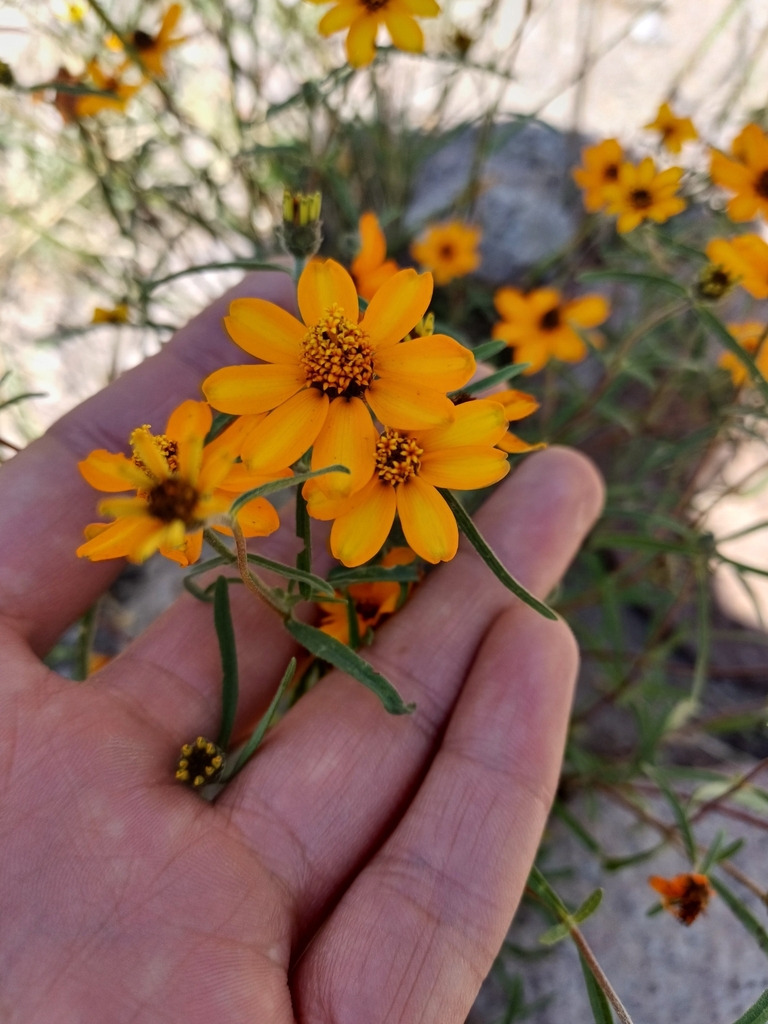
This charming annual brings a splash of color to your garden with its petite, daisy like flowers. It is a tough little plant that handles heat and humidity with ease. You will love how it keeps blooming from summer until the first frost.
At a glance
- Care level
- Easy
- Plant type
- Annual
- Light
- Full sun
- Indoor light
- Direct sun
- Water
- Every 3 to 7 days
- Mature size
- 12 to 18 inches
- Growth rate
- Fast
- Hardiness
- USDA 9 to 11
- Bloom time
- Early summer to first frost
Care
Plant these in a spot that gets plenty of sun to keep them blooming their best. Water at the base to keep the foliage dry and prevent powdery mildew. Watch for wilting, which is your sign that they need a good drink.
- Watering
- Water when the top inch of soil feels dry to the touch.
- Feeding
- Apply a balanced liquid fertilizer once a month during the growing season.
- Pruning
- Deadhead spent blooms regularly to encourage the plant to produce more flowers.
- Repotting
- Since these are annuals, you typically do not need to repot them.
- Soil
- Well draining, fertile soil
- Soil pH
- 6.0 to 7.5
- Temperature
- 10 to 35°C
- Humidity
- 40 to 60%
- Drought tolerance
- Moderate
- Lifespan
- Annual, completes its life cycle in one season.
- Deer and rabbits
- Moderate
Signs it needs repotting
- Roots growing out of the drainage holes.
- Water running straight through the pot without soaking in.
Safety
- People
- This plant is non toxic to humans.
- Pets
- This plant is considered non toxic to cats and dogs.
- Children
- The plant is safe for children, though the rough foliage might be slightly scratchy to touch.
- Contact allergens
- The rough, hairy stems and leaves can cause mild skin irritation in sensitive individuals.
- Airborne allergens
- The pollen may trigger mild symptoms in those with severe seasonal allergies.
- Edibility
- While not toxic, these flowers are not typically consumed as food.
How to identify it
- Narrow, lance shaped green leaves
- Small, daisy like flower heads
- Bushy and compact growth habit
- Bright orange, yellow, or white petals
- Height
- 0.3 to 0.45m
- Spread
- 0.3 to 0.6m
- Leaves
- green, deciduous
- Flowers
- orange, yellow, white, 3 to 5cm
Problems to watch for
- Aphids · Small insects that cluster on new growth and suck plant sap.
Check your narrowleaf zinnia from a photo
Pocket Botanist looks at a photo of your plant and tells you what's wrong and what to try first.
Scan with your phone's camera to get the app
Or go to pocketbotanist.app/get on your phone
Growing it
- Propagation
- seed
- When to plant
- spring
- Overwintering
- This plant is an annual and will die with the first hard frost, so no winter care is needed.
- In containers
- They grow very well in pots at least 25 centimeters deep with good drainage.
Direct Sowing
- Wait until the soil has warmed in spring.
- Sow seeds about 0.5 centimeters deep.
- Keep the soil moist until seedlings emerge.
Plant these in full sun alongside other heat loving annuals for a long lasting summer display.
Grows well with
- Marigold · They share similar water and light requirements while providing a nice color contrast.
- Cosmos · These provide a taller, airy texture that complements the mounding habit of zinnia.
Similar species
- Common Zinnia · A larger relative with broader leaves and more varied flower forms.
Science
- Family
- Asteraceae
- Genus
- Zinnia
- Order
- Asterales
- Class
- Magnoliopsida
- Native range
- Mexico and Central America
- Conservation
- This plant is not of conservation concern.
It grows in sunny, well drained open areas where it can quickly establish during the warm season.
- Value to wildlife
- nectar source
- Pollinators
- bees, butterflies
- Uses
- bedding plant, container plant, pollinator garden
Through the year
Ecological indicators
- Salinity
- 2/9
- Soil reaction
- 6/9
- Light
- 8/9
- Temperature
- 7/9
- Moisture
- 4/9
- Nutrients
- 5/9
Taxonomy resolved against GBIF.
Questions people ask
- Do I need to deadhead these?
- Deadheading helps keep the plant tidy and encourages more blooms throughout the season.
- Can I grow these in pots?
- Yes, they are excellent for containers due to their compact, mounding habit.
Where the name comes from
The genus name honors German botanist Johann Gottfried Zinn, while the species name means narrow leaved.
Good to know
- It is often called the Mexican zinnia.
- The narrow leaves are a key identifier for this species.
- It thrives in hot, sunny conditions where other flowers might wilt.
Keep your narrowleaf zinnia growing
This page is a general guide. Save your plant in Pocket Botanist and you get care reminders timed for this plant, plus a care history that shows what worked.
Scan with your phone's camera to get the app
Or go to pocketbotanist.app/get on your phone
This guide was generated with AI on and checked against GBIF taxonomy. It is general information, not horticultural or veterinary advice. Read about how we build these guides.