 Pocket Botanist
Plant guide
Ginger lily.
Zingiber spectabile
Pronounced ZIN-jih-ber spek-TAH-bih-lee
Also known as Beehive Ginger



Scan with your phone's camera to get the app
Or go to pocketbotanist.app/get on your phone
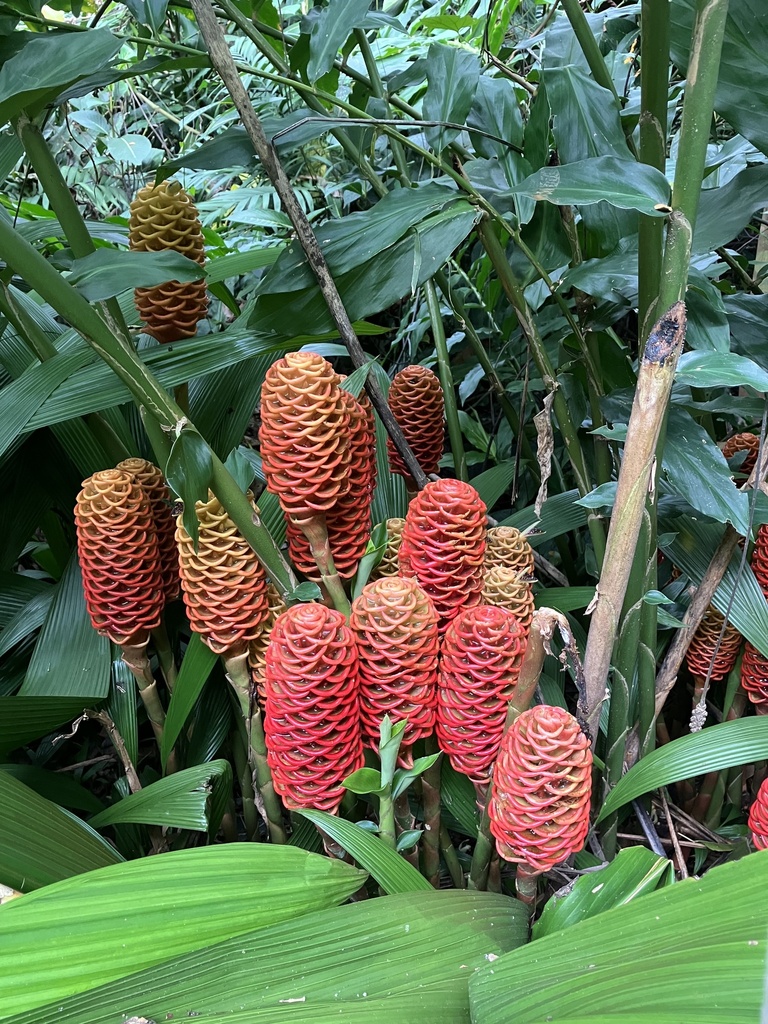
The ginger lily is a stunning tropical plant known for its unique, cone shaped flower heads. It thrives in warm, humid environments and adds a dramatic flair to any garden. You will love how its architectural foliage complements its vibrant blooms.

At a glance
- Care level
- Moderate
- Plant type
- Rhizomatous perennial
- Light
- Partial shade to bright indirect light
- Indoor light
- Bright indirect
- Water
- Every 3 to 7 days
- Mature size
- 5 to 8 feet
- Growth rate
- Fast
- Hardiness
- USDA 10 to 12
- Bloom time
- Late summer to autumn
Care
Keep the soil consistently moist but never waterlogged to mimic its native tropical habitat. Watch for browning leaf tips, which often indicate the air is too dry or the plant needs more water. Ensure it gets plenty of warmth and protection from harsh, direct afternoon sun.
- Watering
- Keep the soil evenly moist throughout the growing season.
- Feeding
- Use a balanced liquid fertilizer during the active growing months.
- Pruning
- Trim back dead or damaged foliage after the flowering season ends.
- Repotting
- Repot when the rhizomes become too crowded in their current container.
- Soil
- Rich, well draining, organic soil
- Soil pH
- 6.0 to 7.0
- Temperature
- 15 to 30°C
- Humidity
- 60 to 90%
- Drought tolerance
- Low
- Lifespan
- Perennial, typically 5 to 10 years
- Deer and rabbits
- Moderate
Signs it needs repotting
- Roots growing out of the drainage holes
- Water running straight through the pot
- Stunted growth during the active season
Safety
- People
- The plant is generally considered non-toxic, but the sap can cause mild skin irritation in sensitive individuals.
- Pets
- This plant is generally considered non toxic to cats and dogs.
- Children
- The plant is not dangerous, but the large, stiff leaves can be sharp and should be kept away from small children.
- Contact allergens
- Contact with the sap may cause mild dermatitis in some people.
- Airborne allergens
- There are no significant airborne allergens associated with this plant.
- Edibility
- The rhizomes are not typically consumed and may cause gastric distress if ingested.
How to identify it
- Large, lance shaped green leaves
- Showy, cone shaped inflorescences
- Flowers change color as they mature
- Tall, reed like stems
- Fragrant, exotic blooms
- Height
- 1.5 to 2.5m
- Spread
- 0.9 to 1.5m
- Leaves
- green, deciduous
- Flowers
- yellow, red, 10 to 20cm
- Fruit
- black, Late autumn
Problems to watch for
- Leaf SpotCommon
- Spider MitesCommon
- Brown Leaf EdgesUncommon
- Fungus GnatsUncommon
- MealybugsUncommon
- Root RotUncommon
Check your ginger lily from a photo
Pocket Botanist looks at a photo of your plant and tells you what's wrong and what to try first.
Scan with your phone's camera to get the app
Or go to pocketbotanist.app/get on your phone
Growing it
- Propagation
- division, rhizome cuttings
- When to plant
- Spring
- Overwintering
- In colder regions, move containers indoors before the first frost. If planted in the ground, mulch heavily to protect the rhizomes from freezing temperatures.
- In containers
- It grows well in large containers of at least 40 liters to accommodate its vigorous rhizome growth.
Rhizome Division
- 1. Carefully dig up the plant in early spring.
- 2. Gently shake off excess soil to expose the rhizomes.
- 3. Use a clean, sharp knife to cut the rhizome into sections with at least one healthy bud.
- 4. Plant the sections in moist, well-draining soil.
- 5. Keep the new divisions warm and humid until growth appears.
Group this ginger with other moisture-loving tropicals to create a microclimate that maintains high ambient humidity.
Grows well with
Similar species
- Pinecone Ginger · It features a similar cone-shaped inflorescence but with different color patterns.
Science
- Family
- Zingiberaceae
- Genus
- Zingiber
- Order
- Zingiberales
- Class
- Liliopsida
- Native range
- Southeast Asia, specifically Malaysia and Thailand.
- Conservation
- It is not currently listed as endangered, but wild populations are threatened by habitat loss.
It grows in the humid understory of tropical forests where it relies on high moisture and filtered light.
- Value to wildlife
- nectar source
- Pollinators
- bees, butterflies
- Uses
- ornamental, cut flower, tropical landscaping
Through the year
Ecological indicators
- Salinity
- 1/9
- Soil reaction
- 6/9
- Light
- 4/9
- Temperature
- 8/9
- Moisture
- 8/9
- Nutrients
- 7/9
Taxonomy resolved against GBIF.
Questions people ask
- Does it need full sun?
- No, it prefers bright, indirect light or partial shade.
- How often should I water it?
- Keep the soil consistently moist but not waterlogged.
Where the name comes from
The name Zingiber comes from the Sanskrit word for ginger, while spectabile means showy or spectacular, referring to its unique flower bracts.
Good to know
- The beehive structure can last for several months on the plant.
- It is a member of the Zingiberaceae family, which includes common culinary ginger.
- The flowers are hidden inside the colorful bracts.
- It grows best in dappled shade to protect its large leaves from burning.
Also in
Keep your ginger lily growing
This page is a general guide. Save your plant in Pocket Botanist and you get care reminders timed for this plant, plus a care history that shows what worked.
Scan with your phone's camera to get the app
Or go to pocketbotanist.app/get on your phone
This guide was generated with AI on and checked against GBIF taxonomy. It is general information, not horticultural or veterinary advice. Read about how we build these guides.