 Pocket Botanist
Plant guide
Caladium.
Caladium bicolor
Pronounced kuh-LAY-dee-um BY-kuh-ler
Also known as Angel Wings, Artist's pallet, Heart of Jesus, Heart-of-Jesus, angel-wings, caladium, elephant's-ear, fancy-leaf caladium



Scan with your phone's camera to get the app
Or go to pocketbotanist.app/get on your phone
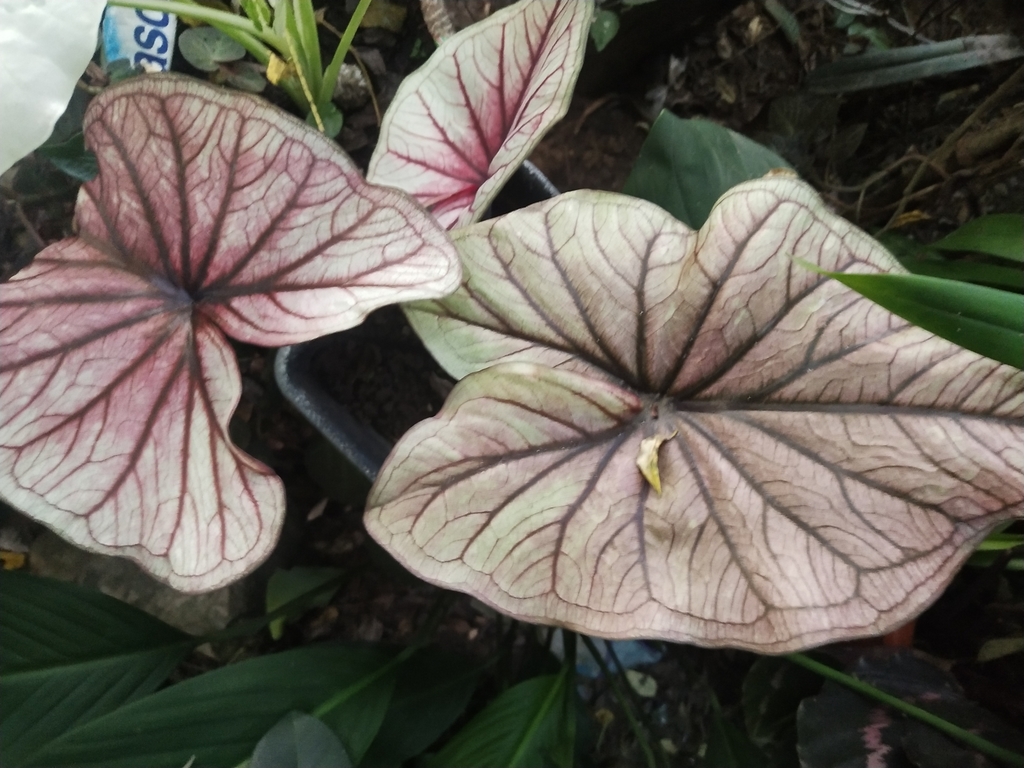
Caladiums are showy tropical perennials grown for their heart shaped, colorful foliage. They grow from tubers and require a warm, humid environment to thrive. These plants naturally go dormant in the winter, losing their leaves until spring.
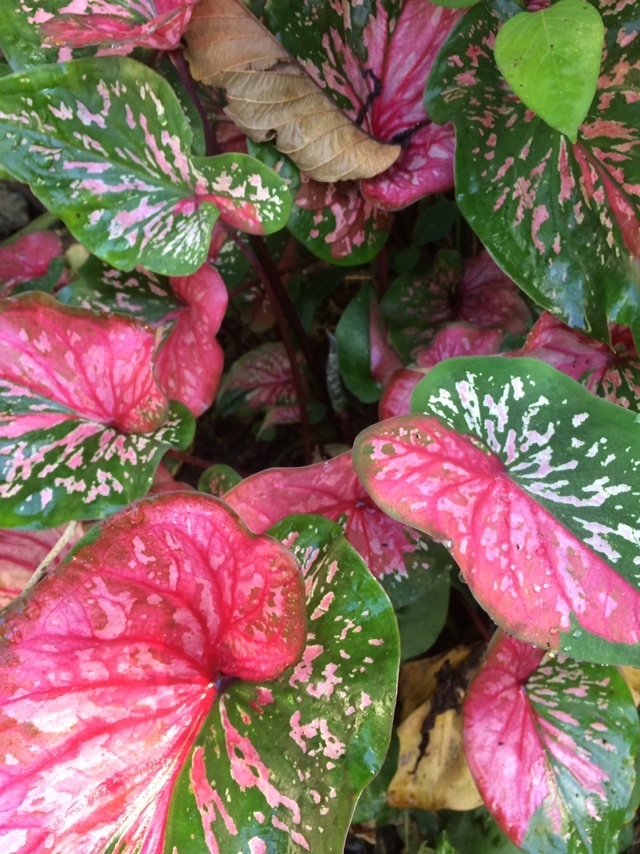
At a glance
- Care level
- Moderate
- Plant type
- Tuberous perennial
- Light
- Partial shade to bright indirect light.
- Indoor light
- Bright indirect
- Water
- Every 3 to 7 days
- Mature size
- 30 to 60 cm tall.
- Growth rate
- Medium
- Hardiness
- USDA 9 to 11
- Bloom time
- Mid to late summer
Care
Keep the soil consistently moist but not soggy during the growing season. Watch for drooping leaves, which often signal a need for more water or higher humidity. Once the foliage fades in autumn, allow the tuber to dry out and rest in a cool, dark place.
- Watering
- Keep the soil evenly moist throughout the active growing season.
- Feeding
- Use a balanced liquid fertilizer diluted to half strength every two weeks.
- Pruning
- Remove yellowing or damaged leaves at the base to keep the plant tidy.
- Repotting
- Refresh the soil annually when starting the tubers after their winter dormancy.
- Soil
- Well draining, peat based potting mix.
- Soil pH
- 5.5 to 6.5
- Temperature
- 15 to 30°C
- Humidity
- 60 to 90%
- Drought tolerance
- Low
- Lifespan
- Perennial, typically 3 to 5 years with proper tuber care.
- Deer and rabbits
- Moderate
Signs it needs repotting
- Roots growing out of the drainage holes.
- Water sitting on the surface of the soil for too long.
- The plant has become top heavy.
Safety
- People
- The plant contains calcium oxalate crystals that cause painful swelling and burning of the mouth and throat if eaten.
- Pets
- This plant is toxic to cats and dogs if ingested, causing oral irritation and swelling.
- Children
- Keep this plant away from children as ingestion of the leaves can cause immediate pain and swelling in the mouth.
- Contact allergens
- The sap can cause skin irritation or dermatitis in sensitive individuals.
- Airborne allergens
- There is no significant evidence of respiratory allergies associated with this plant.
- Edibility
- All parts of this plant are toxic if ingested and can cause severe irritation.
How to identify it
- Heart shaped leaves
- Translucent leaf tissue
- Variegated patterns of pink, white, red
- Long, slender petioles
- Grows from a tuber
- Height
- 0.3 to 0.6m
- Spread
- 0.3 to 0.45m
- Leaves
- green, white, pink, red, deciduous
- Flowers
- white, green, 5 to 10cm
- Fruit
- white, Autumn
Problems to watch for
- AphidsCommon
- Root RotCommon
- Spider MitesUncommon
- Tuber RotUncommon
Check your caladium from a photo
Pocket Botanist looks at a photo of your plant and tells you what's wrong and what to try first.
Scan with your phone's camera to get the app
Or go to pocketbotanist.app/get on your phone
Growing it
- Propagation
- division, seed
- When to plant
- Spring
- Overwintering
- In cold climates, dig up the tubers after the first frost, let them dry, and store them in a cool, dark place in peat moss until spring.
- In containers
- They thrive in containers, provided the pot has excellent drainage and is at least 20 centimeters wide.
Tuber Division
- 1. Carefully lift the tuber from the soil after the foliage dies back.
- 2. Use a clean knife to cut the tuber into sections, ensuring each has an eye.
- 3. Let the cut surfaces callous for a day.
- 4. Replant the sections in well draining soil.
Group these with other shade loving plants that appreciate consistent soil moisture.
Grows well with
- Impatiens · They share similar shade and moisture requirements.
- Begonia · These plants provide great textural contrast in shaded beds.
Similar species
- Elephant Ear · They are related aroids with similar tropical foliage habits.
- Alocasia · They share the same family and tropical aesthetic.
Science
- Family
- Araceae
- Genus
- Caladium
- Order
- Alismatales
- Class
- Liliopsida
- Native range
- Tropical South America
- Conservation
- This plant is not currently of conservation concern.
It grows in the shaded understory of tropical forests where it relies on high humidity and consistent moisture.
- Value to wildlife
- provides shelter for small insects
- Pollinators
- beetles
- Uses
- container gardening, shaded border filler, indoor houseplant
Through the year
Ecological indicators
- Salinity
- 1/9
- Light
- 3/9
- Temperature
- 8/9
- Moisture
- 7/9
- Nutrients
- 6/9
- Soil reaction
- 5/9
Taxonomy resolved against GBIF.
Questions people ask
- Why are my Caladium leaves turning yellow?
- This is often a sign of overwatering or the plant beginning its natural winter dormancy.
- Can I grow Caladiums in full sun?
- Most varieties prefer partial shade, though some newer cultivars tolerate more light.
Where the name comes from
The name Caladium comes from the Malay word keladi, while the species name bicolor refers to the two toned coloration of the leaves.
Good to know
- Caladiums go dormant in winter and lose all their leaves.
- They are native to the tropical rainforests of South America.
- The leaves are naturally water repellent.
Also in
Keep your caladium growing
This page is a general guide. Save your plant in Pocket Botanist and you get care reminders timed for this plant, plus a care history that shows what worked.
Scan with your phone's camera to get the app
Or go to pocketbotanist.app/get on your phone
This guide was generated with AI on and checked against GBIF taxonomy. It is general information, not horticultural or veterinary advice. Read about how we build these guides.