 Pocket Botanist
Pflanzenratgeber
Engelsflügel.
Caladium bicolor
Aussprache kuh-LAY-dee-um BY-kuh-ler
Auch bekannt als Engelsflügel, Artist's pallet, Heart of Jesus, Heart-of-Jesus, angel-wings, caladium, Elefantenohr, fancy-leaf caladium


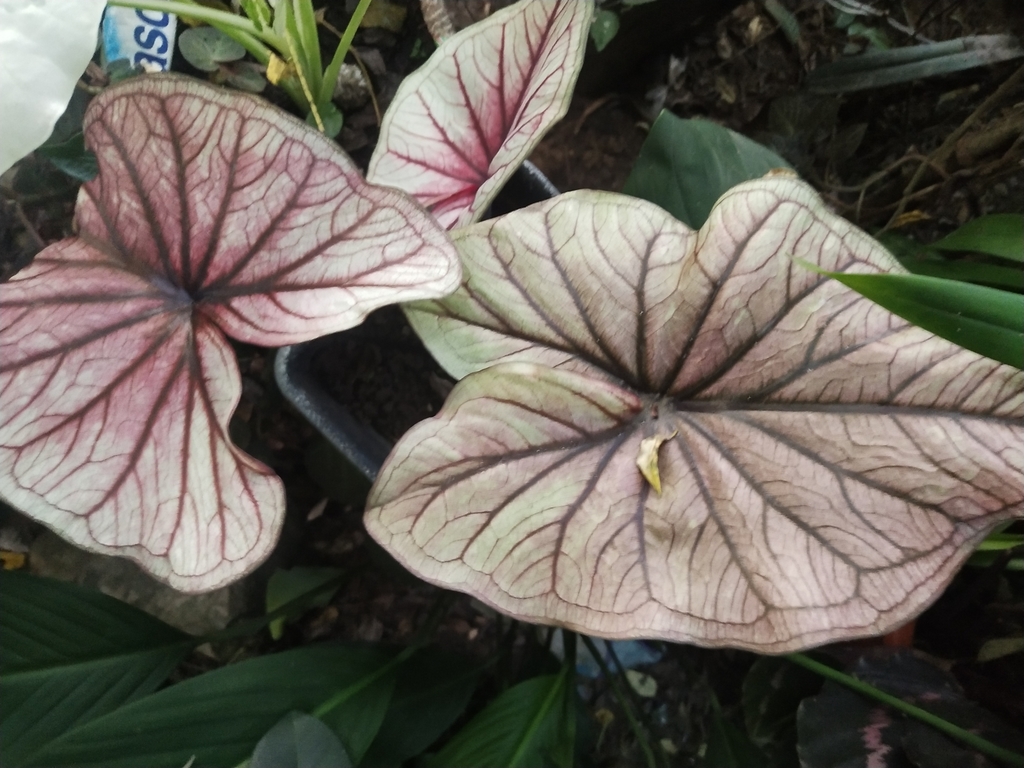
Buntwurzen sind auffällige tropische Stauden, die wegen ihres herzförmigen, bunten Laubes angebaut werden. Sie wachsen aus Knollen und benötigen eine warme, feuchte Umgebung, um gut zu gedeihen. Diese Pflanzen werden im Winter auf natürliche Weise ruhend, verlieren ihre Blätter bis zum Frühling.
Auf einen Blick
- Care level
- Moderate
- Plant type
- Knollenartige Staude
- Light
- Halbschatten bis helles, indirektes Licht.
- Indoor light
- bright-indirect
- Water
- Every 3 to 7 days
- Mature size
- 30 bis 60 cm hoch.
- Growth rate
- medium
- Hardiness
- USDA 10 to 12
- Bloom time
- Mitte bis Spätsommer
Pflege
Halten Sie den Boden während der Wachstumsperiode durchgehend feucht, aber nicht nass. Achten Sie auf schlaffe Blätter, die oft ein Zeichen für mehr Wasser oder höhere Luftfeuchtigkeit sind. Sobald das Laub im Herbst verblasst, lassen Sie die Knolle austrocknen und ruhen Sie sie an einem kühlen, dunklen Ort aus.
- Watering
- Halten Sie den Boden während der aktiven Wachstumsperiode gleichmäßig feucht.
- Feeding
- Verwenden Sie alle zwei Wochen einen ausgewogenen Flüssigdünger, verdünnt auf halbe Stärke.
- Pruning
- Entfernen Sie vergilbte oder beschädigte Blätter an der Basis, um die Pflanze sauber zu halten.
- Repotting
- Erneuern Sie die Erde jährlich, wenn Sie die Knollen nach ihrer Winterruhe beginnen.
- Soil
- Gut durchlässige, torfbasierte Blumenerde.
- Soil pH
- 5,5 bis 6,5
- Temperature
- 15 to 30°C
- Humidity
- 60 to 90%
- Drought tolerance
- low
- Lifespan
- Perennial, typically grown as an annual in cooler climates.
- Deer and rabbits
- moderate
Anzeichen fürs Umtopfen
- Roots growing out of the drainage holes.
- Water running straight through the soil without soaking in.
- The plant has become too large for its current container.
Sicherheit
- People
- The plant contains calcium oxalate crystals that cause intense irritation and burning upon contact or ingestion.
- Pets
- Diese Pflanze ist giftig für Katzen und Hunde, wenn sie verschluckt wird, und verursacht Reizungen und Schwellungen im Mund.
- Children
- Keep this plant away from children as the leaves are highly toxic if chewed or swallowed.
- Contact allergens
- The sap can cause skin irritation or rashes in sensitive individuals.
- Airborne allergens
- There are no significant airborne allergens associated with this plant.
- Edibility
- All parts of this plant are toxic if ingested and can cause severe swelling of the mouth and throat.
So erkennst du die Pflanze
- Herzförmige Blätter
- Transluzente Blattstruktur
- Bunt gemusterte Flecken in Pink, Weiß, Rot
- Lange, schlanke Blattstiele
- Wächst aus einer Knolle
- Height
- 0.3 to 0.6m
- Spread
- 0.3 to 0.45m
- Leaves
- grün, pink, weiß, rot, sommergrün
- Flowers
- weiß, grün, 5 to 10cm
Häufige Probleme
- Root rot — This occurs when the soil stays too wet for too long, causing the tubers to decay.
- Aphids — These tiny insects cluster on new growth and suck sap from the leaves.
Standort und Pflege
- Propagation
- Teilung
- When to plant
- Frühling
- Overwintering
- In cold climates, dig up the tubers after the first frost, let them dry, and store them in a cool, dark place until spring.
- In containers
- Caladiums grow beautifully in containers, provided the pot has good drainage and is at least 6 inches deep.
Tuber Division
- Wait for the plant to go dormant in autumn.
- Carefully dig up the tubers from the soil.
- Cut the larger tubers into sections, ensuring each piece has at least one eye or bud.
- Allow the cut surfaces to callous over for a few days.
- Replant the sections in fresh, well draining soil.
Group plants with similar water needs to ensure the caladium tubers do not rot from overwatering.
Gute Pflanzpartner
- Impatiens — They share similar shade and moisture requirements.
- Ferns — Ferns provide a lush, green backdrop that highlights the bright colors of caladium leaves.
- Begonias — These plants thrive in the same shaded conditions and offer complementary textures.
Ähnliche Arten
- Elephant Ear — They share a similar tropical look and heart shaped leaf structure.
- Alocasia — Both are members of the Araceae family and share similar growth habits.
Botanisches
- Family
- Araceae
- Genus
- Caladium
- Order
- Alismatales
- Class
- Liliopsida
- Native range
- Tropical regions of South and Central America.
- Conservation
- This species is not currently listed as threatened or endangered in its native range.
It thrives in the humid, shaded understory of tropical forests where it grows in rich, moist soil.
- Uses
- ornamental foliage, shaded container plant, indoor houseplant
Im Jahresverlauf
Ökologische Zeigerwerte
- Salinity
- 1/9
- Soil reaction
- 6/9
- Light
- 3/9
- Temperature
- 8/9
- Moisture
- 7/9
- Nutrients
- 6/9
Taxonomie abgeglichen mit GBIF.
Häufige Fragen
- Do caladiums need full sun?
- Most varieties prefer partial to full shade to prevent leaf scorch.
- Why are my leaves drooping?
- Drooping is often a sign of underwatering or the plant beginning its natural dormancy phase.
Woher der Name kommt
The name Caladium comes from the Malay word keladi, which refers to similar tuberous plants.
Gut zu wissen
- Caladiums are tropical perennials that grow from tubers.
- They are native to South America, specifically the Amazon basin.
- The leaves can change color intensity based on light exposure.
- They go dormant in the winter when temperatures drop.
Auch in
Geht es deiner engelsflügel nicht gut?
Diese Seite bietet allgemeine Infos. Pocket Botanist erkennt Probleme anhand eines Fotos deiner echten Pflanze, passt das Gießen an dein Licht und deinen Standort an und erinnert dich an die Pflege.
Dieser Ratgeber wurde mit KI erstellt und mit der GBIF-Taxonomie abgeglichen. Er dient zur allgemeinen Information und ersetzt keine gärtnerische oder tierärztliche Beratung. Hier erfährst du, wie wir diese Ratgeber erstellen.