 Pocket Botanist
Plant guide
Muscadine grape.
Vitis rotundifolia
Pronounced VYE-tis ro-tun-di-FO-lee-ah
Also known as Muscadine Grape, Scuppernong, muscadine, southern fox grape



Scan with your phone's camera to get the app
Or go to pocketbotanist.app/get on your phone
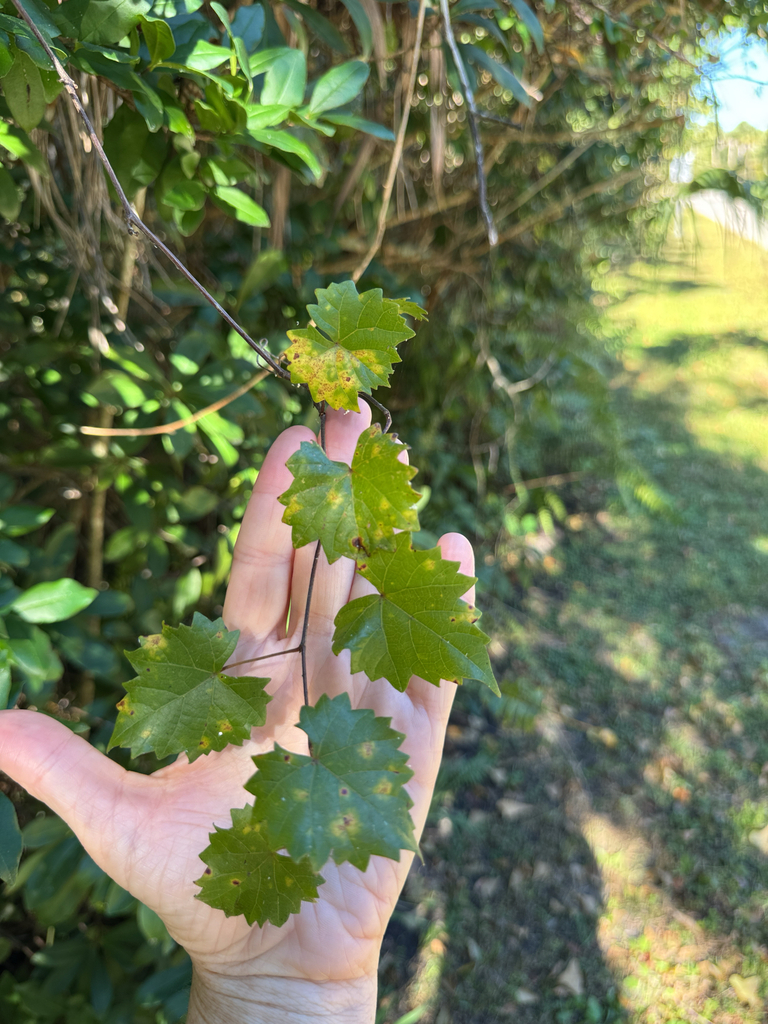
The muscadine grape is a hardy vine native to the southeastern United States. It produces delicious bronze or dark purple fruits that are perfect for jams and jellies. These vines are quite vigorous and thrive in warm, humid climates.
At a glance
- Care level
- Moderate
- Plant type
- Deciduous vine
- Light
- Full sun
- Indoor light
- Direct sun
- Water
- Every 5 to 10 days
- Mature size
- 20 to 30 feet
- Growth rate
- Fast
- Hardiness
- USDA 6 to 10
- Bloom time
- Late spring
Care
Provide a sturdy trellis or fence for the vines to climb as they grow. Keep an eye out for fungal issues by ensuring good air circulation around the foliage. Prune back heavily in late winter to encourage fruit production for the coming season.
- Watering
- Keep the soil consistently moist but not waterlogged during the growing season.
- Feeding
- Apply a balanced fertilizer during the spring and early summer months.
- Pruning
- Prune during the dormant winter season to manage size and improve fruit yield.
- Repotting
- These are best planted directly in the ground rather than in containers.
- Soil
- Well draining sandy loam
- Soil pH
- 6.0 to 6.5
- Temperature
- -15 to 40°C
- Humidity
- 40 to 70%
- Drought tolerance
- Moderate
- Lifespan
- Perennial, can live for many decades with proper care.
- Fragrance
- Light
- Deer and rabbits
- Moderate
Signs it needs repotting
- Roots circling the bottom of the pot
- Stunted growth during the active season
Safety
- People
- The plant is not toxic to humans, though some individuals may have sensitivities to the skins.
- Children
- The fruit is safe, but be mindful of choking hazards with whole grapes for very young children.
- Contact allergens
- The sap can cause mild skin irritation in sensitive individuals.
- Airborne allergens
- Pollen from the flowers may cause mild seasonal allergies.
- Edibility
- Ensure you correctly identify the plant before consuming any wild fruit.
How to identify it
- Simple rounded leaves with serrated edges
- Dark purple or bronze spherical fruit
- Strong woody climbing vines
- Tendrils used for climbing support
- Height
- 3 to 10m
- Spread
- 3 to 10m
- Leaves
- green, deciduous
- Flowers
- green, 0.5 to 1cm
- Fruit
- purple, bronze, black, Late summer to early fall
Problems to watch for
- Black rot · A fungal infection causing dark spots on leaves and shriveled fruit.
- Powdery mildew · A white fungal growth on leaves and stems that thrives in humid conditions.
Check your muscadine grape from a photo
Pocket Botanist looks at a photo of your plant and tells you what's wrong and what to try first.
Scan with your phone's camera to get the app
Or go to pocketbotanist.app/get on your phone
Growing it
- Propagation
- cuttings, layering, seed
- When to plant
- spring, fall
- Overwintering
- Prune back excess growth in late winter before new buds appear. Ensure the base is mulched to protect roots from extreme temperature fluctuations.
- In containers
- Not ideal for containers due to its massive size and deep root system.
Hardwood cuttings
- Take cuttings in late winter from dormant wood.
- Ensure each cutting has at least three nodes.
- Plant in moist, well draining soil until rooted.
Planting aromatic herbs near the base of the vine can help mask the scent from potential pests.
Grows well with
Similar species
- Fox grape · It is another native grape species often used for juice and jelly.
Science
- Family
- Vitaceae
- Genus
- Vitis
- Order
- Vitales
- Class
- Magnoliopsida
- Native range
- Southeastern and south central United States.
- Conservation
- This species is common and stable throughout its native range.
It thrives in warm, humid climates and often climbs over trees in woodland edges.
- Value to wildlife
- nectar source, provides food for birds
- Pollinators
- bees, beetles
- Uses
- fresh eating, jelly, wine making, juice
Through the year
Ecological indicators
- Salinity
- 2/9
- Soil reaction
- 6/9
- Light
- 7/9
- Temperature
- 7/9
- Moisture
- 5/9
- Nutrients
- 6/9
Taxonomy resolved against GBIF.
Questions people ask
- Do I need more than one vine for fruit?
- Many varieties are self fertile, but female varieties such as Scuppernong need a self fertile vine planted nearby to set fruit, so check your variety before planting a single vine.
- How do I prune them?
- Prune heavily in late winter while the vine is dormant to encourage new growth.
Where the name comes from
The genus name Vitis is the Latin word for vine, while rotundifolia refers to the round shape of the leaves.
Good to know
- Muscadines are native to the southeastern United States.
- They are often called swamp grapes or bullace grapes.
- These grapes have a very thick, tough skin compared to table grapes.
- They are highly prized for their unique, musky flavor.
Keep your muscadine grape growing
This page is a general guide. Save your plant in Pocket Botanist and you get care reminders timed for this plant, plus a care history that shows what worked.
Scan with your phone's camera to get the app
Or go to pocketbotanist.app/get on your phone
This guide was generated with AI on and checked against GBIF taxonomy. It is general information, not horticultural or veterinary advice. Read about how we build these guides.