 Pocket Botanist
Plant guide
American vetch.
Vicia americana
Pronounced VISH-ee-uh uh-mer-ih-KAY-nuh
Also known as American deervetch, American purple vetch, American vetch, peavine, purple vetch



Scan with your phone's camera to get the app
Or go to pocketbotanist.app/get on your phone
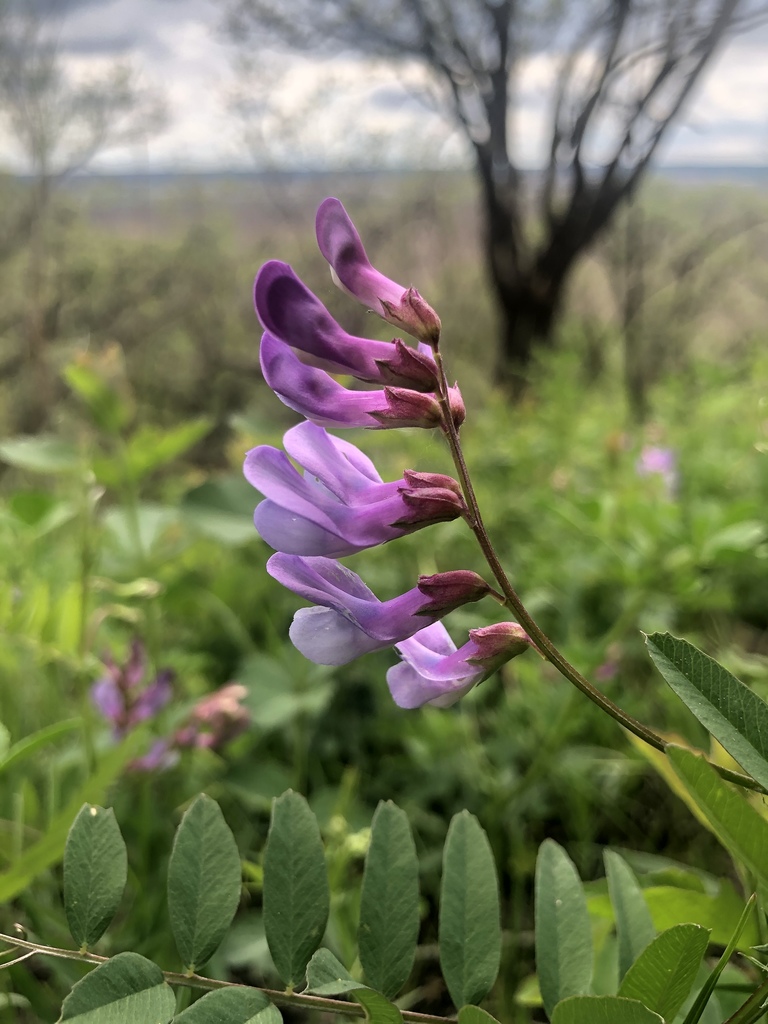
American vetch is a lovely native perennial vine that adds a touch of wild beauty to meadows and forest edges. It features delicate, climbing stems and clusters of purple flowers that attract pollinators. You will find it thrives best when given a bit of support to climb.
At a glance
- Care level
- Easy
- Plant type
- Herbaceous perennial vine
- Light
- Full sun to partial shade
- Indoor light
- Bright indirect
- Water
- Every 3 to 7 days
- Mature size
- 1 to 3 feet
- Growth rate
- Fast
- Hardiness
- USDA 3 to 8
- Bloom time
- Late spring to mid summer
Care
Provide a trellis or nearby shrubs for this vine to climb as it grows. Keep an eye out for aphids on the tender new growth during the spring. Ensure the soil stays consistently moist but not waterlogged to keep the foliage happy.
- Watering
- Water when the top inch of soil feels dry to the touch.
- Feeding
- A light application of balanced organic fertilizer during the growing season is plenty.
- Pruning
- Trim back dead vines in late winter or early spring to tidy up the plant.
- Repotting
- Repot if the plant becomes root bound or if you need to refresh the soil nutrients.
- Soil
- Well draining, loamy soil
- Soil pH
- 6.0 to 7.5
- Temperature
- -30 to 30°C
- Humidity
- 40 to 70%
Safety
- People
- The plant is generally considered non-toxic, but ingestion of seeds should be avoided due to potential anti-nutritional compounds.
- Pets
- This plant is generally considered safe for pets, though it is always best to keep them from snacking on garden greens.
- Children
- The small seeds could pose a choking hazard to very young children if ingested.
- Contact allergens
- No specific contact irritation is known.
- Airborne allergens
- Pollen may cause mild reactions in sensitive individuals during the bloom period.
- Edibility
- While some vetch seeds are consumed, many species contain toxins and should be avoided unless you are an expert.
How to identify it
- Pinnately compound leaves with tendrils
- Small purple to blue pea flowers
- Slender, vining stems
- Flat, oblong seed pods
- Height
- 0.3 to 0.9m
- Spread
- 0.3 to 0.6m
- Leaves
- green, deciduous
- Flowers
- purple, blue, lavender, 1 to 2cm
- Fruit
- brown, black, Late summer
Problems to watch for
- Powdery mildew · A white fungal growth on leaves often caused by poor air circulation.
- Aphids · Small insects that suck sap from the tender new growth.
Check your american vetch from a photo
Pocket Botanist looks at a photo of your plant and tells you what's wrong and what to try first.
Scan with your phone's camera to get the app
Or go to pocketbotanist.app/get on your phone
Growing it
- Propagation
- seed
- When to plant
- spring, fall
Plant it alongside native grasses to provide natural support for its climbing habit.
Grows well with
- Wild Bergamot · They share similar light and moisture needs in a meadow setting.
- Little Bluestem · The vetch provides nitrogen to the grass while the grass offers structural support.
Similar species
- Common Vetch · It is a non-native relative that is often confused with the American species.
Science
- Family
- Fabaceae
- Genus
- Vicia
- Order
- Fabales
- Class
- Magnoliopsida
- Native range
- Widespread across North America from Alaska to Mexico.
- Conservation
- It is widespread and not of conservation concern.
It survives by forming symbiotic relationships with nitrogen-fixing bacteria in its root nodules.
- Value to wildlife
- larval host plant, nectar source, nitrogen fixer
- Pollinators
- bees, butterflies
- Uses
- ground cover, soil improvement, wildlife garden, meadow planting
Through the year
Ecological indicators
- Salinity
- 1/9
- Soil reaction
- 6/9
- Light
- 6/9
- Temperature
- 5/9
- Moisture
- 5/9
- Nutrients
- 4/9
Taxonomy resolved against GBIF.
Questions people ask
- Is American Vetch invasive?
- No, it is a native species that generally behaves well in a garden setting.
- Does it need a trellis?
- It can grow as a ground cover or use nearby plants to climb, so a trellis is optional.
Where the name comes from
The genus name Vicia is the classical Latin name for vetch, while americana indicates its native range in the Americas.
Good to know
- It is a native legume that thrives in diverse habitats across North America.
- The tendrils allow it to climb over other vegetation to reach sunlight.
- It is a key host plant for several species of blue butterflies.
Keep your american vetch growing
This page is a general guide. Save your plant in Pocket Botanist and you get care reminders timed for this plant, plus a care history that shows what worked.
Scan with your phone's camera to get the app
Or go to pocketbotanist.app/get on your phone
This guide was generated with AI on and checked against GBIF taxonomy. It is general information, not horticultural or veterinary advice. Read about how we build these guides.