 Pocket Botanist
Plant guide
Blue vervain.
Verbena hastata
Pronounced ver-BEE-nuh has-TAY-tuh
Also known as American Blue Vervain, American Vervain, American Vervain, Blue Vervain, Swamp Vervain, Blue Vervain, Simpler's-joy, Swamp Verbena, Wild Hyssop, swamp vervain



Scan with your phone's camera to get the app
Or go to pocketbotanist.app/get on your phone

Blue vervain is a lovely native perennial that brings a touch of the wild to your garden. It features tall, slender spikes of tiny purple flowers that attract plenty of pollinators. You will love how it stands out in a meadow or a rain garden.
At a glance
- Care level
- Easy
- Plant type
- Perennial
- Light
- Full sun
- Indoor light
- Direct sun
- Water
- Every 2 to 4 days
- Mature size
- 2 to 6 feet
- Growth rate
- Fast
- Hardiness
- USDA 3 to 8
- Bloom time
- Mid to late summer
Care
Keep the soil consistently moist as this plant naturally thrives in damp areas. Watch for wilting during dry spells, which is a clear sign it needs a good soak. You can deadhead the spent flower spikes to encourage a second flush of blooms.
- Watering
- Keep the soil damp at all times since it loves moisture.
- Feeding
- Apply a balanced organic fertilizer once in the spring.
- Pruning
- Cut the plant back to the ground in late autumn or early spring.
- Repotting
- If growing in a container, refresh the soil every year or two.
- Soil
- Moist, rich, well draining soil
- Soil pH
- 6.0 to 7.5
- Temperature
- -30 to 35°C
- Humidity
- 40 to 70%
- Drought tolerance
- Low
- Lifespan
- Short-lived perennial, typically 3 to 5 years.
- Deer and rabbits
- High
Signs it needs repotting
- Roots growing out of the drainage holes.
- Plant drying out too quickly between waterings.
Safety
- People
- The plant is generally considered non-toxic, but should be handled with care as it is not intended for culinary use.
- Pets
- This plant is generally considered non toxic to cats and dogs.
- Children
- Keep away from small children as the seeds and stems can be a choking hazard if ingested.
- Contact allergens
- Some people may experience mild skin irritation from handling the foliage.
- Airborne allergens
- Pollen may cause minor reactions in sensitive individuals during peak bloom.
- Edibility
- While historically used in herbal teas, it is not recommended for consumption without expert guidance due to potential side effects.
How to identify it
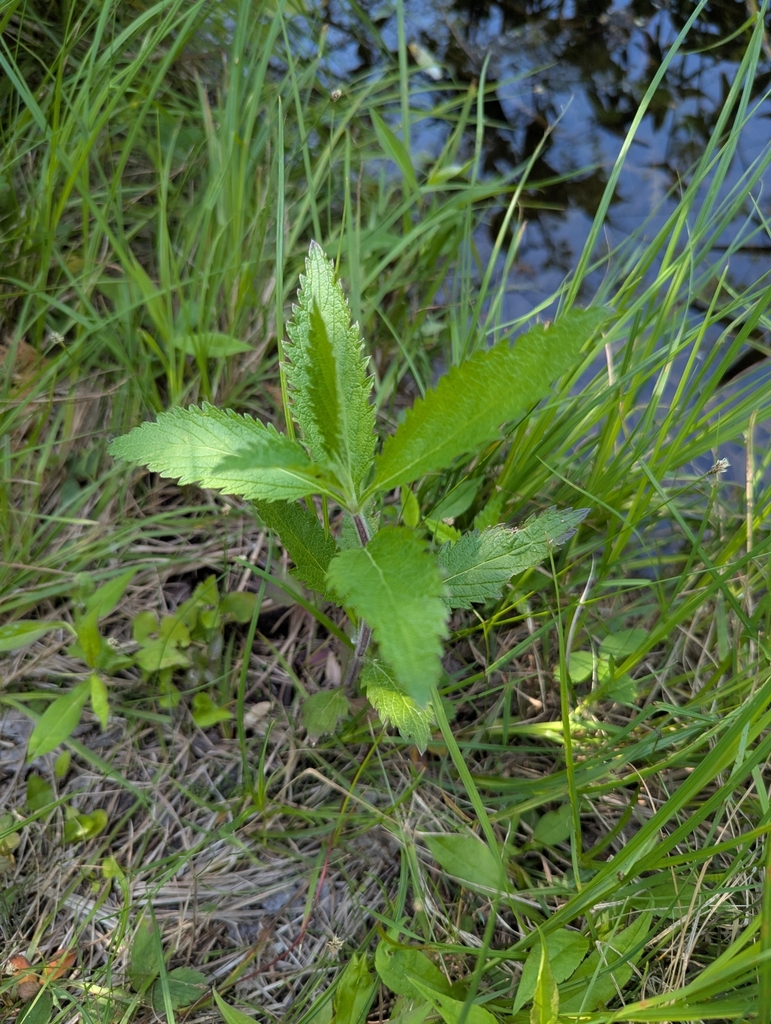
- Tall spikes of purple flowers
- Opposite lance shaped leaves
- Rough textured leaf surfaces
- Square stems
- Flowers bloom from bottom up
- Height
- 0.6 to 1.5m
- Spread
- 0.3 to 0.6m
- Leaves
- green, deciduous
- Flowers
- purple, blue, 0.5 to 1cm
- Fruit
- brown, Autumn
Problems to watch for
- Powdery mildew · A white fungal growth on leaves often caused by poor air circulation.
Check your blue vervain from a photo
Pocket Botanist looks at a photo of your plant and tells you what's wrong and what to try first.
Scan with your phone's camera to get the app
Or go to pocketbotanist.app/get on your phone
Growing it
- Propagation
- seed, division
- When to plant
- spring, autumn
- Overwintering
- Leave the dried stalks standing through winter to provide habitat for insects and seeds for birds. Cut back to the ground in early spring before new growth appears.
- In containers
- It can grow in containers if kept consistently moist, but it prefers being planted in the ground.
Seed
- 1. Collect seeds in late autumn.
- 2. Cold stratify seeds for 30 days.
- 3. Sow on the surface of moist soil in spring.
Division
- 1. Dig up the clump in early spring.
- 2. Gently pull the root mass apart.
- 3. Replant immediately in moist soil.
Group this plant with other moisture-loving natives to create a low-maintenance rain garden.
Grows well with
- Joe Pye Weed · They share similar moisture requirements and bloom times.
- Swamp Milkweed · This plant thrives in the same wet soil conditions.
- Sneezeweed · It provides a nice color contrast in late summer.
Similar species
- White Vervain · It is a close relative but prefers slightly drier soil.
Science
- Family
- Verbenaceae
- Genus
- Verbena
- Order
- Lamiales
- Class
- Magnoliopsida
- Native range
- Most of North America.
- Conservation
- It is secure across most of its range, though it is considered endangered in some peripheral states.
It naturally colonizes wet meadows and floodplains where its roots can access constant moisture.
- Value to wildlife
- nectar source, seed source for birds
- Pollinators
- bees, butterflies, moths
- Uses
- pollinator gardens, rain gardens, meadow plantings, cut flowers
Through the year
Ecological indicators
- Salinity
- 2/9
- Soil reaction
- 6/9
- Light
- 7/9
- Temperature
- 5/9
- Moisture
- 8/9
- Nutrients
- 5/9
Taxonomy resolved against GBIF.
Questions people ask
- Does it need a lot of water?
- Yes, it prefers consistently moist soil and does well in rain gardens.
- Will it spread on its own?
- It can self-seed readily in ideal conditions.
Where the name comes from
The genus name Verbena is the classical Latin name for sacred herbs, while hastata describes the spear-like leaf shape.
Good to know
- It is commonly known as blue vervain.
- The flowers bloom from the bottom of the spike to the top.
- It thrives in damp meadows and along stream banks in the wild.
- Native American tribes historically used the plant for various medicinal purposes.
Also in
Keep your blue vervain growing
This page is a general guide. Save your plant in Pocket Botanist and you get care reminders timed for this plant, plus a care history that shows what worked.
Scan with your phone's camera to get the app
Or go to pocketbotanist.app/get on your phone
This guide was generated with AI on and checked against GBIF taxonomy. It is general information, not horticultural or veterinary advice. Read about how we build these guides.