 Pocket Botanist
Plant guide
Snowberry.
Symphoricarpos albus var. albus
Pronounced sim-for-ih-KAR-pos AL-bus
Also known as Symphoricarpos albus var. albus, Common Snowberry, Thin-leaved Snowberry, Northern Snowberry, Waxberry, White Coralberry



Scan with your phone's camera to get the app
Or go to pocketbotanist.app/get on your phone
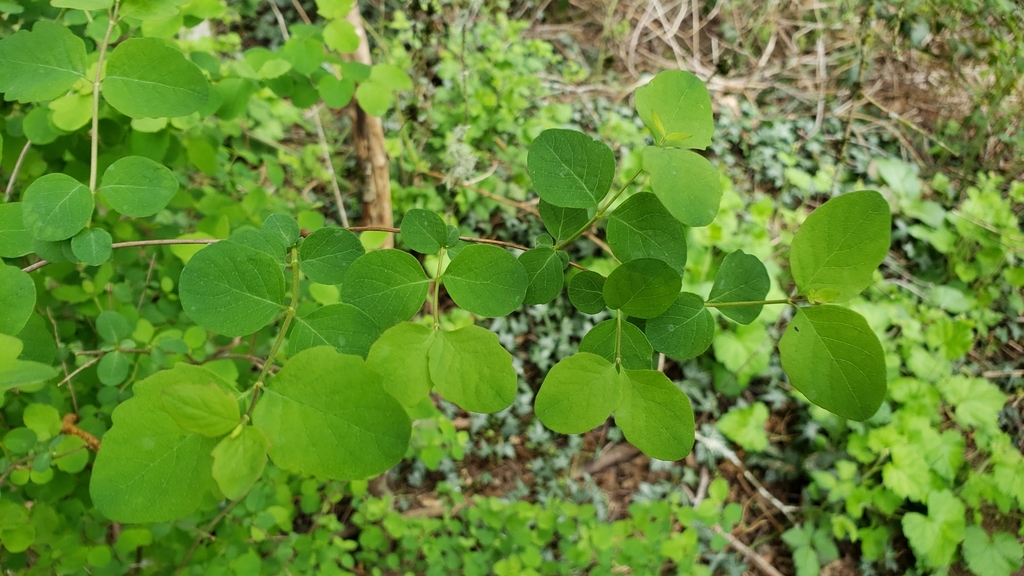
Snowberry is a charming deciduous shrub known for its clusters of waxy, white berries that persist into winter. It thrives in various conditions and provides excellent habitat for local birds. This plant is a great choice for naturalizing in woodland gardens or informal hedges.

At a glance
- Care level
- Easy
- Plant type
- Deciduous shrub
- Light
- Partial shade to full sun
- Indoor light
- Bright indirect
- Water
- Every 7 to 14 days
- Mature size
- 1 to 2 meters
- Growth rate
- Medium
- Hardiness
- USDA 3 to 7
- Bloom time
- Early to mid summer
Care
Keep the soil consistently moist but well drained to support healthy growth. Watch for powdery mildew on the leaves during humid spells and prune back old stems to encourage fresh growth. It is a hardy shrub that requires minimal fuss once established.
- Watering
- Water regularly during the first growing season to establish a deep root system.
- Feeding
- Apply a balanced organic fertilizer in early spring as new growth begins.
- Pruning
- Prune in late winter or early spring to remove dead wood and maintain the desired shape.
- Repotting
- Repot only if the shrub is container grown and has become root bound.
- Soil
- Well draining, loamy soil
- Soil pH
- Neutral to slightly acidic
- Temperature
- -40 to 30°C
- Humidity
- 40 to 70%
- Drought tolerance
- Moderate
- Lifespan
- Perennial, typically 20 plus years
- Deer and rabbits
- Moderate
Signs it needs repotting
- Roots growing out of the drainage holes.
- Stunted growth despite regular watering.
- Soil drying out very quickly.
Safety
- People
- Ingestion of the berries can cause gastrointestinal distress, including vomiting and diarrhea.
- Pets
- The berries are mildly toxic to cats and dogs if ingested in large quantities.
- Children
- The berries are attractive to children but pose a risk of stomach upset if eaten.
- Contact allergens
- The sap may cause mild skin irritation in sensitive individuals.
- Airborne allergens
- There are no significant reports of airborne allergens associated with this shrub.
- Edibility
- The berries are considered mildly toxic to humans and should not be consumed.
How to identify it
- Small, oval, opposite leaves
- Tiny, bell shaped pink flowers
- Clusters of round, white berries
- Slender, arching woody stems
- Height
- 0.6 to 1.8m
- Spread
- 0.9 to 2m
- Leaves
- green, blue-green, deciduous
- Flowers
- pink, white, 0.5 to 1cm
- Fruit
- white, Late summer to winter
Problems to watch for
- AphidsCommon
- Powdery MildewCommon
- Leaf SpotUncommon
- Root RotUncommon
Check your snowberry from a photo
Pocket Botanist looks at a photo of your plant and tells you what's wrong and what to try first.
Scan with your phone's camera to get the app
Or go to pocketbotanist.app/get on your phone
Growing it
- Propagation
- cuttings, division, seed
- When to plant
- spring, autumn
- Overwintering
- No special winter care is required as it is fully hardy. You can prune out dead or damaged wood in late winter before new growth begins.
- In containers
- It can grow in large containers, but it prefers being in the ground to spread its rhizomes.
Softwood Cuttings
- Take 10 cm cuttings in early summer.
- Remove lower leaves.
- Dip in rooting hormone and place in moist soil.
Division
- Dig up a section of the root mass in early spring.
- Separate the suckers with a sharp spade.
- Replant immediately in a new location.
Plant in groups to encourage the formation of thickets, which provides the best shelter for local wildlife.
Grows well with
- Serviceberry · They share similar woodland habitat requirements and provide layered interest.
- Red Osier Dogwood · Both shrubs thrive in moist soils and offer excellent winter color.
Similar species
- Coralberry · A related species with similar growth habits but distinct pinkish red berries.
Science
- Family
- Caprifoliaceae
- Genus
- Symphoricarpos
- Order
- Dipsacales
- Class
- Magnoliopsida
- Native range
- Northern North America
- Conservation
- This plant is common and widespread across its range and is not of conservation concern.
It thrives in forest edges and open woodlands where it spreads via underground rhizomes to form thickets.
- Value to wildlife
- nectar source, winter food for birds, nesting cover
- Pollinators
- bees, butterflies
- Uses
- ornamental shrub, erosion control, wildlife garden, hedging
Through the year
Ecological indicators
- Salinity
- 2/9
- Light
- 5/9
- Moisture
- 5/9
- Nutrients
- 4/9
- Soil reaction
- 5/9
- Temperature
- 3/9
Taxonomy resolved against GBIF.
Questions people ask
- Are the berries poisonous to dogs?
- Yes, they can cause digestive upset in pets if ingested in large quantities.
- Does it need pruning?
- It benefits from occasional thinning to keep the shrub from becoming too dense.
Where the name comes from
The genus name Symphoricarpos comes from Greek words meaning to bear fruit together, referring to the clustered berries. The species name albus means white, describing the fruit color.
Good to know
- The berries are often called snowberries because of their bright white appearance.
- Indigenous peoples traditionally used the plant for various medicinal purposes.
- It is a very tough plant that tolerates a wide range of soil conditions.
- The berries are a vital food source for birds during harsh winters.
Also in
Keep your snowberry growing
This page is a general guide. Save your plant in Pocket Botanist and you get care reminders timed for this plant, plus a care history that shows what worked.
Scan with your phone's camera to get the app
Or go to pocketbotanist.app/get on your phone
This guide was generated with AI on and checked against GBIF taxonomy. It is general information, not horticultural or veterinary advice. Read about how we build these guides.