 Pocket Botanist
Plant guide
Japanese pagoda tree.
Styphnolobium japonicum
Pronounced stif-no-LO-bee-um ja-PON-i-kum
Also known as Chinese Scholar Tree, Chinese Scholartree, Japanese Pagoda Tree, Japanese pagoda-tree, Pagoda-tree, Scholar tree, pagoda tree



Scan with your phone's camera to get the app
Or go to pocketbotanist.app/get on your phone
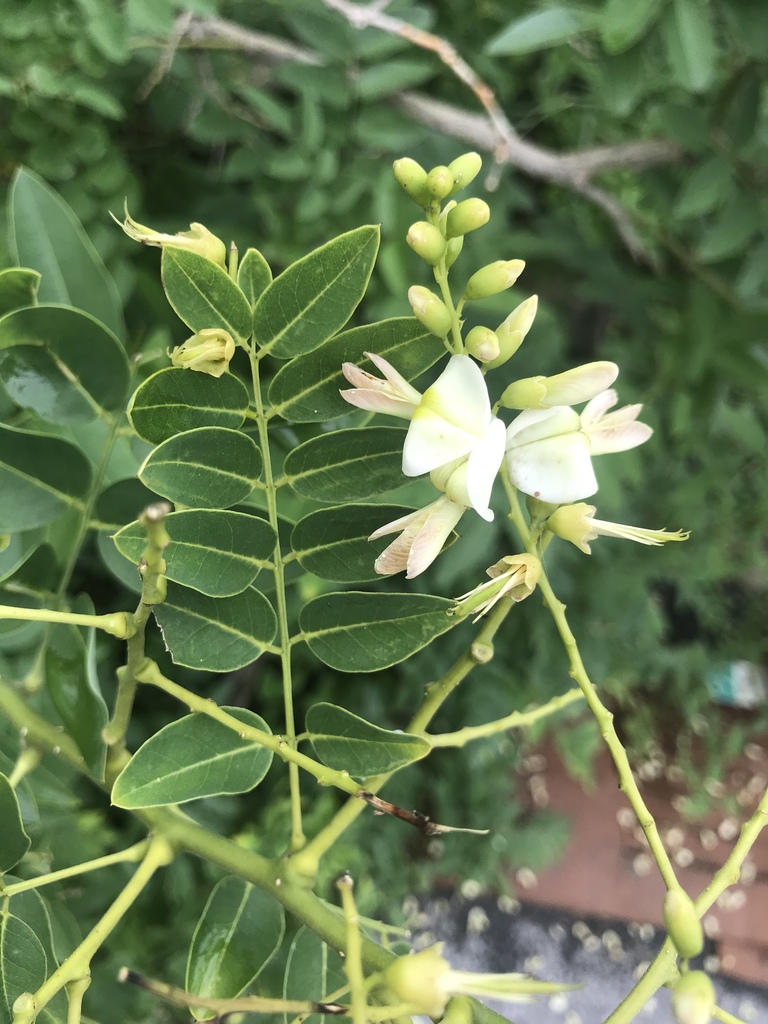
The Japanese pagoda tree is a beautiful, deciduous specimen known for its graceful, rounded canopy. It produces lovely clusters of creamy white flowers in late summer that look like tiny pea blossoms. This tree is quite hardy and adds a nice touch of elegance to any landscape.
At a glance
- Care level
- Easy
- Plant type
- Deciduous tree
- Light
- Full sun
- Indoor light
- Direct sun
- Water
- Every 7 to 14 days
- Mature size
- 30 to 50 feet
- Growth rate
- Medium
- Hardiness
- USDA 4 to 8
- Bloom time
- Mid to late summer
Care
Plant this tree in a spot with plenty of sun to encourage the best flowering. Keep an eye on the soil moisture during the first few years, but it becomes quite drought tolerant once established. Watch for any signs of leaf drop or yellowing which might suggest poor drainage.
- Watering
- Water deeply once a week during dry spells while the tree is young.
- Feeding
- Apply a balanced slow release fertilizer in early spring before new growth starts.
- Pruning
- Prune during the dormant winter months to remove dead wood and shape the canopy.
- Repotting
- If grown in a container, move to a larger pot every few years as it outgrows its space.
- Soil
- Well draining loam
- Soil pH
- 6.0 to 8.0
- Temperature
- -25 to 35°C
- Humidity
- 40 to 70%
- Drought tolerance
- High
- Lifespan
- Long lived, often 50 to 100 years.
- Fragrance
- Light
- Deer and rabbits
- Moderate
Safety
- People
- All parts of the plant are considered toxic if ingested.
- Children
- Keep children away from the pods as they are toxic if eaten.
- Contact allergens
- The sap may cause mild skin irritation in sensitive individuals.
- Airborne allergens
- The pollen can be a moderate trigger for those with seasonal allergies.
- Edibility
- The pods and seeds contain toxins and should not be consumed.
How to identify it
- Compound leaves with small oval leaflets
- Clusters of creamy white pea flowers
- Smooth gray bark on younger branches
- Distinctive knobby seed pods in autumn
- Height
- 10 to 20m
- Spread
- 10 to 15m
- Leaves
- green, deciduous
- Flowers
- white, cream, 1 to 2cm
- Fruit
- green, yellow, Autumn
Problems to watch for
- Twig blight · Fungal infection causing dieback on smaller branches.
- Scale insects · Small insects that suck sap and weaken the tree.
Check your japanese pagoda tree from a photo
Pocket Botanist looks at a photo of your plant and tells you what's wrong and what to try first.
Scan with your phone's camera to get the app
Or go to pocketbotanist.app/get on your phone
Growing it
- Propagation
- seed, cuttings
- When to plant
- spring, autumn
- Overwintering
- Young trees benefit from a layer of mulch around the base to protect roots from deep freezes. No special winter care is needed for established trees.
- In containers
- It is generally too large for long term container growth.
Plant shallow rooted perennials under the tree to avoid disturbing its root system.
Grows well with
Similar species
- Black Locust · It shares similar compound leaves and pea like flowers.
Science
- Family
- Fabaceae
- Genus
- Styphnolobium
- Order
- Fabales
- Class
- Magnoliopsida
- Native range
- China and Korea
- Conservation
- Not currently of conservation concern.
It thrives in well drained soils and is highly adaptable to various urban conditions.
- Value to wildlife
- nectar source
- Pollinators
- bees, butterflies
- Uses
- ornamental shade tree, urban street tree, honey production
Through the year
Ecological indicators
- Salinity
- 3/9
- Soil reaction
- 6/9
- Light
- 8/9
- Temperature
- 5/9
- Moisture
- 5/9
- Nutrients
- 5/9
Taxonomy resolved against GBIF.
Questions people ask
- Is this tree messy?
- It can drop a significant amount of pods and flowers in late summer and autumn.
- How fast does it grow?
- It has a moderate growth rate, typically adding 30 to 60 centimeters per year.
Where the name comes from
The genus name comes from Greek words meaning stiff and pod, referring to the fruit, while the specific epithet incorrectly suggests a Japanese origin.
Good to know
- It is often called the Japanese pagoda tree despite being native to China.
- The flowers are sometimes used to produce a yellow dye.
- It is a member of the pea family.
Also in
Keep your japanese pagoda tree growing
This page is a general guide. Save your plant in Pocket Botanist and you get care reminders timed for this plant, plus a care history that shows what worked.
Scan with your phone's camera to get the app
Or go to pocketbotanist.app/get on your phone
This guide was generated with AI on and checked against GBIF taxonomy. It is general information, not horticultural or veterinary advice. Read about how we build these guides.