 Pocket Botanist
Plant guide
Siebold's elderberry.
Sambucus sieboldiana
Pronounced sam-BOO-kus see-bol-dee-AY-nah



Scan with your phone's camera to get the app
Or go to pocketbotanist.app/get on your phone

This lovely shrub is a real standout in the garden, known for its lush foliage and clusters of small berries. It thrives in temperate climates and adds a nice touch of texture to any landscape. You'll enjoy watching it change through the seasons.
At a glance
- Care level
- Easy
- Plant type
- Deciduous shrub
- Light
- Full sun to partial shade
- Indoor light
- Bright indirect
- Water
- Every 3 to 7 days
- Mature size
- 10 to 15 feet
- Growth rate
- Fast
- Hardiness
- USDA 5 to 8
- Bloom time
- Late spring to early summer
Care
Keep the soil consistently moist but not waterlogged to help it establish well. Watch for drooping leaves, which often signal that the plant is thirsty. A layer of mulch around the base helps keep the roots cool and happy.
- Watering
- Water deeply whenever the top inch of soil feels dry to the touch.
- Feeding
- Apply a balanced, slow release fertilizer once during the spring growing season.
- Pruning
- Trim back dead or overgrown branches in late winter before new growth starts.
- Repotting
- Repot only if the shrub becomes rootbound in its container.
- Soil
- Moist, well-draining, fertile soil
- Soil pH
- 6.0 to 7.5
- Temperature
- -20 to 30°C
- Humidity
- 40 to 70%
- Drought tolerance
- Moderate
- Lifespan
- Perennial, typically 15 to 25 years.
- Fragrance
- Light
- Deer and rabbits
- Moderate
Signs it needs repotting
- Roots growing out of the drainage holes
- Water running straight through the pot without soaking in
Safety
- People
- Raw berries, leaves, and bark contain cyanogenic glycosides that can cause nausea and vomiting.
- Pets
- The berries and foliage can be toxic to cats and dogs if ingested.
- Children
- Keep children away from the raw berries, as they are tempting but harmful if ingested.
- Contact allergens
- Handling the foliage may cause mild skin irritation in sensitive individuals.
- Airborne allergens
- The pollen can trigger mild allergic reactions in some people during the flowering season.
- Edibility
- Leaves, stems, bark, roots and unripe berries are toxic and should never be eaten, even cooked. Only fully ripe berries can be eaten, and only after they are cooked thoroughly with the seeds removed.
How to identify it
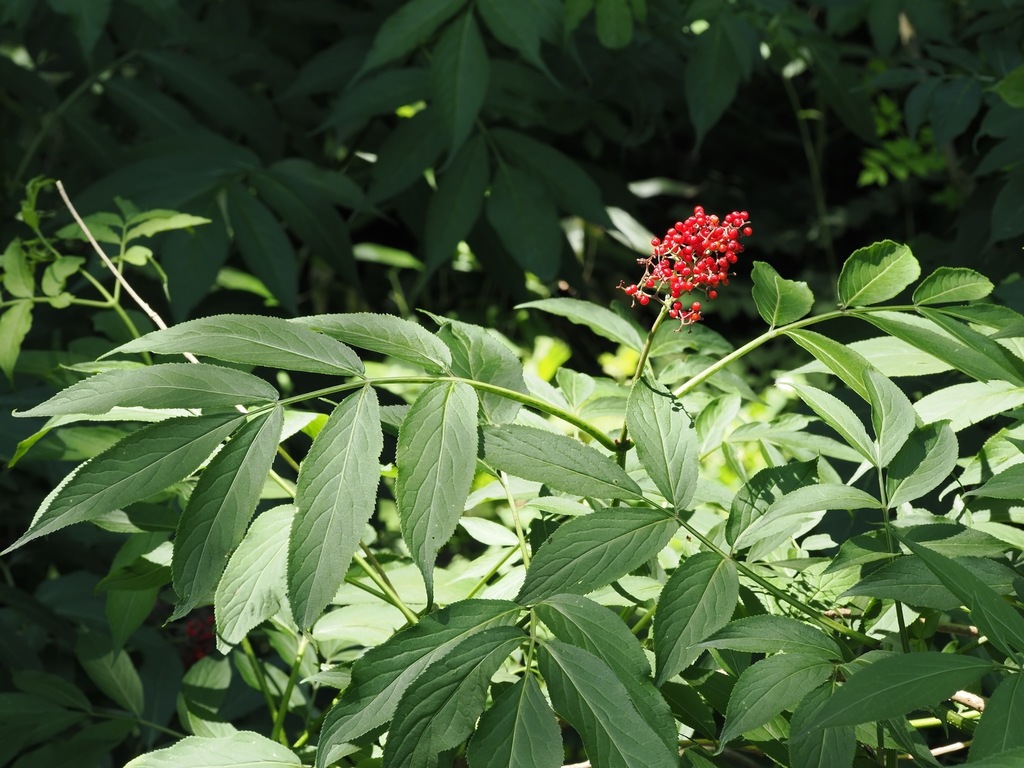
- Opposite, pinnately compound leaves
- Small white flowers in clusters
- Red or dark purple berries
- Sturdy, woody stems
- Height
- 2 to 4m
- Spread
- 2 to 4m
- Leaves
- green, deciduous
- Flowers
- white, cream, 0.5 to 0.8cm
- Fruit
- red, Late summer to early autumn
Problems to watch for
- Aphids · Small insects that cluster on new growth and suck plant sap.
- Powdery mildew · A fungal infection causing white dusty patches on the leaves.
Check your siebold's elderberry from a photo
Pocket Botanist looks at a photo of your plant and tells you what's wrong and what to try first.
Scan with your phone's camera to get the app
Or go to pocketbotanist.app/get on your phone
Growing it
- Propagation
- cuttings, seed
- When to plant
- spring, autumn
- Overwintering
- Mulch the base in late autumn to protect the roots from deep freezes. Prune back any dead wood in early spring before new growth begins.
- In containers
- It can be grown in a very large container, but it is much happier in the ground.
Hardwood cuttings
- Take 20cm cuttings in late autumn.
- Place them in a pot with moist, sandy soil.
- Keep them in a cool, sheltered spot until spring.
Plant these shrubs in groups to create a natural screen that supports local bird populations.
Grows well with
Similar species
- Black Elderberry · It is a close relative with similar growth habits but produces black fruit.
Science
- Family
- Viburnaceae
- Genus
- Sambucus
- Order
- Dipsacales
- Class
- Magnoliopsida
- Native range
- Japan and East Asia.
- Conservation
- Not currently a conservation concern.
It thrives in moist, well-draining woodland edges where it can spread its roots.
- Value to wildlife
- nectar source, provides food for birds
- Pollinators
- bees, butterflies
- Uses
- ornamental shrub, wildlife habitat, hedgerow plant
Through the year
Ecological indicators
- Salinity
- 2/9
- Soil reaction
- 6/9
- Light
- 5/9
- Temperature
- 5/9
- Moisture
- 6/9
- Nutrients
- 5/9
Taxonomy resolved against GBIF.
Questions people ask
- Can I eat the berries raw?
- No, you should never eat them raw because they contain toxins.
- Does it need full sun?
- It prefers partial shade but will tolerate full sun if the soil stays moist.
Where the name comes from
The name Sambucus comes from the Greek word for a musical instrument, while sieboldiana honors the botanist Philipp Franz von Siebold.
Good to know
- It is native to Japan and parts of East Asia.
- The red berries are a favorite snack for local birds.
- It is closely related to the common European elderberry.
Also in
Keep your siebold's elderberry growing
This page is a general guide. Save your plant in Pocket Botanist and you get care reminders timed for this plant, plus a care history that shows what worked.
Scan with your phone's camera to get the app
Or go to pocketbotanist.app/get on your phone
This guide was generated with AI on and checked against GBIF taxonomy. It is general information, not horticultural or veterinary advice. Read about how we build these guides.