 Pocket Botanist
Plant guide
Cutleaf coneflower.
Rudbeckia laciniata
Pronounced rud-BEK-ee-uh lah-sin-ee-AY-tuh
Also known as Coneflower, Cut-leaf Coneflower, Cutleaf Coneflower, Dronjava pupavica



Scan with your phone's camera to get the app
Or go to pocketbotanist.app/get on your phone

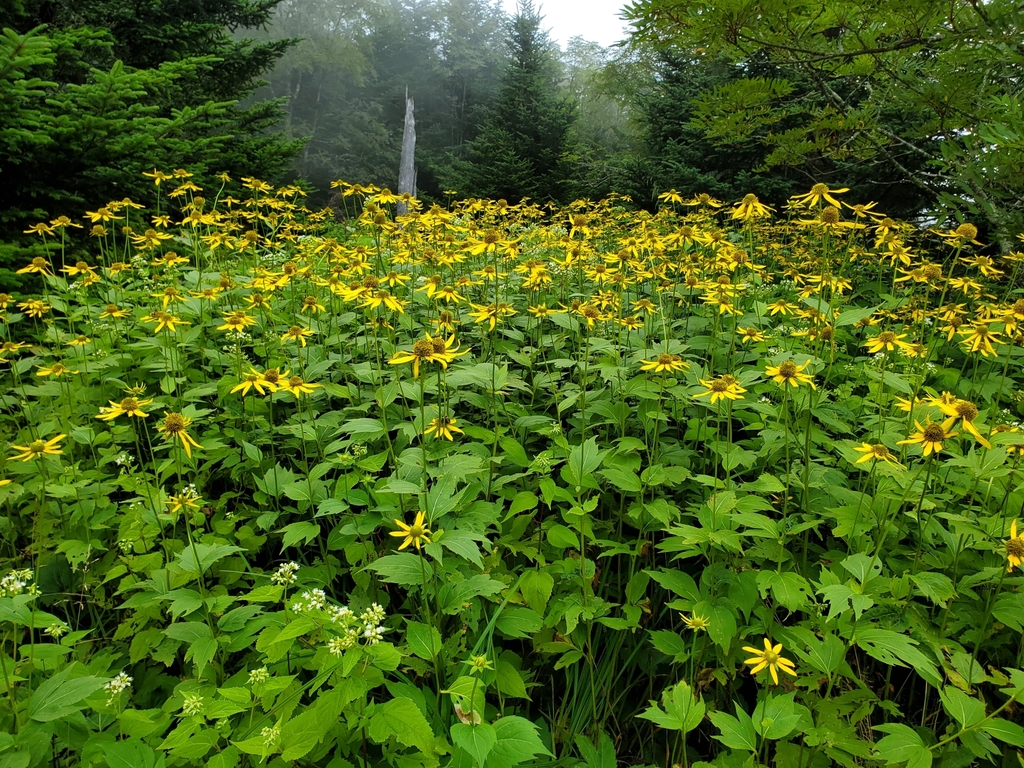
This tall perennial brings a cheerful, wild look to your garden with its bright yellow blooms. It thrives in moist, sunny spots and is a favorite for local pollinators. You will love how it stands out in the back of a border.
At a glance
- Care level
- Easy
- Plant type
- Herbaceous perennial
- Light
- Full sun to partial shade
- Indoor light
- Direct sun
- Water
- Every 3 to 7 days
- Mature size
- 3 to 9 feet
- Growth rate
- Fast
- Hardiness
- USDA 3 to 9
- Bloom time
- Mid summer to early autumn
Care
Keep the soil consistently moist to prevent the leaves from wilting during hot spells. Watch for powdery mildew on the foliage if the air circulation is poor. Deadheading spent flowers can encourage a second flush of blooms later in the season.
- Watering
- Keep the soil evenly moist, especially during dry summer weather.
- Feeding
- Apply a balanced compost or organic fertilizer once in early spring.
- Pruning
- Cut the stems back to the ground in late winter or early spring.
- Repotting
- Divide the clumps every few years to maintain vigor and prevent overcrowding.
- Soil
- Moist, fertile, well draining soil
- Soil pH
- 6.0 to 7.5
- Temperature
- -35 to 35°C
- Humidity
- 40 to 70%
- Drought tolerance
- Low
- Lifespan
- Perennial, typically 5 to 10 years
- Deer and rabbits
- Moderate
Signs it needs repotting
- Roots growing out of the drainage holes
- Water running straight through the pot without soaking in
Safety
- People
- The plant contains sesquiterpene lactones which can cause skin irritation upon contact.
- Children
- Keep children away from the foliage to prevent skin irritation, and discourage ingestion of any plant parts.
- Contact allergens
- Handling the foliage may cause dermatitis in sensitive individuals due to the presence of sesquiterpene lactones.
- Airborne allergens
- The pollen can trigger hay fever symptoms in susceptible people during the late summer bloom.
- Edibility
- This plant is not considered edible and may cause irritation if ingested.
How to identify it
- Tall stems reaching several feet
- Deeply lobed, jagged green leaves
- Bright yellow drooping ray florets
- Prominent greenish yellow central cone
- Height
- 1.2 to 2.5m
- Spread
- 0.6 to 1m
- Leaves
- green, deciduous
- Flowers
- yellow, 5 to 10cm
- Fruit
- brown, late autumn
Problems to watch for
- Powdery mildew · A white fungal growth appears on leaves during periods of high humidity and poor air circulation.
Check your cutleaf coneflower from a photo
Pocket Botanist looks at a photo of your plant and tells you what's wrong and what to try first.
Scan with your phone's camera to get the app
Or go to pocketbotanist.app/get on your phone
Growing it
- Propagation
- division, seed
- When to plant
- spring, autumn
- Overwintering
- Cut the stems back to the ground after the first hard frost to tidy the garden. The crown will remain dormant through the winter.
- In containers
- It is generally too large for containers unless you use a very deep, heavy pot to prevent tipping.
Division
- 1. Dig up the clump in early spring as new growth begins.
- 2. Use a sharp spade to divide the root mass into smaller sections.
- 3. Replant the divisions immediately at the same depth as the original plant.
Pair this plant with other moisture-loving perennials to create a lush, self-sustaining meadow border.
Grows well with
- Joe Pye Weed · They share similar moisture requirements and bloom at the same time.
- New England Aster · The purple flowers provide a beautiful color contrast to the yellow coneflowers.
- Switchgrass · The grass provides structural support and a textural contrast to the broad leaves.
Similar species
- Black-eyed Susan · It is a smaller, more common relative with similar flower structure.
Science
- Family
- Asteraceae
- Genus
- Rudbeckia
- Order
- Asterales
- Class
- Magnoliopsida
- Native range
- North America
- Conservation
- This species is widespread and not of conservation concern.
It naturally inhabits moist thickets, floodplains, and stream banks where it can access consistent soil moisture.
- Value to wildlife
- nectar source, larval host plant, seed source for birds
- Pollinators
- bees, butterflies, moths
- Uses
- pollinator gardens, wildlife borders, naturalized areas, cut flowers
Through the year
Ecological indicators
- Salinity
- 1/9
- Soil reaction
- 6/9
- Light
- 7/9
- Temperature
- 5/9
- Moisture
- 7/9
- Nutrients
- 6/9
Taxonomy resolved against GBIF.
Questions people ask
- Does it need staking?
- Yes, because of its height, it often benefits from support to prevent it from flopping over.
- Is it invasive?
- It can be aggressive in small gardens, so give it plenty of space to spread.
Where the name comes from
The genus honors Olof Rudbeck, a Swedish botanist, while the species name laciniata refers to the deeply cut or fringed appearance of the leaves.
Good to know
- It is commonly known as cutleaf coneflower because of its deeply lobed leaves.
- The plant can reach over two meters in height in ideal conditions.
- It is a host plant for the silvery checkerspot butterfly.
- The flowers have a distinct drooping petal habit.
- It thrives in moist soil where other plants might struggle.
Keep your cutleaf coneflower growing
This page is a general guide. Save your plant in Pocket Botanist and you get care reminders timed for this plant, plus a care history that shows what worked.
Scan with your phone's camera to get the app
Or go to pocketbotanist.app/get on your phone
This guide was generated with AI on and checked against GBIF taxonomy. It is general information, not horticultural or veterinary advice. Read about how we build these guides.