 Pocket Botanist
Plant guide
Field rose.
Rosa arvensis
Pronounced RO-za ar-VEN-sis
Also known as Field Rose, Field-rose, musk rose



Scan with your phone's camera to get the app
Or go to pocketbotanist.app/get on your phone
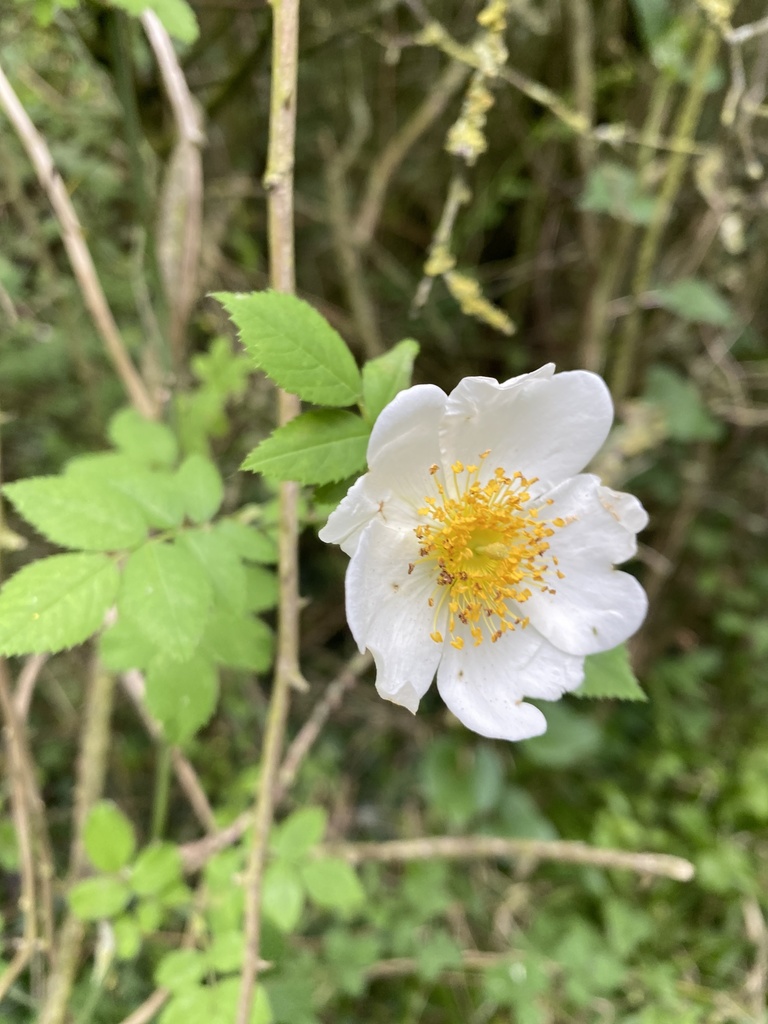
The field rose is a lovely, trailing shrub that brings a touch of wild elegance to any garden. It is known for its delicate white flowers and long, arching stems that look great scrambling over fences or walls. You will find it is quite hardy and adds a classic, woodland feel to your outdoor space.
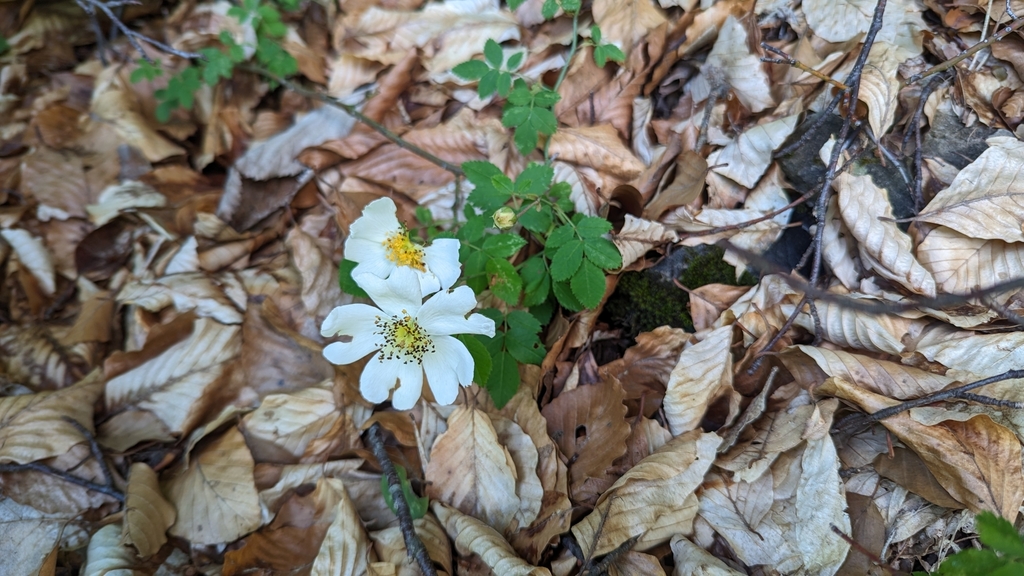
At a glance
- Care level
- Easy
- Plant type
- Deciduous shrub
- Light
- Full sun to partial shade
- Indoor light
- Bright indirect
- Water
- Every 5 to 10 days
- Mature size
- 3 to 5 meters
- Growth rate
- Medium
- Hardiness
- USDA 5 to 9
- Bloom time
- Early to mid summer
Care
Keep the soil consistently moist but never soggy to help your rose thrive. Watch for yellowing leaves or wilting, which often signal that the plant needs a bit more drainage or a change in watering habits. Pruning after the main flowering season keeps the plant tidy and encourages a nice shape for the following year.
- Watering
- Water deeply whenever the top inch of soil feels dry to the touch.
- Feeding
- Apply a balanced rose fertilizer during the active growing season.
- Pruning
- Prune back old or crossing stems right after flowering in summer to maintain health. In late winter, only remove dead or damaged wood.
- Repotting
- Repot only if the plant becomes root-bound or needs fresh soil.
- Soil
- Well-draining, fertile loam
- Soil pH
- 6.0 to 7.0
- Temperature
- -20 to 30°C
- Humidity
- 40 to 70%
- Drought tolerance
- Moderate
- Lifespan
- Perennial, typically 10 to 20 years.
- Fragrance
- Light
- Deer and rabbits
- Low
Signs it needs repotting
- Roots growing out of the drainage holes.
- Water running straight through the pot without soaking in.
Safety
- People
- The plant is not toxic, but the sharp thorns can cause mechanical injury to skin.
- Children
- Keep children away from the stems as the hooked thorns are sharp and can easily snag clothing or skin.
- Contact allergens
- The sharp thorns can cause scratches and minor skin irritation.
- Airborne allergens
- The pollen may trigger mild hay fever in sensitive individuals during the flowering season.
- Edibility
- While rose hips are technically edible, they contain irritating hairs inside that must be removed before consumption.
How to identify it
- Trailing or climbing habit
- Single white flowers with yellow centers
- Small, red, oval shaped hips
- Pinnate leaves with serrated edges
- Long, slender, arching green stems
- Height
- 0.5 to 3m
- Spread
- 1 to 4m
- Leaves
- green, deciduous
- Flowers
- white, 3 to 5cm
- Fruit
- red, Autumn
Problems to watch for
- Black spot · A fungal infection causing dark spots on leaves that may lead to premature leaf drop.
- Aphids · Small insects that cluster on new growth and buds, sucking sap from the plant.
Check your field rose from a photo
Pocket Botanist looks at a photo of your plant and tells you what's wrong and what to try first.
Scan with your phone's camera to get the app
Or go to pocketbotanist.app/get on your phone
Growing it
- Propagation
- cuttings, seed
- When to plant
- spring, autumn
- Overwintering
- No special protection is needed as it is fully hardy. Simply clear away any dead or diseased foliage in late winter.
- In containers
- It is not ideal for containers due to its vigorous, trailing habit, but it can be grown in a very large tub with support.
Hardwood Cuttings
- Take 20cm cuttings in late autumn.
- Remove lower leaves and insert into a pot of gritty compost.
- Keep in a cold frame until spring.
Plant this rose near sturdy shrubs that can act as a natural support for its trailing stems.
Grows well with
- Foxglove · They share similar woodland edge habitat preferences.
- Common Hawthorn · This rose naturally scrambles through hawthorn hedges in the wild.
Similar species
- Dog Rose · It is a similar wild rose but typically grows more upright.
Science
- Family
- Rosaceae
- Genus
- Rosa
- Order
- Rosales
- Class
- Magnoliopsida
- Native range
- Europe and parts of Western Asia.
- Conservation
- It is a common and stable species in its native range and is not currently of conservation concern.
It thrives by scrambling over other vegetation to reach sunlight in woodland edges and hedgerows.
- Value to wildlife
- nectar source, provides shelter, food for birds
- Pollinators
- bees, beetles
- Uses
- hedgerow plant, ground cover, wildlife garden, naturalistic landscaping
Through the year
Ecological indicators
- Salinity
- 1/9
- Soil reaction
- 6/9
- Light
- 6/9
- Temperature
- 5/9
- Moisture
- 5/9
- Nutrients
- 5/9
Taxonomy resolved against GBIF.
Questions people ask
- Does it need a trellis?
- It can be grown as a ground cover or allowed to scramble through shrubs and fences.
- When should I prune it?
- Prune immediately after flowering to encourage fresh growth for the following year.
Where the name comes from
The name arvensis is Latin for of the field, referring to its common habitat in wild meadows and hedgerows.
Good to know
- It is also known as the Ayrshire rose.
- The flowers have a delicate, sweet fragrance.
- It is a parent of many historical climbing rose hybrids.
- The stems can trail along the ground for several meters.
Keep your field rose growing
This page is a general guide. Save your plant in Pocket Botanist and you get care reminders timed for this plant, plus a care history that shows what worked.
Scan with your phone's camera to get the app
Or go to pocketbotanist.app/get on your phone
This guide was generated with AI on and checked against GBIF taxonomy. It is general information, not horticultural or veterinary advice. Read about how we build these guides.