 Pocket Botanist
Plant guide
Fragrant sumac.
Rhus aromatica
Pronounced roos ah-roh-MAT-ih-kah
Also known as Aromatic Sumac, Fragrant Sumac, Lemon Sumac, Polecatbush, Skunkbrush, Squawbush, Sweet Sumac, basket bush



Scan with your phone's camera to get the app
Or go to pocketbotanist.app/get on your phone
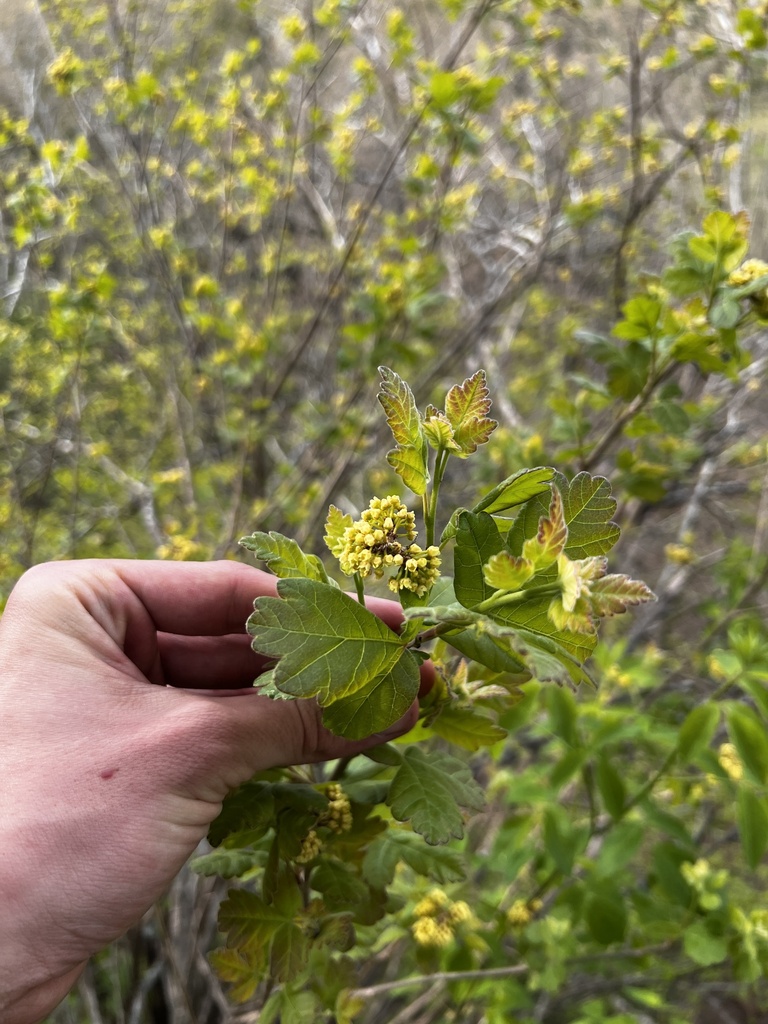
Fragrant sumac is a hardy, deciduous shrub that offers lovely seasonal color and a pleasant scent when its leaves are crushed. It is a fantastic choice for naturalizing areas or preventing soil erosion on slopes. You will enjoy its bright yellow flowers in spring and vibrant red foliage in autumn.
At a glance
- Care level
- Easy
- Plant type
- Deciduous shrub
- Light
- Full sun to partial shade
- Indoor light
- Bright indirect
- Water
- Every 7 to 14 days
- Mature size
- 3 to 6 feet
- Growth rate
- Medium
- Hardiness
- USDA 3 to 9
- Bloom time
- Early to mid spring
Care
This shrub is quite adaptable and thrives in well drained soil. Keep an eye out for suckering, as it tends to spread over time. It is very drought tolerant once established in your garden.
- Watering
- Water regularly during the first year to help it establish a deep root system.
- Feeding
- A light application of balanced fertilizer in early spring is usually plenty.
- Pruning
- Prune in late winter or early spring to shape the plant and remove dead wood.
- Repotting
- If kept in a container, move to a larger pot every few years as it outgrows its space.
- Soil
- Well drained, rocky, or sandy soil
- Soil pH
- Acidic to alkaline
- Temperature
- -35 to 35°C
- Humidity
- 30 to 70%
- Drought tolerance
- High
- Lifespan
- Perennial, typically 20 to 50 years.
- Fragrance
- Strong
- Deer and rabbits
- High
Signs it needs repotting
- Roots growing out of drainage holes
- Stunted growth despite proper care
Safety
- People
- This plant is generally considered non-toxic, though some individuals may experience mild skin irritation from the sap.
- Children
- The berries are safe, but the stems can be woody and sharp, so keep an eye on small children playing near the shrub.
- Contact allergens
- The sap can cause mild contact dermatitis in sensitive individuals.
- Airborne allergens
- Pollen may cause mild seasonal allergies for some people.
- Edibility
- The berries are edible but can be quite tart and are often used for tea rather than eaten fresh.
How to identify it
- Three leaflets with serrated edges
- Aromatic foliage when crushed
- Small yellow flower clusters in spring
- Fuzzy red berries in late summer
- Low growing, spreading habit
- Height
- 0.6 to 1.8m
- Spread
- 1.5 to 3m
- Leaves
- green, deciduous
- Flowers
- yellow, 0.5 to 1cm
- Fruit
- red, Late summer to autumn
Problems to watch for
- Powdery mildew · A fungal infection that causes a white, dusty coating on the leaves.
Check your fragrant sumac from a photo
Pocket Botanist looks at a photo of your plant and tells you what's wrong and what to try first.
Scan with your phone's camera to get the app
Or go to pocketbotanist.app/get on your phone
Growing it
- Propagation
- cuttings, division, seed
- When to plant
- spring, autumn
- Overwintering
- No special winter care is needed as it is fully hardy. You can prune back dead wood in late winter before new growth starts.
- In containers
- It is not ideal for containers due to its wide spreading habit, but it can be grown in very large tubs.
Softwood cuttings
- Take 10cm cuttings in early summer.
- Remove lower leaves and dip in rooting hormone.
- Place in a moist, well-draining medium.
- Keep in bright, indirect light until rooted.
Pair this shrub with deep-rooted native grasses to create a stable, low-maintenance slope planting.
Grows well with
- Purple Coneflower · They share similar sun and soil requirements.
- Little Bluestem · This grass provides a beautiful textural contrast to the sumac leaves.
Similar species
- Staghorn Sumac · It is a much larger relative with fuzzy branches.
Science
- Family
- Anacardiaceae
- Genus
- Rhus
- Order
- Sapindales
- Class
- Magnoliopsida
- Native range
- Central and eastern North America.
- Conservation
- This plant is widespread and not of conservation concern.
It thrives in rocky, dry soils and is often found on hillsides or woodland edges where it provides essential cover for small mammals.
- Value to wildlife
- nectar source, nesting cover, bird food
- Pollinators
- bees, butterflies
- Uses
- groundcover, erosion control, wildlife garden, hedging
Through the year
Ecological indicators
- Salinity
- 2/9
- Soil reaction
- 6/9
- Light
- 7/9
- Temperature
- 5/9
- Moisture
- 3/9
- Nutrients
- 3/9
Taxonomy resolved against GBIF.
Questions people ask
- Is it related to poison ivy?
- Yes, it is in the same family, but it does not cause the same allergic reaction.
- Does it spread easily?
- It spreads by suckering, which makes it great for erosion control but something to watch in small gardens.
Where the name comes from
The name Rhus is the classical Greek name for sumac, while aromatica refers to the fragrant, citrus-scented leaves.
Good to know
- It is a member of the cashew family.
- The fall foliage turns brilliant shades of red and orange.
- It is highly effective at stabilizing slopes.
- Native Americans used the branches for basketry.
Also in
Keep your fragrant sumac growing
This page is a general guide. Save your plant in Pocket Botanist and you get care reminders timed for this plant, plus a care history that shows what worked.
Scan with your phone's camera to get the app
Or go to pocketbotanist.app/get on your phone
This guide was generated with AI on and checked against GBIF taxonomy. It is general information, not horticultural or veterinary advice. Read about how we build these guides.