 Pocket Botanist
Plant guide
Pontic rhododendron.
Rhododendron ponticum
Pronounced roh-doh-DEN-dron PON-ti-kum
Also known as Pontian rhododendron, Rhododendron, common rhododendron



Scan with your phone's camera to get the app
Or go to pocketbotanist.app/get on your phone
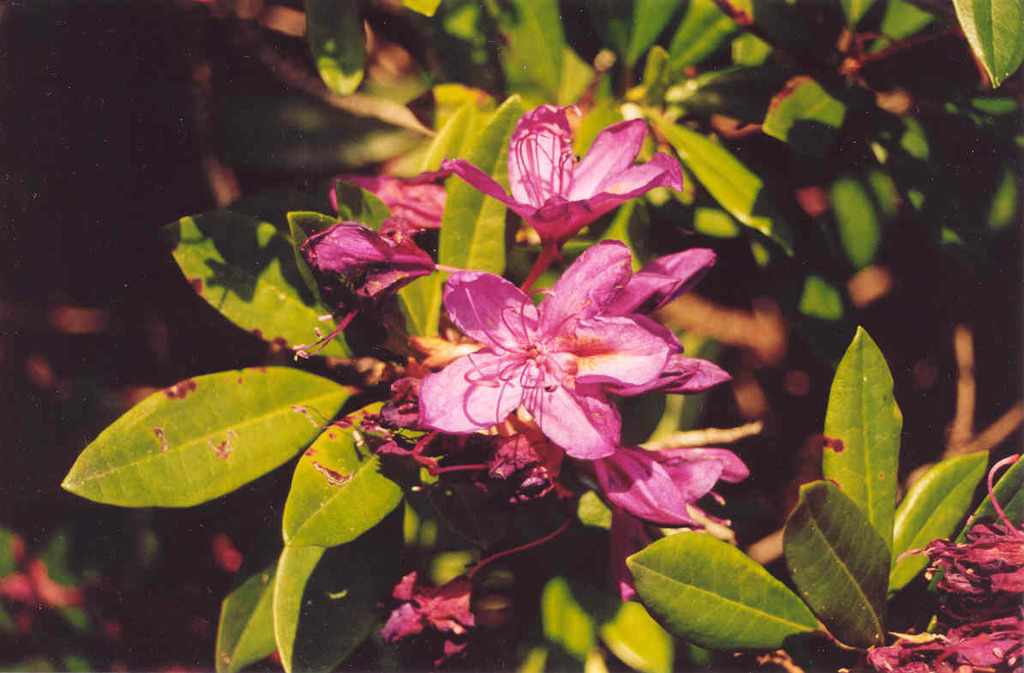
This evergreen shrub is famous for its massive, showy clusters of purple flowers. It thrives in cool, moist climates and acidic soils. You will find it makes a bold statement in any woodland garden.
At a glance
- Care level
- Moderate
- Plant type
- Evergreen shrub
- Light
- Partial shade to full sun
- Indoor light
- Bright indirect
- Water
- Every 7 to 14 days
- Mature size
- 15 to 20 feet
- Growth rate
- Medium
- Hardiness
- USDA 6 to 9
- Bloom time
- Late spring to early summer
Care
Keep the soil consistently moist but never soggy to prevent root rot. Watch for yellowing leaves, which often signal that the soil is not acidic enough for the plant. Mulch around the base to keep the shallow roots cool and protected.
- Watering
- Water deeply whenever the top inch of soil feels dry to the touch.
- Feeding
- Apply an acid-loving plant fertilizer once in early spring.
- Pruning
- Prune immediately after flowering to maintain shape and encourage bushier growth.
- Repotting
- Repot only when the plant has clearly outgrown its container or the soil has degraded.
- Soil
- Acidic, well-draining, organic-rich soil
- Soil pH
- 4.5 to 6.0
- Temperature
- -15 to 30°C
- Humidity
- 60 to 90%
- Drought tolerance
- Moderate
- Lifespan
- Perennial, can live for many decades.
- Deer and rabbits
- High
Signs it needs repotting
- Roots growing out of drainage holes
- Stunted growth
- Soil drying out very rapidly
Safety
- People
- The plant contains grayanotoxins which cause severe gastrointestinal and cardiac distress if consumed.
- Pets
- All parts of this plant are highly toxic to cats and dogs if ingested.
- Children
- Keep children away from this plant as all parts are poisonous if swallowed.
- Contact allergens
- The leaves can cause mild skin irritation in sensitive individuals.
- Airborne allergens
- The pollen is not typically a major allergen.
- Edibility
- All parts of this plant are highly toxic if ingested.
How to identify it
- Large, leathery, dark green leaves
- Showy clusters of purple flowers
- Evergreen shrub growth habit
- Bell shaped individual blossoms
- Height
- 2 to 5m
- Spread
- 2 to 5m
- Leaves
- dark green, evergreen
- Flowers
- purple, lilac, 4 to 6cm
- Fruit
- brown, Autumn
Problems to watch for
- Rhododendron leafhopper · Small insects that cause yellow spotting on leaves.
- Phytophthora root rot · A soil-borne fungus that causes wilting and death in poorly drained soil.
Check your pontic rhododendron from a photo
Pocket Botanist looks at a photo of your plant and tells you what's wrong and what to try first.
Scan with your phone's camera to get the app
Or go to pocketbotanist.app/get on your phone
Growing it
- Propagation
- cuttings, seed, layering
- When to plant
- spring, autumn
- Overwintering
- Mulch the base to protect roots from deep freezes. Ensure the soil remains moist but not waterlogged during winter thaws.
- In containers
- It is generally too large for long-term container growth unless a very large tub is used.
Semi-ripe cuttings
- Take 10cm cuttings in late summer.
- Remove lower leaves and dip in rooting hormone.
- Place in a well-draining peat-based mix.
- Cover with plastic to maintain humidity.
- Keep in bright, indirect light until rooted.
Pair with other acid-loving plants to ensure consistent soil pH management.
Grows well with
- Ferns · They enjoy the same acidic, shaded conditions.
- Camellia · They share similar soil and light requirements.
Similar species
- Rhododendron catawbiense · Similar growth habit but often more cold hardy.
Science
- Family
- Ericaceae
- Genus
- Rhododendron
- Order
- Ericales
- Class
- Magnoliopsida
- Native range
- Southwestern Europe and parts of Asia Minor.
- Conservation
- It is not endangered and is actually managed as a pest in many non-native regions.
It forms dense thickets in woodland understories that shade out most other competing plant species.
- Value to wildlife
- nectar source
- Pollinators
- bees
- Uses
- ornamental shrub, hedging, windbreak
Through the year
Ecological indicators
- Salinity
- 1/9
- Soil reaction
- 3/9
- Light
- 4/9
- Temperature
- 5/9
- Moisture
- 6/9
- Nutrients
- 3/9
Taxonomy resolved against GBIF.
Questions people ask
- Is it safe for pets?
- No, it is toxic to dogs, cats, and horses.
- Does it need full sun?
- It prefers partial shade and protection from harsh afternoon sun.
Where the name comes from
The name Rhododendron comes from the Greek words for rose and tree, while ponticum refers to the Pontus region in Turkey.
Good to know
- It was introduced to Britain in the 18th century as an ornamental.
- The nectar can produce toxic honey if bees forage on it extensively.
- It thrives in acidic, peaty soils.
Also in
Keep your pontic rhododendron growing
This page is a general guide. Save your plant in Pocket Botanist and you get care reminders timed for this plant, plus a care history that shows what worked.
Scan with your phone's camera to get the app
Or go to pocketbotanist.app/get on your phone
This guide was generated with AI on and checked against GBIF taxonomy. It is general information, not horticultural or veterinary advice. Read about how we build these guides.