 Pocket Botanist
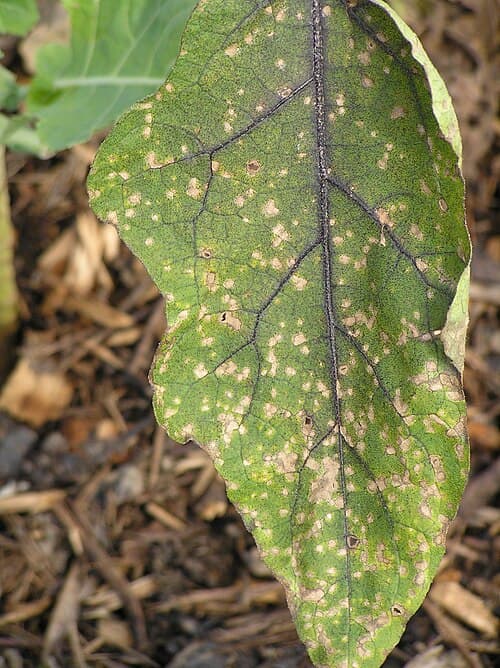

Check these first
- Examine the underside of the leaves for fungal growth.
- Check if the spots are concentrated near the leaf veins.
- Look for similar spots on neighboring oak trees.
Likely causes
Bur Oak Blight
Most likelyHow to tell: These spots appear as dark, scorched areas that often follow the veins of the leaf. They start small and grow until they cover large sections of the leaf blade.
What to do: Remove and destroy all fallen leaves in the autumn to stop the fungus from overwintering. If the infection is severe, consult an arborist about fungicide injections.
Anthracnose
PossibleHow to tell: Small, irregular brown or black spots appear on the leaves, often accompanied by leaf curling. This usually happens during a cool, wet spring.
What to do: Prune out any dead or damaged twigs to improve air circulation. Rake up and discard all fallen leaves to prevent the fungus from spreading next season.
Find out what's wrong with your bur oak
The list above covers the usual causes. Pocket Botanist looks at a photo of your actual plant and tells you the likely cause, how serious it is, and what to try first. Identification and a health check are free.



Scan with your phone's camera to get the app
Or go to pocketbotanist.app/get on your phone
When to worry
If the spots cover more than half of the leaf surface or cause the tree to lose its leaves by July, it is a serious issue. A few scattered spots are common and rarely threaten the tree.
Stopping it coming back
Keep the area around the base of the tree clean and ensure the canopy has good airflow.
Bur oak: spots? Check yours with a photo
Every plant is a little different. Take a photo of your bur oak and Pocket Botanist tells you which cause is most likely, how serious it is, and what to try first. A few checks a day are free. Save the plant and you get care reminders timed for it.
Scan with your phone's camera to get the app
Or go to pocketbotanist.app/get on your phone
Get the app · Or check it from a photo now, free
Questions people ask
- Can I spray the leaves with water to clean them?
- No, wetting the leaves can actually encourage fungal growth. Keep the foliage dry and focus on soil health.
- Are these spots contagious to other plants?
- Most oak specific fungi will not spread to your garden flowers or shrubs. They are generally host specific.
Guides to these causes
More problems with Bur oak
This article was generated with AI on from the plant’s care profile and is general information, not horticultural advice. Read about how we build these guides.