 Pocket Botanist
Plant guide
Callery pear.
Pyrus calleryana
Pronounced PY-rus kal-ler-ee-AY-nuh
Also known as Bradford, Bradford Pear, Callery Pear, cum tree, smegma tree, sperm tree



Scan with your phone's camera to get the app
Or go to pocketbotanist.app/get on your phone
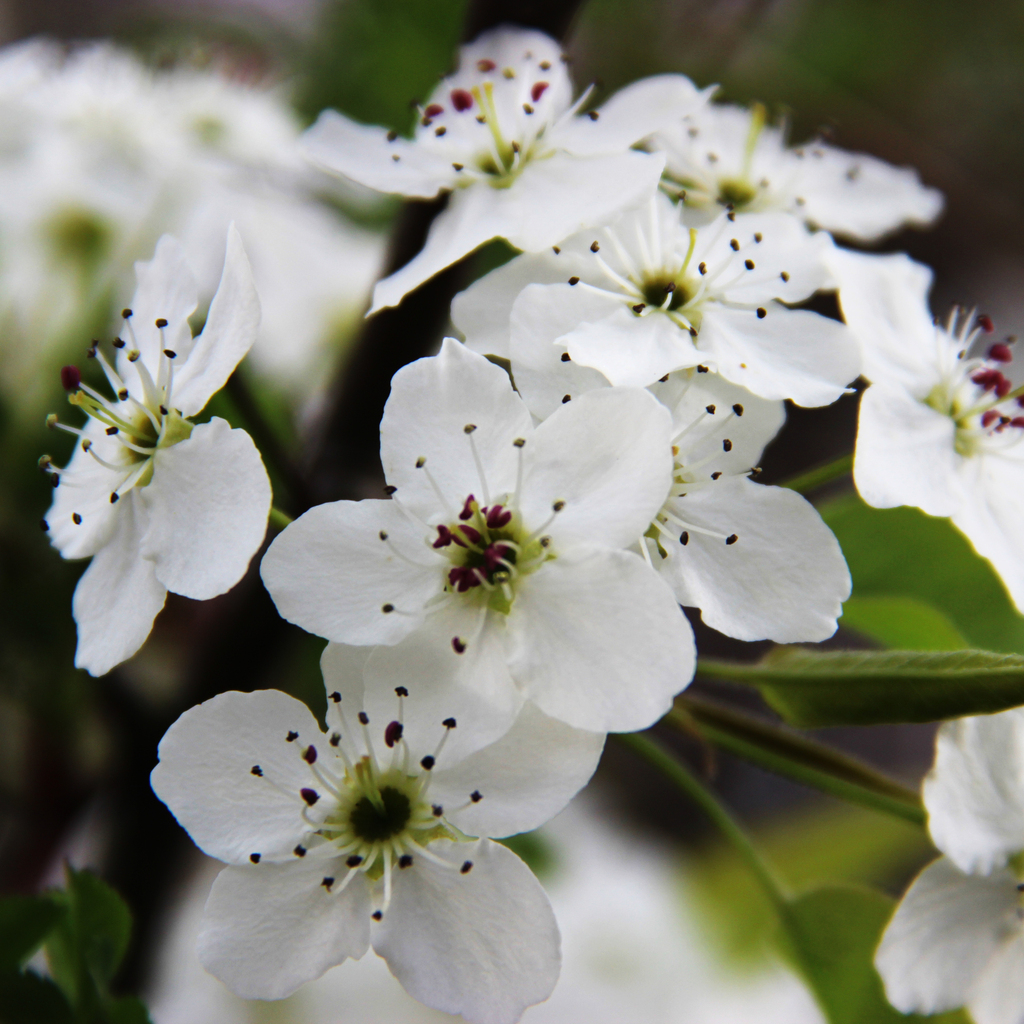
The Callery pear is a deciduous tree known for its early spring display of white flowers. It has a distinct pyramidal shape when young that often rounds out as it matures. You will see it frequently used in landscaping for its hardiness and quick growth.

At a glance
- Care level
- Easy
- Plant type
- Deciduous tree
- Light
- Full sun
- Indoor light
- Direct sun
- Water
- Every 7 to 14 days
- Mature size
- 30 to 50 feet
- Growth rate
- Fast
- Hardiness
- USDA 5 to 9
- Bloom time
- Early spring
Care
Plant this tree in a spot with plenty of sun to ensure the strongest branch structure. Keep an eye out for fire blight which shows up as blackened leaves or twigs. Regular monitoring helps you catch any structural issues before they become major problems.
- Watering
- Water deeply during the first few years to establish a strong root system.
- Feeding
- Apply a balanced fertilizer once in early spring before new growth begins.
- Pruning
- Prune in late winter to remove dead wood and improve the overall shape.
- Repotting
- This tree is meant for outdoor planting and is not suitable for container life.
- Soil
- Well draining loamy soil
- Soil pH
- 6.0 to 7.5
- Temperature
- -28 to 38°C
- Humidity
- 30 to 70%
Safety
- People
- The plant is not considered toxic to humans, though the fruit can cause mild stomach upset if consumed in large quantities.
- Children
- The small, hard fruits could pose a choking hazard to very small children if ingested.
- Contact allergens
- The bark and leaves are generally safe, but some individuals may experience mild skin irritation from handling the foliage.
- Airborne allergens
- The flowers produce a strong, often unpleasant odor that can trigger respiratory sensitivity in some people.
- Edibility
- The fruit is technically edible but is extremely astringent and generally considered unpalatable for humans.
How to identify it
- Glossy dark green ovate leaves
- Clusters of white five petaled flowers
- Small round brown pome fruits
- Pyramidal growth habit when young
- Brilliant red to purple autumn foliage
- Height
- 9 to 12m
- Spread
- 6 to 9m
- Leaves
- glossy green, red, purple, deciduous
- Flowers
- white, 2 to 3cm
- Fruit
- brown, Autumn
Problems to watch for
- Fire blight · A bacterial infection that causes branches to look scorched and die back.
- Weak branch structure · The tree is prone to splitting during high winds or heavy snow due to narrow branch angles.
Check your callery pear from a photo
Pocket Botanist looks at a photo of your plant and tells you what's wrong and what to try first.
Scan with your phone's camera to get the app
Or go to pocketbotanist.app/get on your phone
Growing it
- Propagation
- seed, cuttings
- When to plant
- spring, autumn
Because this tree is invasive, it is best to avoid planting it near natural areas where it can outcompete native species.
Grows well with
- Daylily · They tolerate similar soil conditions and provide contrasting textures.
Similar species
- European Pear · It shares a similar genus but produces edible, high quality fruit.
Science
- Family
- Rosaceae
- Genus
- Pyrus
- Order
- Rosales
- Class
- Magnoliopsida
- Native range
- China, Korea, and Vietnam.
- Conservation
- This species is listed as invasive in many states and is not of conservation concern.
It spreads rapidly in disturbed habitats by producing abundant fruit that birds consume and disperse.
- Value to wildlife
- nectar source
- Pollinators
- bees
- Uses
- ornamental street tree, landscape specimen
Through the year
Ecological indicators
- Salinity
- 4/9
- Soil reaction
- 6/9
- Light
- 8/9
- Temperature
- 5/9
- Moisture
- 5/9
- Nutrients
- 5/9
Taxonomy resolved against GBIF.
Questions people ask
- Is it a good tree for my yard?
- It is generally discouraged due to its invasive nature and weak branch structure.
- Why does it smell bad?
- The flowers produce chemicals like dimethylamine to attract specific pollinators.
Where the name comes from
The species name calleryana honors Joseph Callery, a French missionary who collected specimens in China.
Good to know
- The flowers are notorious for having a scent that many people find quite unpleasant.
- It was originally introduced to the United States as a rootstock for edible pears.
- The tree is incredibly adaptable to poor soils and urban pollution.
Keep your callery pear growing
This page is a general guide. Save your plant in Pocket Botanist and you get care reminders timed for this plant, plus a care history that shows what worked.
Scan with your phone's camera to get the app
Or go to pocketbotanist.app/get on your phone
This guide was generated with AI on and checked against GBIF taxonomy. It is general information, not horticultural or veterinary advice. Read about how we build these guides.