 Pocket Botanist
Plant guide
Cherry plum.
Prunus cerasifera
Pronounced PROO-nus seh-rah-SIF-er-uh
Also known as Cherry Plum, Cherry-plum



Scan with your phone's camera to get the app
Or go to pocketbotanist.app/get on your phone
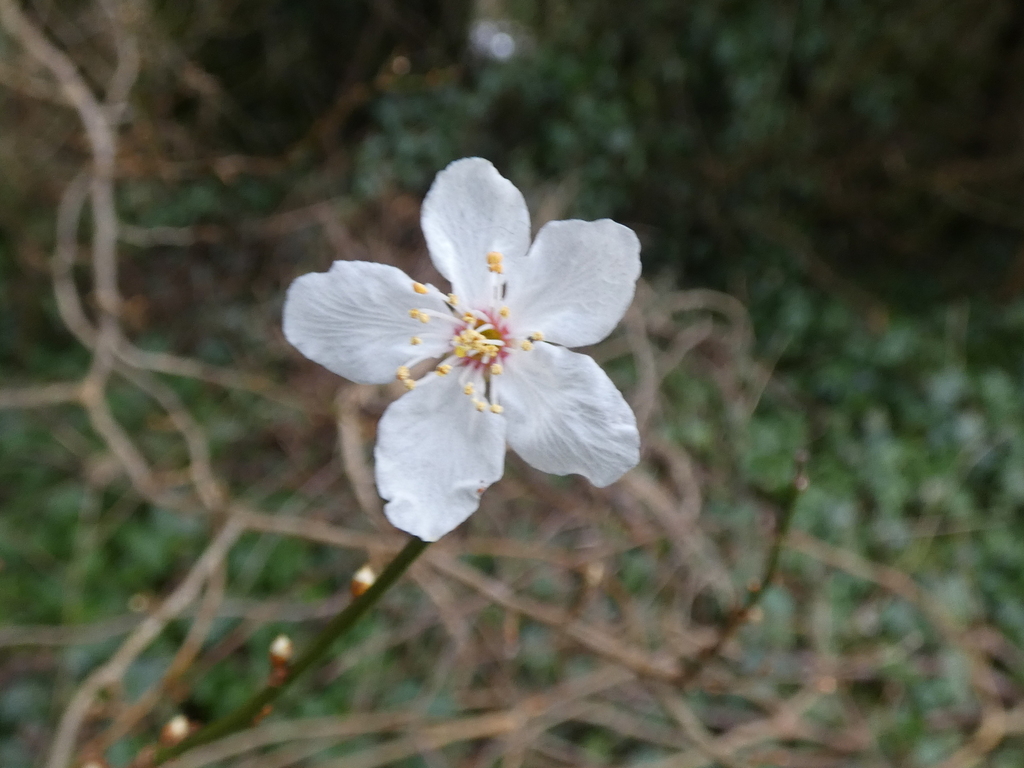
The cherry plum is a lovely deciduous tree that is often one of the first to bloom in early spring. It produces small, edible fruits and offers beautiful foliage colors ranging from green to deep purple. You will find it makes a wonderful ornamental addition to many gardens.

At a glance
- Care level
- Easy
- Plant type
- Deciduous tree
- Light
- Full sun
- Indoor light
- Direct sun
- Water
- Every 7 to 14 days
- Mature size
- 25 feet
- Growth rate
- Fast
- Hardiness
- USDA 4 to 8
- Bloom time
- Early spring
Care
Plant this tree in a spot that gets plenty of sun to encourage the best flowering and leaf color. Keep an eye out for aphids or scale insects on the branches. Ensure the soil drains well so the roots stay healthy.
- Watering
- Water deeply during the first few years to help the roots establish.
- Feeding
- Apply a balanced fertilizer in early spring before new growth starts.
- Pruning
- Prune in late winter while the tree is dormant to shape the canopy.
- Repotting
- If growing in a container, move to a larger pot every few years as it grows.
- Soil
- Well drained loamy soil
- Soil pH
- 6.0 to 7.5
- Temperature
- -28 to 35°C
- Humidity
- 40 to 70%
- Drought tolerance
- Moderate
- Lifespan
- Perennial, typically 20 to 30 years.
- Fragrance
- Light
- Deer and rabbits
- Moderate
Signs it needs repotting
- Roots growing out of the drainage holes.
- Water running straight through the pot without soaking in.
- Stunted growth despite regular feeding.
Safety
- People
- The leaves and seeds contain compounds that can release cyanide if ingested in large quantities.
- Pets
- The leaves and stems contain cyanogenic glycosides which are toxic to cats and dogs if ingested.
- Children
- The small, round fruits may pose a choking hazard to small children if they attempt to eat them whole.
- Contact allergens
- The sap may cause mild skin irritation in sensitive individuals.
- Airborne allergens
- The pollen can trigger seasonal allergies in some people during the early spring bloom.
- Edibility
- The seeds contain cyanogenic glycosides and should not be ingested.
How to identify it
- Small white or pink flowers
- Smooth reddish or dark bark
- Oval shaped serrated leaves
- Small round edible drupe fruits
- Height
- 4.5 to 9m
- Spread
- 3 to 6m
- Leaves
- green, purple, bronze, deciduous
- Flowers
- white, pale pink, 1.5 to 2.5cm
- Fruit
- red, yellow, Late summer
Problems to watch for
- Aphids · Small insects that cluster on new growth and cause leaf curling.
- Black knot · Fungal infection causing rough, black, elongated galls on branches.
Check your cherry plum from a photo
Pocket Botanist looks at a photo of your plant and tells you what's wrong and what to try first.
Scan with your phone's camera to get the app
Or go to pocketbotanist.app/get on your phone
Growing it
- Propagation
- cuttings, grafting, seed
- When to plant
- early spring, late autumn
- Overwintering
- No special protection is needed once established. Ensure the soil remains well drained to prevent root rot during wet winters.
- In containers
- It is not well suited for long term container growth due to its large size and extensive root system.
Softwood Cuttings
- 1. Take 10 to 15 centimeter cuttings in early summer.
- 2. Remove lower leaves and dip the cut end in rooting hormone.
- 3. Place in a pot with moist, well draining potting mix.
- 4. Cover with a plastic bag to maintain humidity until roots form.
Plant spring bulbs like daffodils beneath the canopy to take advantage of the light before the tree leaves out.
Grows well with
- Lavender · It thrives in similar sunny conditions and attracts beneficial pollinators.
- Catmint · This hardy perennial helps suppress weeds around the base of the tree.
Similar species
- Purple Leaf Plum · This is a popular cultivar specifically grown for its deep purple foliage.
Science
- Family
- Rosaceae
- Genus
- Prunus
- Order
- Rosales
- Class
- Magnoliopsida
- Native range
- Southeastern Europe and Western Asia.
- Conservation
- Not of conservation concern as it is widely naturalized and cultivated.
It thrives in sunny, well drained sites and often colonizes forest edges or disturbed ground.
- Value to wildlife
- early nectar source, provides fruit for birds
- Pollinators
- bees, butterflies
- Uses
- ornamental specimen, hedging, fruit preserves, wildlife habitat
Through the year
Ecological indicators
- Salinity
- 2/9
- Soil reaction
- 6/9
- Light
- 8/9
- Temperature
- 5/9
- Moisture
- 5/9
- Nutrients
- 5/9
Taxonomy resolved against GBIF.
Questions people ask
- Does it need a pollinator?
- It is self fertile, but planting more than one can increase fruit yield.
- How fast does it grow?
- It is a relatively fast grower, often adding 30 to 60 centimeters per year.
Where the name comes from
The genus name Prunus is the classical Latin name for the plum tree, while the species name cerasifera means cherry bearing.
Good to know
- It is also known as the cherry plum.
- The purple leaf varieties are popular for adding contrast to garden beds.
- It is a common rootstock for other stone fruits.
- The fruits are quite tart and best used in jams or jellies.
Also in
Keep your cherry plum growing
This page is a general guide. Save your plant in Pocket Botanist and you get care reminders timed for this plant, plus a care history that shows what worked.
Scan with your phone's camera to get the app
Or go to pocketbotanist.app/get on your phone
This guide was generated with AI on and checked against GBIF taxonomy. It is general information, not horticultural or veterinary advice. Read about how we build these guides.