 Pocket Botanist
Plant guide
Elephant Bush.
Portulacaria afra
Pronounced por-too-lah-KAIR-ee-uh AF-ruh
Also known as Common Spekboom, Elephant Bush, Elephant Food, Elephant's Food, Elephant-Food, Porkbush, elephant-bush



Scan with your phone's camera to get the app
Or go to pocketbotanist.app/get on your phone
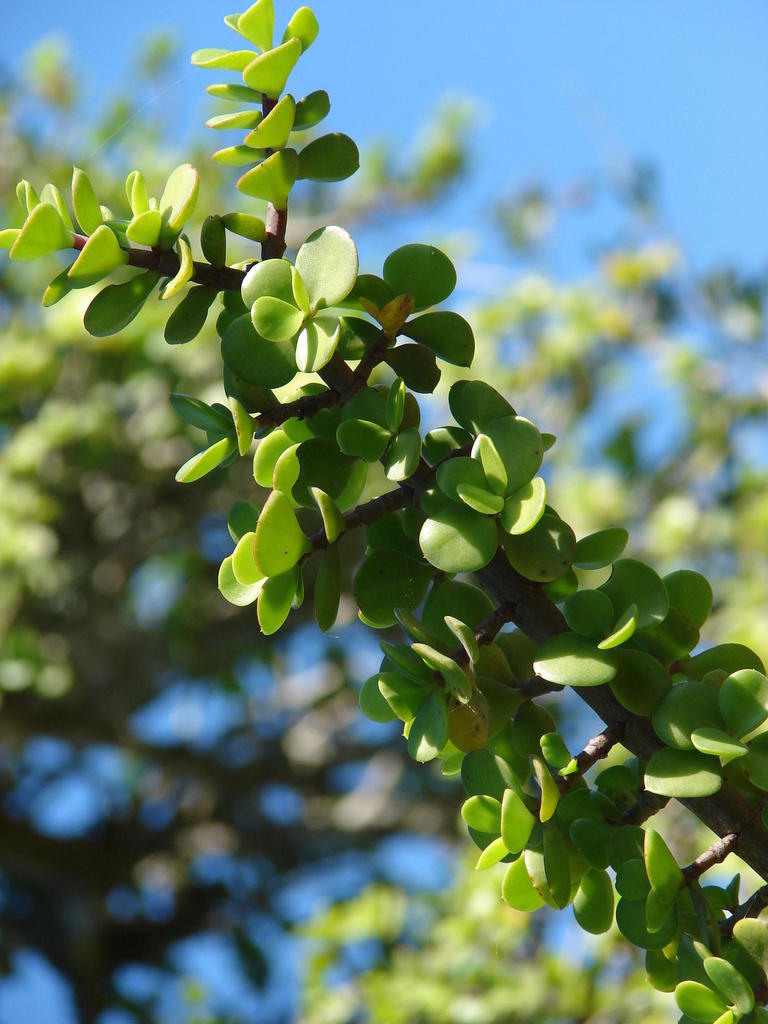
This charming succulent is a fantastic choice for beginners because it is so forgiving. It looks a lot like a miniature jade plant with its woody stems and fleshy, rounded leaves. You will love how easily it can be shaped into a bonsai or kept as a tidy houseplant.
At a glance
- Care level
- Easy
- Plant type
- Succulent shrub
- Light
- Bright light with some direct sun is best.
- Indoor light
- Bright indirect
- Water
- Every 10 to 21 days
- Mature size
- 3 to 6 feet indoors
- Growth rate
- Medium
- Hardiness
- USDA 9 to 11
- Bloom time
- Late spring to summer
Care
Let the soil dry out completely between waterings to prevent root rot. If the leaves start to look shriveled or lose their plumpness, your plant is likely thirsty. Ensure your pot has excellent drainage to keep the roots happy.
- Watering
- Water only when the soil is dry to the touch throughout the entire pot.
- Feeding
- Feed with a balanced liquid fertilizer diluted to half strength during the growing season.
- Pruning
- Trim back long branches to encourage a bushier shape and maintain your desired size.
- Repotting
- Move to a slightly larger pot only when the plant becomes root bound.
- Soil
- Well-draining succulent or cactus mix
- Soil pH
- 6.0 to 7.5
- Temperature
- 5 to 35°C
- Humidity
- 20 to 50%
- Drought tolerance
- High
- Lifespan
- Perennial, can live for decades if well cared for.
- Deer and rabbits
- Moderate
Signs it needs repotting
- Roots growing out of drainage holes
- Water running straight through the pot
- Stunted growth during the active season
Safety
- People
- This plant is non-toxic to humans.
- Pets
- This plant is non-toxic to cats and dogs.
- Children
- The small leaves can be a choking hazard for very young children.
- Edibility
- While the leaves are edible and tart, do not consume plants treated with systemic pesticides.
How to identify it
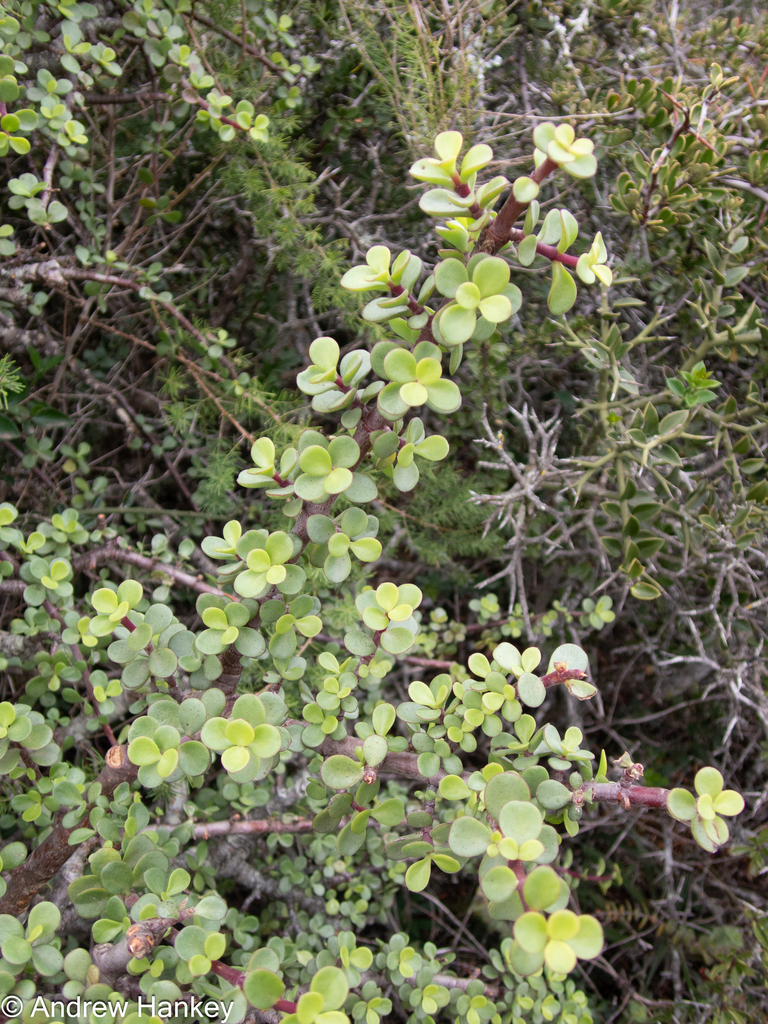
- Small, succulent, rounded green leaves
- Reddish-brown stems that become woody
- Opposite leaf arrangement on branches
- Compact, shrubby growth habit
- Height
- 0.6 to 3m
- Spread
- 0.6 to 2m
- Leaves
- green, evergreen
- Flowers
- pink, 0.2 to 0.5cm
Problems to watch for
- MealybugsCommon
- Root RotCommon
- Leaf DropUncommon
- Scale InsectsUncommon
Check your elephant bush from a photo
Pocket Botanist looks at a photo of your plant and tells you what's wrong and what to try first.
Scan with your phone's camera to get the app
Or go to pocketbotanist.app/get on your phone
Growing it
- Propagation
- cuttings
- When to plant
- spring, summer
- Overwintering
- Move containers indoors before the first frost. Reduce watering significantly during the winter months.
- In containers
- It is excellent for containers, provided the pot has drainage holes and a gritty soil mix.
Stem Cuttings
- 1. Take a 10 cm cutting from a healthy stem.
- 2. Allow the cut end to callous for 2 days.
- 3. Insert the cutting into dry, well-draining soil.
- 4. Wait a week before watering lightly.
Group this plant only with other drought-tolerant succulents to avoid overwatering issues.
Grows well with
- Jade Plant · They share identical water and light requirements.
- Aloe · Both thrive in similar arid, well-draining conditions.
Similar species
- Jade Plant · Often confused due to similar succulent leaves, though they are unrelated.
Science
- Family
- Didiereaceae
- Genus
- Portulacaria
- Order
- Caryophyllales
- Class
- Magnoliopsida
- Native range
- South Africa
- Conservation
- It is not currently threatened, but wild harvesting should be avoided.
It grows in arid, rocky slopes where it stores water in its succulent stems to survive long droughts.
- Value to wildlife
- nectar source
- Pollinators
- bees, butterflies
- Uses
- ornamental, bonsai, edible garnish
Through the year
Ecological indicators
- Salinity
- 4/9
- Soil reaction
- 6/9
- Light
- 8/9
- Temperature
- 7/9
- Moisture
- 2/9
- Nutrients
- 3/9
Taxonomy resolved against GBIF.
Questions people ask
- How often should I water it?
- Water only when the soil is completely dry.
- Does it need full sun?
- Yes, it thrives in bright, direct sunlight.
Where the name comes from
The genus name Portulacaria refers to its resemblance to Portulaca, while the species name afra indicates its African origin.
Good to know
- It is often called elephant bush.
- It is highly effective at carbon sequestration.
- It is very easy to propagate from stem cuttings.
Also in
Keep your elephant bush growing
This page is a general guide. Save your plant in Pocket Botanist and you get care reminders timed for this plant, plus a care history that shows what worked.
Scan with your phone's camera to get the app
Or go to pocketbotanist.app/get on your phone
This guide was generated with AI on and checked against GBIF taxonomy. It is general information, not horticultural or veterinary advice. Read about how we build these guides.