 Pocket Botanist
Plant guide
Water hyacinth.
Pontederia crassipes
Pronounced pon-te-DEER-ee-uh KRAS-ih-peez
Also known as Water-hyacinth, floating water-hyacinth



Scan with your phone's camera to get the app
Or go to pocketbotanist.app/get on your phone
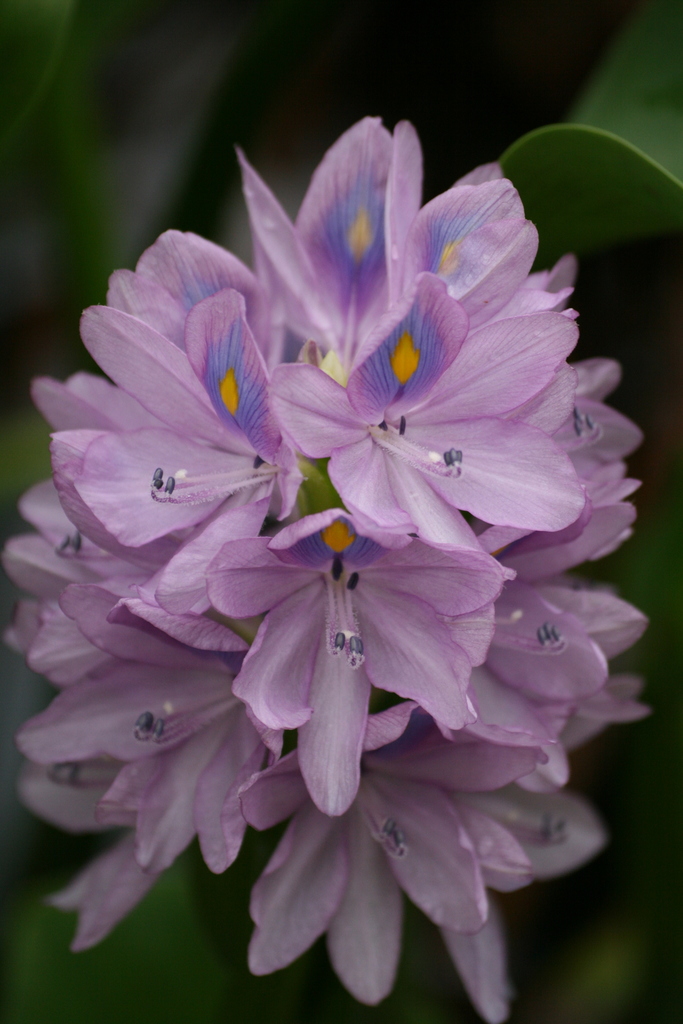
This floating aquatic plant is famous for its beautiful lavender flowers and bulbous, air-filled leaf stalks. It grows quickly in warm water and helps keep ponds clean by absorbing excess nutrients. Just keep an eye on it, as it can spread very fast in the right conditions.
At a glance
- Care level
- Easy
- Plant type
- Aquatic perennial
- Light
- Full sun to partial shade
- Indoor light
- Direct sun
- Water
- Every 0 days
- Mature size
- 1 to 2 feet tall
- Growth rate
- Fast
- Hardiness
- USDA 9 to 11
- Bloom time
- Late spring to early autumn
Care
Place this plant in a sunny spot with plenty of nutrients in the water. Watch for yellowing leaves, which often signal a lack of nutrients or too much crowding. It is a floating plant, so it does not need to be planted in soil.
- Watering
- This plant lives directly in water and does not require traditional watering.
- Feeding
- If the water is low in nutrients, use a specialized aquatic plant fertilizer once a month.
- Pruning
- Trim back dead leaves and remove excess plants every couple of weeks to prevent them from taking over the entire surface.
- Repotting
- Since it floats freely, you do not need to repot this plant.
- Soil
- None, it is a floating aquatic plant
- Soil pH
- 6.0 to 8.0
- Temperature
- 10 to 35°C
- Humidity
- 60 to 100%
- Drought tolerance
- Low
- Lifespan
- Perennial, but often grown as an annual in cooler climates.
- Deer and rabbits
- Moderate
Signs it needs repotting
- The plant has completely covered the water surface.
- Growth has slowed significantly due to overcrowding.
Safety
- People
- The plant is generally considered non toxic, but it can accumulate heavy metals and chemical pollutants from the water it inhabits.
- Pets
- This plant is considered non-toxic to cats and dogs.
- Children
- Keep children away from water features where this plant grows to prevent accidental drowning or ingestion of contaminated water.
- Contact allergens
- Handling the plant may cause mild skin irritation in sensitive individuals due to its aquatic nature.
- Airborne allergens
- There are no significant reports of airborne allergens associated with this species.
- Edibility
- This plant is not considered edible and may absorb toxins from polluted water.
How to identify it
- Glossy, rounded, leathery green leaves
- Swollen, spongy, air-filled leaf stalks
- Showy spikes of lavender flowers
- Feathery, dark purple underwater roots
- Height
- 0.1 to 1m
- Spread
- 0.3 to 2m
- Leaves
- bright green, evergreen
- Flowers
- lavender, blue, yellow, 4 to 6cm
- Fruit
- brown, Autumn
Problems to watch for
- Algae OvergrowthCommon
- AphidsCommon
- Spider MitesCommon
- Root RotUncommon
Check your water hyacinth from a photo
Pocket Botanist looks at a photo of your plant and tells you what's wrong and what to try first.
Scan with your phone's camera to get the app
Or go to pocketbotanist.app/get on your phone
Growing it
- Propagation
- division, seed
- When to plant
- spring, summer
- Overwintering
- Bring the plant indoors to a bright, frost free location in a bucket of water if you live in a cold climate. It will not survive freezing temperatures.
- In containers
- It is perfect for water gardens or large tubs, provided the container is kept filled with water.
Division
- 1. Separate the daughter plants that form on the stolons.
- 2. Ensure each new plant has a healthy root system.
- 3. Place the new plant directly into the water.
Always keep floating aquatic plants in a contained area to prevent them from choking out other pond life.
Grows well with
- Water Lily · They share similar aquatic requirements and provide complementary foliage textures.
- Pickerelweed · They create a cohesive look in water gardens with their similar growth habits.
Similar species
- Pickerelweed · It is a related species that is much less invasive and often better for native gardens.
Science
- Family
- Pontederiaceae
- Genus
- Pontederia
- Order
- Commelinales
- Class
- Liliopsida
- Native range
- South America
- Conservation
- It is considered an invasive species in many parts of the world and should never be released into natural waterways.
It floats freely on the water surface and spreads rapidly through vegetative stolons.
- Value to wildlife
- provides cover for aquatic life, filters water
- Pollinators
- bees, butterflies
- Uses
- water garden ornamental, water filtration, aquatic habitat
Through the year
Ecological indicators
- Salinity
- 1/9
- Soil reaction
- 6/9
- Light
- 8/9
- Temperature
- 8/9
- Moisture
- 9/9
- Nutrients
- 8/9
Taxonomy resolved against GBIF.
Questions people ask
- Can I grow this in a pond?
- Yes, but only in contained water features where it cannot escape into local ecosystems.
- Does it need full sun?
- It thrives best in full sun to partial shade.
Where the name comes from
The genus honors the Italian botanist Giulio Pontedera, while the species name crassipes refers to the thick, swollen leaf stalks.
Good to know
- It is often called the world's worst aquatic weed.
- The plant has specialized air filled bladders that help it float.
- It can remove nitrogen and phosphorus from water very efficiently.
- The flowers only last for a single day.
Keep your water hyacinth growing
This page is a general guide. Save your plant in Pocket Botanist and you get care reminders timed for this plant, plus a care history that shows what worked.
Scan with your phone's camera to get the app
Or go to pocketbotanist.app/get on your phone
This guide was generated with AI on and checked against GBIF taxonomy. It is general information, not horticultural or veterinary advice. Read about how we build these guides.