 Pocket Botanist
Plant guide
Yew pine.
Podocarpus macrophyllus
Pronounced po-do-KAR-pus mak-ro-FIL-lus
Also known as Buddhist Pine, Japanese yew, Yew plum pine, Buddhist pine, big-leaf podocarp, yew plum pine, yew



Scan with your phone's camera to get the app
Or go to pocketbotanist.app/get on your phone

The yew pine is a handsome evergreen conifer that works beautifully as a hedge or a specimen plant. It is quite adaptable and handles pruning well, which makes it a favorite for topiary. You will love how its dark, needle like foliage adds a touch of elegance to any space.
At a glance
- Care level
- Easy
- Plant type
- Evergreen conifer
- Light
- Partial shade to full sun
- Indoor light
- Bright indirect
- Water
- Every 5 to 10 days
- Mature size
- 10 to 40 feet
- Growth rate
- Medium
- Hardiness
- USDA 7 to 10
- Bloom time
- Late spring to early summer
Care
Keep the soil consistently moist but never soggy to prevent root issues. Watch for yellowing leaves, which often signal that the plant is getting too much water or not enough light. It is a tough plant that thrives with regular misting and good air circulation.
- Watering
- Water when the top inch of soil feels dry to the touch.
- Feeding
- Feed with a balanced liquid fertilizer during the active growing season.
- Pruning
- Trim back new growth in spring to maintain your desired shape.
- Repotting
- Move to a slightly larger pot once the roots begin to circle the container.
- Soil
- Well draining sandy or loamy soil
- Soil pH
- Acidic to neutral
- Temperature
- -7 to 35°C
- Humidity
- 40 to 70%
- Drought tolerance
- Moderate
- Lifespan
- Long lived perennial, often lasting for decades.
- Deer and rabbits
- Moderate
Signs it needs repotting
- Roots growing out of the drainage holes.
- Water sitting on the surface for too long.
- Stunted growth during the active season.
Safety
- People
- All parts of the plant, especially the seeds, are considered toxic if ingested.
- Pets
- This plant is considered toxic to cats and dogs if ingested.
- Children
- Keep this plant away from small children because the seeds are toxic and the foliage can be irritating.
- Contact allergens
- The foliage can cause mild skin irritation in sensitive individuals.
- Airborne allergens
- The pollen can trigger allergic reactions in some people during the spring.
- Edibility
- The fleshy part of the fruit is edible but the seeds are toxic and should never be consumed.
How to identify it
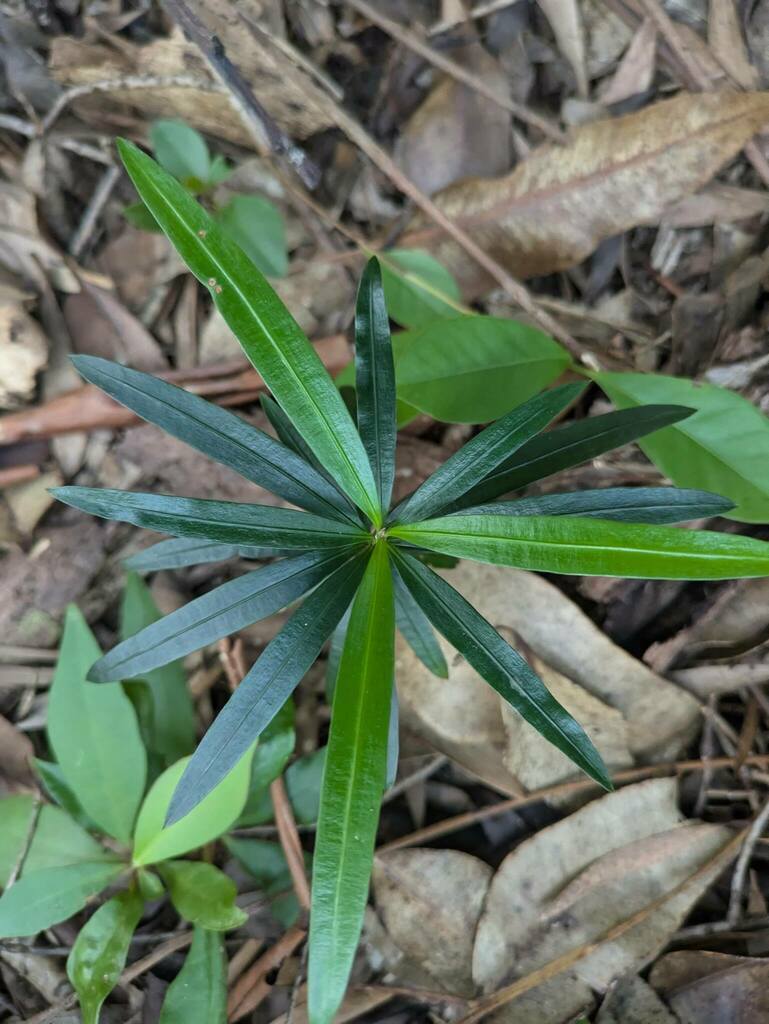
- Dark green needle like leaves
- Spirally arranged foliage on stems
- Conical growth habit when young
- Small fleshy berry like cones
- Height
- 3 to 12m
- Spread
- 1.5 to 4.5m
- Leaves
- dark green, evergreen
- Flowers
- yellow, green, 1 to 2cm
- Fruit
- purple, red, Late summer to autumn
Problems to watch for
- Scale insects · Small sap sucking insects that appear as bumps on the stems and leaves.
- Root rot · Fungal infection caused by consistently waterlogged soil.
Check your yew pine from a photo
Pocket Botanist looks at a photo of your plant and tells you what's wrong and what to try first.
Scan with your phone's camera to get the app
Or go to pocketbotanist.app/get on your phone
Growing it
- Propagation
- cuttings, seed
- When to plant
- spring, autumn
- Overwintering
- In colder regions, move containers to a sheltered area or unheated garage. Ensure the soil does not dry out completely during winter months.
- In containers
- It is excellent for containers and should be planted in a pot at least 40 cm wide to allow for root growth.
Semi-hardwood cuttings
- Take 10 cm cuttings in late summer.
- Remove lower leaves and dip the base in rooting hormone.
- Place in a well draining potting mix and keep humid until rooted.
Pair this with acid loving shrubs to keep the soil chemistry consistent across the bed.
Grows well with
Similar species
- Yew · It shares a similar evergreen habit and is also used for hedging.
Science
- Family
- Podocarpaceae
- Genus
- Podocarpus
- Order
- Pinales
- Class
- Pinopsida
- Native range
- Southern Japan and China
- Conservation
- It is not currently listed as endangered, but wild populations are sometimes over-harvested for the nursery trade.
It grows as an understory tree in temperate forests where it relies on birds to disperse its seeds.
- Value to wildlife
- provides cover for birds, birds eat the fleshy fruit
- Pollinators
- bees, beetles
- Uses
- hedging, topiary, container plant, privacy screen
Through the year
Ecological indicators
- Salinity
- 4/9
- Soil reaction
- 5/9
- Light
- 6/9
- Temperature
- 6/9
- Moisture
- 5/9
- Nutrients
- 5/9
Taxonomy resolved against GBIF.
Questions people ask
- Can I grow this in a pot?
- Yes, it adapts very well to containers and is often used for topiary.
- Does it need full sun?
- It prefers full sun but will tolerate partial shade quite well.
Where the name comes from
The name Podocarpus comes from the Greek words for foot and fruit, referring to the fleshy stalk beneath the seed. The species name macrophyllus means large leaf.
Good to know
- It is a conifer that looks more like a broadleaf plant.
- It is highly prized for bonsai cultivation.
- The wood is rot resistant and used for high quality furniture in Japan.
- It can tolerate salt spray, making it great for coastal gardens.
Also in
Keep your yew pine growing
This page is a general guide. Save your plant in Pocket Botanist and you get care reminders timed for this plant, plus a care history that shows what worked.
Scan with your phone's camera to get the app
Or go to pocketbotanist.app/get on your phone
This guide was generated with AI on and checked against GBIF taxonomy. It is general information, not horticultural or veterinary advice. Read about how we build these guides.