 Pocket Botanist
Plant guide
Staghorn fern.
Platycerium bifurcatum (Cav.) C.Chr.
Pronounced pla-ti-SEE-ree-um by-fur-KAY-tum
Also known as Elkhorn Fern, Staghorn fern, common staghorn fern


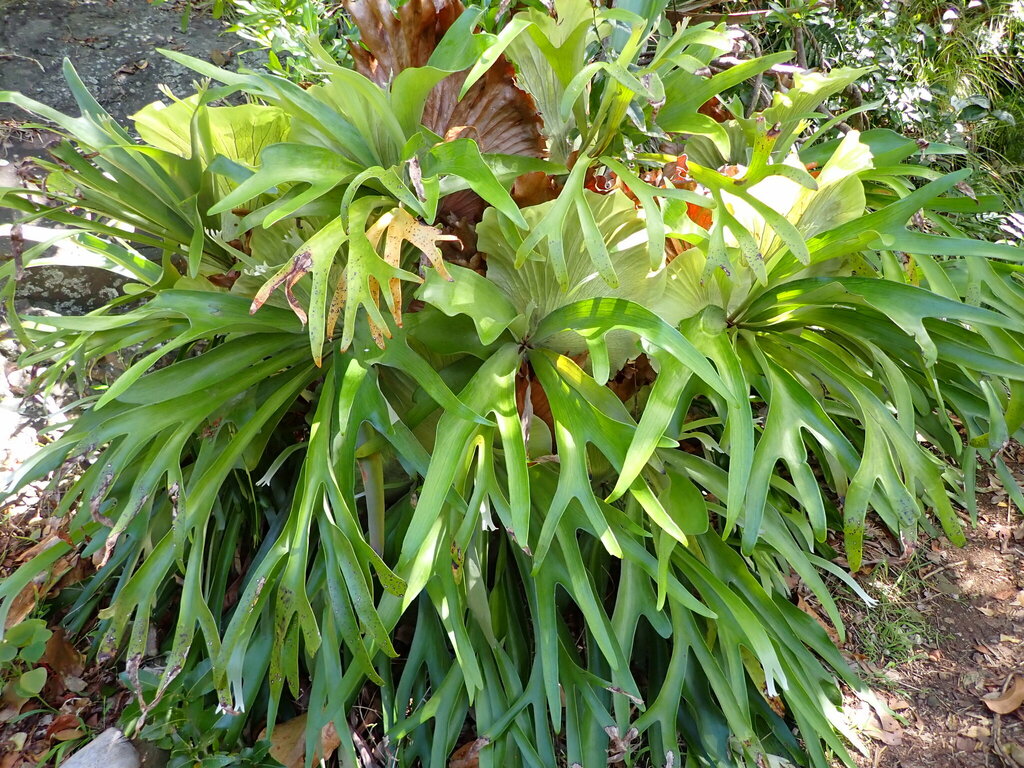
The staghorn fern is a unique epiphyte that grows on trees in its native habitat. It features two distinct types of fronds, including shield fronds that protect the roots and fertile fronds that resemble antlers. It is a fantastic choice for mounting on wooden boards to show off its natural form.

At a glance
- Care level
- Moderate
- Plant type
- Fern
- Light
- Filtered bright light
- Indoor light
- Bright indirect
- Water
- Every 7 to 14 days
- Mature size
- 3 feet
- Growth rate
- Slow
- Hardiness
- USDA 9 to 11
- Bloom time
- None, as it is a fern reproducing by spores.
Care
Mount this fern on a board with moss to mimic its natural tree dwelling environment. Keep the root ball consistently moist but never soggy, and watch for wilting fronds as a sign of thirst. High humidity is essential for keeping this plant happy and healthy.
- Watering
- Soak the entire root ball in water when the moss feels dry to the touch.
- Feeding
- Use a balanced liquid fertilizer diluted to half strength during the growing season.
- Pruning
- Only remove dead or brown fronds to keep the plant looking tidy.
- Repotting
- Repot or remount only when the plant has clearly outgrown its current board or basket.
- Soil
- Sphagnum moss or orchid bark
- Soil pH
- 5.5 to 6.5
- Temperature
- 10 to 30°C
- Humidity
- 60 to 90%
- Drought tolerance
- Low
- Lifespan
- Perennial, can live for many decades with proper care.
- Deer and rabbits
- Moderate
Signs it needs repotting
- The plant has outgrown its mount.
- The medium has decomposed into fine dust.
- Water runs through the mount without being absorbed.
Safety
- People
- This plant is considered non-toxic to humans.
- Children
- Keep out of reach of small children to prevent accidental ingestion of soil or plant debris.
- Contact allergens
- The fuzzy scales on the fronds may cause mild skin irritation in sensitive individuals.
- Airborne allergens
- Spore release can trigger respiratory issues in those with specific sensitivities.
- Edibility
- This plant is not intended for consumption.
How to identify it
- Antler shaped fertile fronds
- Round flat shield fronds
- Fuzzy silvery coating on leaves
- Epiphytic growth habit
- Height
- 0.3 to 0.9m
- Spread
- 0.3 to 0.9m
- Leaves
- green, silver-green, evergreen
- Flowers
- 0cm
Problems to watch for
- Root RotCommon
- Scale InsectsCommon
- Brown Leaf EdgesUncommon
- Fungus GnatsUncommon
By symptom
Check your staghorn fern from a photo
Pocket Botanist looks at a photo of your plant and tells you what's wrong and what to try first.
Growing it
- Propagation
- division, spores
- When to plant
- spring, summer
- Overwintering
- Bring indoors before temperatures drop below 10 degrees Celsius. Keep it in a bright spot and reduce watering slightly during the cooler months.
- In containers
- It is excellent for wall mounts or hanging baskets, which mimic its natural tree-dwelling habitat.
Division
- 1. Identify a small offset or pup growing near the base.
- 2. Carefully separate the pup from the parent using a clean, sharp knife.
- 3. Mount the pup onto a board with damp sphagnum moss.
Group these with other humidity-loving epiphytes to create a microclimate that helps them stay hydrated.
Grows well with
- Orchids — They share similar epiphytic growing requirements.
- Bromeliads — They thrive in the same high humidity and bright, indirect light.
Similar species
- Elkhorn Fern — It has a similar growth habit and appearance.
Science
- Family
- Polypodiaceae
- Genus
- Platycerium
- Order
- Polypodiales
- Class
- Polypodiopsida
- Native range
- Eastern Australia and parts of Southeast Asia.
- Conservation
- It is widely cultivated and not currently threatened in its native range.
It survives by clinging to tree trunks and gathering nutrients from decaying organic matter that falls into its shield fronds.
- Value to wildlife
- provides habitat for small insects in the wild
- Uses
- indoor ornamental, epiphytic display, wall mount
Through the year
Ecological indicators
- Temperature
- 7/9
- Nutrients
- 3/9
- Salinity
- 1/9
- Soil reaction
- 5/9
- Light
- 4/9
- Moisture
- 6/9
Taxonomy resolved against GBIF.
Questions people ask
- How often should I water it?
- Water when the moss or medium feels slightly dry to the touch.
- Can I grow it in soil?
- No, it prefers a loose, well-draining mix like orchid bark or sphagnum moss.
Where the name comes from
The name Platycerium comes from the Greek words for broad and horn, referencing the shape of the fronds.
Good to know
- It is an epiphyte that grows on trees in the wild.
- The two types of fronds have distinct roles: shield fronds for protection and fertile fronds for reproduction.
- It is often called the staghorn fern because its fronds resemble deer antlers.
Keep your staghorn fern growing
This page is a general guide. Save your plant in Pocket Botanist and you get care reminders timed for this plant, plus a care history that shows what worked.
This guide was generated with AI and checked against GBIF taxonomy. It is general information, not horticultural or veterinary advice. Read about how we build these guides.