 Pocket Botanist
Guide botanique
Platycerium.
Platycerium bifurcatum (Cav.) C.Chr.
Prononciation pla-ti-SEE-ree-um by-fur-KAY-tum
Aussi appelée Platycerium, Platycerium, common staghorn fern


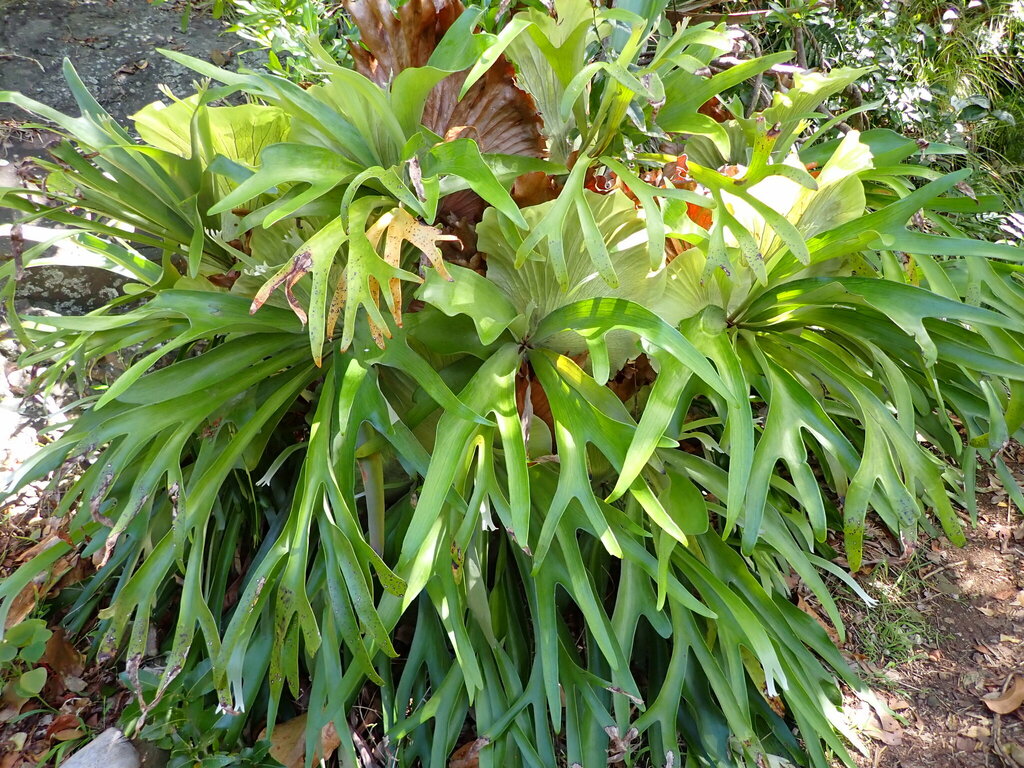
Le Platycerium est une épiphyte unique qui pousse sur les arbres dans son habitat d'origine. Il présente deux types distincts de frondes, y compris des frondes boucliers qui protègent les racines et des frondes fertiles qui ressemblent à des bois de cerf. C'est un excellent choix à monter sur des planches de bois pour mettre en valeur sa forme naturelle.

En un coup d'œil
- Niveau d'entretien
- Moyenne
- Type de plante
- Fougère
- Lumière
- Lumière vive filtrée
- Lumière en intérieur
- Lumière vive indirecte
- Arrosage
- Tous les 7 à 14 jours
- Taille adulte
- 3 pieds
- Croissance
- Lente
- Rusticité
- USDA 9 à 11
- Floraison
- Aucune, car c'est une fougère qui se reproduit par spores.
Entretien
Montez cette fougère sur une planche avec de la mousse pour imiter son environnement naturel de dwelling sur arbre. Gardez la motte de racines constamment humide mais jamais détrempée, et surveillez le flétrissement des frondes comme signe de soif. Une humidité élevée est essentielle pour que cette plante reste heureuse et en bonne santé.
- Arrosage
- Trempez toute la motte de racines dans l'eau lorsque la mousse est sèche au toucher.
- Engrais
- Utilisez un engrais liquide équilibré dilué à moitié pendant la saison de croissance.
- Taille
- Retirez uniquement les frondes mortes ou brunes pour garder la plante nette.
- Rempotage
- Rempotez ou remontez uniquement lorsque la plante a clairement dépassé sa planche ou son panier actuel.
- Sol
- Mousse de sphaigne ou écorce d'orchidée
- pH du sol
- 5.5 à 6.5
- Température
- 10 à 30°C
- Humidité
- 60 à 90%
- Résistance à la sécheresse
- Faible
- Durée de vie
- Vivace, peut vivre plusieurs décennies avec des soins appropriés.
- Résistance aux chevreuils et lapins
- Moyenne
Signes qu'il faut rempoter
- La plante a dépassé sa monture.
- Le substrat s'est décomposé en une fine poussière.
- L'eau traverse la monture sans être absorbée.
Sécurité
- Humains
- Cette plante est considérée comme non toxique pour les humains.
- Enfants
- Tenir hors de portée des jeunes enfants pour éviter l'ingestion accidentelle de terre ou de débris de plantes.
- Allergènes de contact
- Les écailles duveteuses sur les frondes peuvent provoquer une légère irritation cutanée chez les personnes sensibles.
- Allergènes aéroportés
- La libération de spores peut déclencher des problèmes respiratoires chez les personnes ayant des sensibilités spécifiques.
- Comestibilité
- Cette plante n'est pas destinée à la consommation.
Comment l'identifier
- Frondes fertiles en forme de bois de cerf
- Frondes boucliers rondes et plates
- Couche argentée et duveteuse sur les feuilles
- Habitat de croissance épiphyte
- Hauteur
- 0,3 à 0,9m
- Envergure
- 0,3 à 0,9m
- Feuilles
- green, silver-green, evergreen
- Fleurs
- 0cm
Problèmes à surveiller
- CochenillesCourant
- Pourriture des racinesCourant
- Brunissement du bord des feuillesPeu courant
- Mouches du terreauPeu courant
Par symptôme
Vérifie la santé de ta plante en photo
Pocket Botanist analyse une photo de ta plante et te dit ce qui ne va pas et quoi essayer en premier.
La cultiver
- Multiplication
- division, spores
- Quand planter
- spring, summer
- Hivernage
- Ramenez à l'intérieur avant que les températures ne descendent en dessous de 10 degrés Celsius. Gardez-la dans un endroit lumineux et réduisez légèrement l'arrosage pendant les mois les plus frais.
- En pot
- Elle est excellente pour les montages muraux ou les paniers suspendus, qui imitent son habitat naturel d'arbre.
Division
- 1. Identifiez une petite division ou un rejet poussant près de la base.
- 2. Séparez délicatement le rejet de la plante mère à l'aide d'un couteau propre et tranchant.
- 3. Montez le rejet sur une planche avec de la mousse de sphaigne humide.
Groupez-les avec d'autres épiphytes aimant l'humidité pour créer un microclimat qui les aide à rester hydratées.
Bonnes associations
- Orchidaceae — Elles partagent des exigences de croissance épiphytes similaires.
- Famille des Broméliacées — Elles prospèrent dans la même humidité élevée et la lumière vive et indirecte.
Espèces similaires
- Platycerium alcicorne — Elle a une habitude de croissance et une apparence similaires.
Science
- Famille
- Polypodiaceae
- Genre
- Platycerium
- Ordre
- Polypodiales
- Classe
- Polypodiopsida
- Région d'origine
- Est de l'Australie et parties de l'Asie du Sud-Est.
- Préservation
- Elle est largement cultivée et n'est pas actuellement menacée dans son aire de répartition indigène.
Elle survit en s'accrochant aux troncs d'arbres et en recueillant des nutriments dans la matière organique en décomposition qui tombe dans ses frondes boucliers.
- Intérêt pour la faune
- fournit un habitat pour les petits insectes à l'état sauvage
- Utilisations
- ornement intérieur, affichage épiphyte, montage mural
Au fil des saisons
Repères écologiques
- Température
- 7/9
- Nutriments
- 3/9
- Salinité
- 1/9
- Réaction du sol
- 5/9
- Lumière
- 4/9
- Humidité
- 6/9
Taxonomie vérifiée avec le GBIF.
Ce qu'on demande souvent
- À quelle fréquence dois-je l'arroser ?
- Arrosez lorsque la mousse ou le substrat semble légèrement sec au toucher.
- Puis-je la cultiver en terre ?
- Non, elle préfère un mélange léger et bien drainant comme de l'écorce d'orchidée ou de la mousse de sphaigne.
D'où vient le nom
Le nom Platycerium vient des mots grecs pour large et corne, faisant référence à la forme des frondes.
Bon à savoir
- C'est une plante épiphyte qui pousse sur les arbres à l'état sauvage.
- Les deux types de frondes ont des rôles distincts : les frondes boucliers pour la protection et les frondes fertiles pour la reproduction.
- On l'appelle souvent la fougère corne de cerf car ses frondes ressemblent à des bois de cerf.
Garde ta plante en pleine forme
Cette page est un guide général. Enregistre ta plante dans Pocket Botanist et tu reçois des rappels d'entretien adaptés à cette plante, ainsi qu'un historique d'entretien qui montre ce qui a marché.
Ce guide a été généré par IA et vérifié avec la taxonomie du GBIF. Il s'agit d'informations générales, et non de conseils horticoles ou vétérinaires. Découvre comment nous concevons ces guides.