 Pocket Botanist
Guide botanique
Ponderosa pine.
Pinus ponderosa
Prononciation PY-nus pon-der-OH-suh
Aussi appelée Bull Pine, Western Ponderosa Pine, Western Yellow-Pine, Willamette Valley Ponderosa Pine, blackjack pine


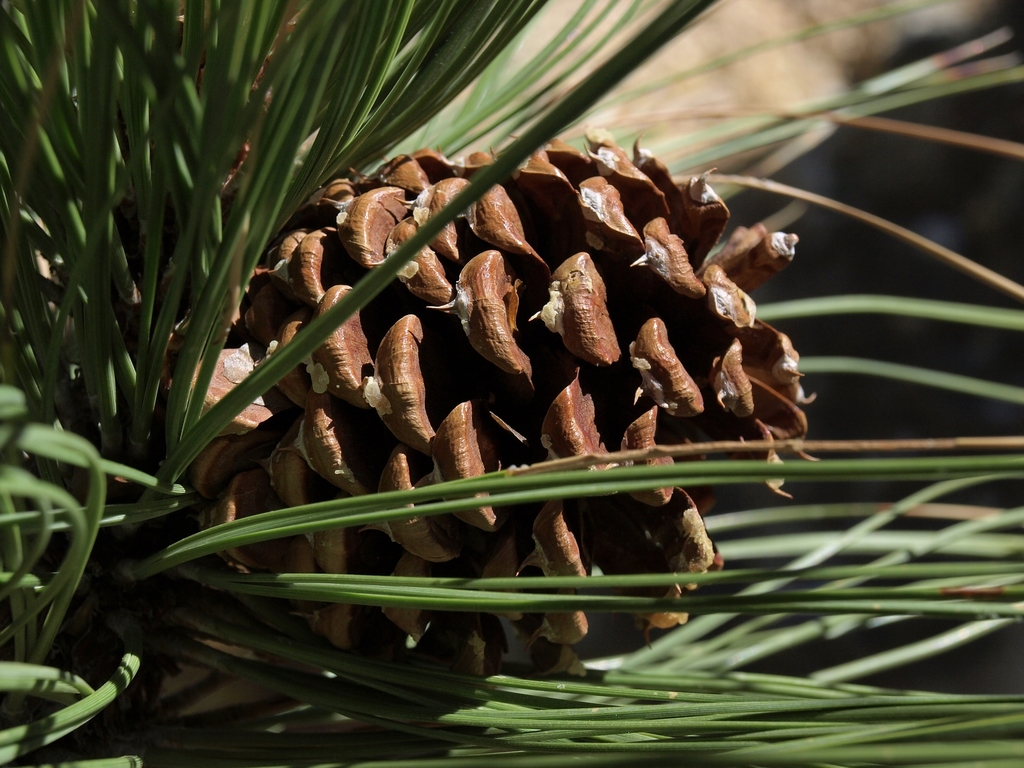
The Ponderosa pine is a majestic evergreen conifer native to western North America. It is well known for its tall, straight trunk and distinctive bark that smells like vanilla or butterscotch. These trees are iconic symbols of the American West.

En un coup d'œil
- Niveau d'entretien
- Facile
- Type de plante
- Coniferous tree
- Lumière
- Full sun
- Lumière en intérieur
- Soleil direct
- Arrosage
- Tous les 14 à 30 jours
- Taille adulte
- 60 to 130 feet
- Croissance
- Moyenne
- Rusticité
- USDA 3 à 7
- Floraison
- Late spring
Entretien
Plant this tree in a sunny spot with plenty of space to accommodate its large size. Ensure the soil drains well, as these trees do not like sitting in wet feet. Watch for yellowing needles which can indicate poor drainage or nutrient issues.
- Arrosage
- Water deeply during the first few years until established, then rely on natural rainfall.
- Engrais
- Apply a balanced fertilizer in early spring if the tree shows signs of slow growth.
- Taille
- Remove dead or damaged branches in late winter while the tree is dormant.
- Rempotage
- Ponderosa pines are typically grown outdoors in the ground, but young specimens in containers need fresh soil every few years.
- Sol
- Well drained sandy or rocky soil
- pH du sol
- 6.0 to 7.5
- Température
- -35 à 35°C
- Humidité
- 20 à 50%
- Résistance à la sécheresse
- Élevée
- Durée de vie
- Long lived, often 300 to 500 years.
- Parfum
- Fort
- Résistance aux chevreuils et lapins
- Moyenne
Sécurité
- Humains
- The needles contain small amounts of isocupressic acid, which can cause issues if consumed in large quantities.
- Enfants
- The sharp needles and heavy cones can pose a physical injury risk to small children if they fall or are handled carelessly.
- Allergènes de contact
- The sap can cause skin irritation in sensitive individuals.
- Allergènes aéroportés
- The pollen is a common airborne allergen during the spring release.
- Comestibilité
- The inner bark and seeds are edible, but ensure correct identification as some pine species are toxic.
Comment l'identifier
- Long, dark green needles in bundles of three
- Thick, reddish brown bark with puzzle piece plates
- Large, woody cones with sharp prickles
- Tall, straight, columnar growth habit
- Hauteur
- 18 à 50m
- Envergure
- 6 à 12m
- Feuilles
- dark green, yellow green, evergreen
- Fleurs
- yellow, red, 1 à 2cm
- Fruits
- brown, Autumn
Problèmes courants
- Pine bark beetle — These beetles bore into the bark and can kill stressed trees.
- Dothistroma needle blight — A fungal infection that causes needles to yellow and drop prematurely.
La cultiver
- Multiplication
- seed
- Quand planter
- spring, autumn
- Hivernage
- No special winter care is needed as they are fully hardy in their native range.
- En pot
- Not suitable for long term container growth due to its massive size.
Seed
- Collect mature cones in late summer or autumn before they open.
- Dry the cones in a warm place until they release their seeds.
- Cold stratify the seeds in a refrigerator for 30 to 60 days.
- Sow seeds in well draining soil and keep moist until germination.
Plant in open, sunny areas with plenty of space to accommodate their large mature size.
Bonnes associations
- Common Juniper — It thrives in similar dry, sunny conditions and provides ground cover.
- Quaking Aspen — They often grow together in mixed stands and provide nice color contrast.
Espèces similaires
- Pinus jeffreyi — It looks very similar but has larger cones and different smelling bark.
Science
- Famille
- Pinaceae
- Genre
- Pinus
- Ordre
- Pinales
- Classe
- Pinopsida
- Région d'origine
- Western North America from Canada to Mexico.
- Préservation
- This species is widespread and not currently of conservation concern.
It is a keystone species that creates open parklike forests which support a wide variety of understory plants and wildlife.
- Intérêt pour la faune
- seeds provide food for birds and small mammals, provides nesting habitat
- Pollinisateurs
- abeilles
- Utilisations
- timber production, ornamental landscape tree, erosion control, wildlife habitat
Au fil des saisons
Repères écologiques
- Salinité
- 2/9
- Réaction du sol
- 5/9
- Lumière
- 8/9
- Température
- 4/9
- Humidité
- 3/9
- Nutriments
- 3/9
Taxonomie vérifiée avec le GBIF.
Ce qu'on demande souvent
- How fast do they grow?
- They grow at a moderate rate, typically adding 30 to 60 centimeters per year.
- Do they need a lot of water?
- Once established, they are quite drought tolerant and prefer well drained soil.
D'où vient le nom
The scientific name Pinus is the classical Latin name for pine, while ponderosa refers to the heavy, substantial nature of the wood.
Bon à savoir
- Ponderosa pines are one of the most widely distributed pine species in North America.
- They are fire adapted and have thick bark to protect them from low intensity ground fires.
- The name ponderosa comes from the Latin word for heavy, referring to the dense wood.
- These trees can live for over 500 years in the right conditions.
Aussi dans
Ta plante a mauvaise mine ?
Cette page est un guide général. Pocket Botanist diagnostique les problèmes directement à partir d'une photo de ta plante, adapte l'arrosage à sa luminosité et te prévient quand il faut t'en occuper.
Ce guide a été généré par IA et vérifié avec la taxonomie du GBIF. Il s'agit d'informations générales, et non de conseils horticoles ou vétérinaires. Découvre comment nous concevons ces guides.