 Pocket Botanist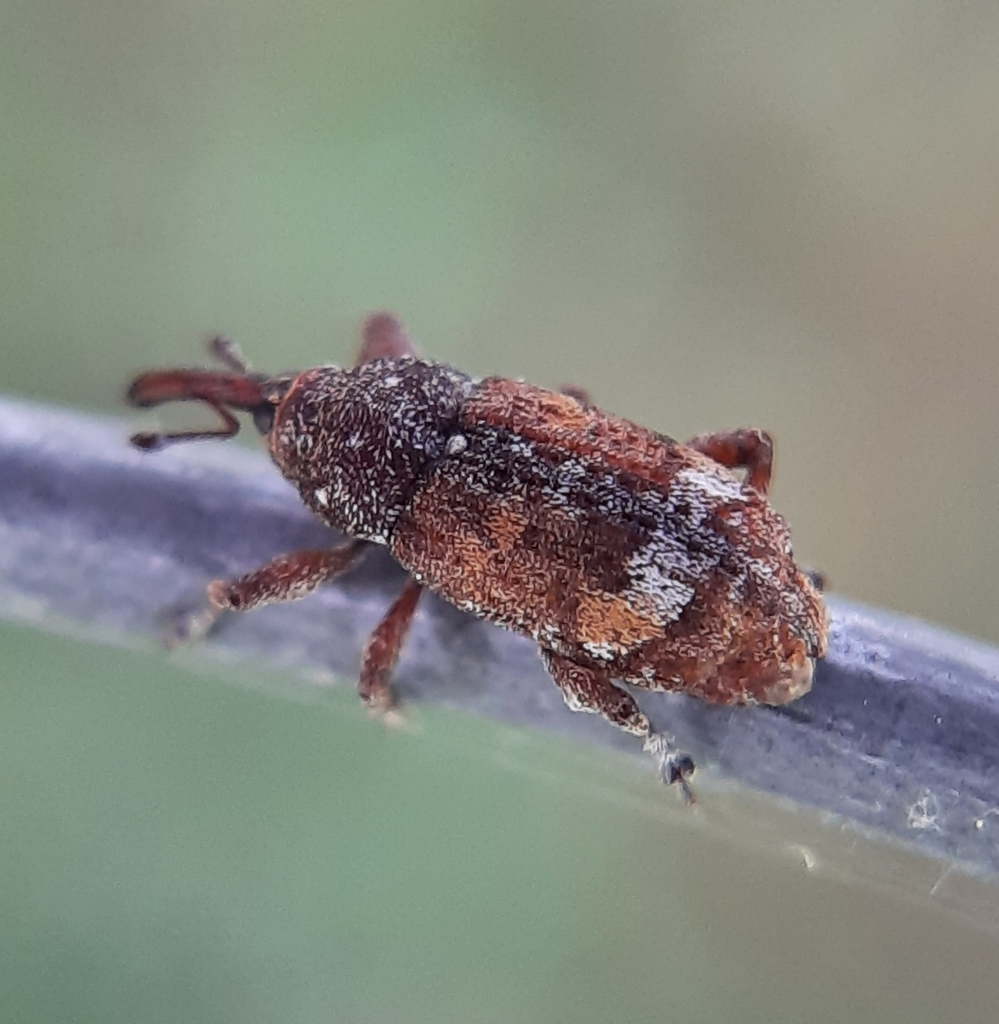
Symptoms by part
Stems
The terminal leader wilts and curves into a shape resembling a shepherd crook, followed by the needles turning yellow and then brown. You may also see small, round exit holes in the bark or resin droplets oozing from feeding punctures.
Causes
- Planting susceptible conifers in open, sunny areas where they are exposed to adult weevils.
- Lack of natural predators in the immediate landscape.
- High density of host trees in a single area.
Could be confused with
- Pine shoot moth · The pine shoot moth typically causes damage to side branches rather than just the main terminal leader.
- Frost damage · Frost damage usually affects all new growth uniformly across the tree, whereas weevil damage is localized to the terminal leader.
Treatment
- Prune the infested terminal leader at least 6 inches below the lowest point of damage during the spring before the larvae emerge.
- Place all pruned material into a sealed bag and dispose of it in the trash to prevent adults from escaping.
- Select a single, healthy side branch near the cut and tie it to a stake to encourage it to become the new vertical leader.
Without chemicals
- Prune and destroy infested leaders promptly to remove larvae before they mature.
- Use physical barriers like fine mesh netting over the terminal leader in early spring to prevent egg laying.
- Encourage natural predators like birds and parasitic wasps in the garden.
Chemical options
- Lambda cyhalothrin, apply as a spray to the terminal leader in early spring when adults are active, follow the label.
Preventing it
- Choose resistant conifer species when planting new trees.
- Maintain tree vigor through proper watering and mulching to help the plant recover from minor damage.
- Avoid planting susceptible species in large, dense blocks.
Season
The warm growing season, specifically when adults emerge in early spring to lay eggs.
Spread risk
Moderate
Severity
High
When to act
Act as soon as you see the shepherd crook shape forming on the leader. If the tree is too tall to reach safely, hire a tree surgeon to perform the pruning.
Think it's White Pine Weevil?
This guide covers the general picture. Pocket Botanist looks at your actual plant from a photo and tells you what's really going on, how serious it is, and what to try first. Identification and a health check are free.


Questions people ask
- Will my tree die if the top is killed?
- The tree will not die, but it will lose its straight form and may develop a permanent crook or multiple tops if not trained.
- Can I save the branch I cut off?
- No, you must destroy the infested material immediately to stop the life cycle of the weevil.
- Why does the weevil only attack the top?
- The weevil prefers the thick, succulent bark of the terminal leader for egg laying because it provides the best nutrition for the developing larvae.
This guide was generated with AI and is general information, not horticultural advice. Read about how we build these guides.