 Pocket Botanist
Plant guide
Golden Bamboo.
Phyllostachys aurea
Pronounced fil-lo-STAK-iss AW-ree-uh
Also known as Golden Bamboo, fish-pole bamboo, fishpole bamboo


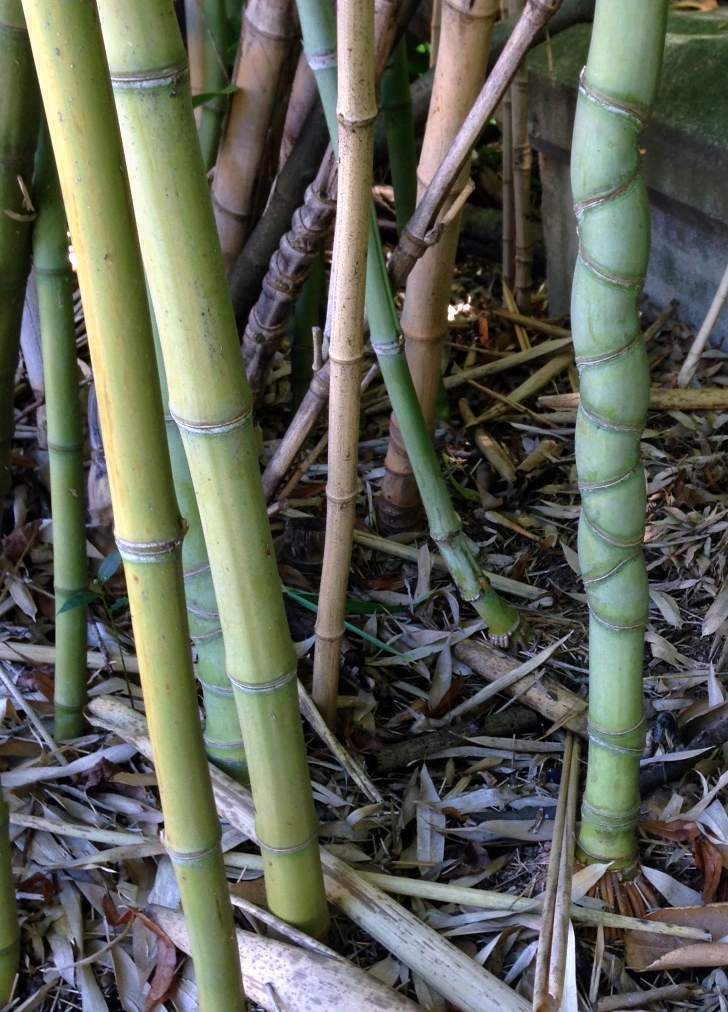
Golden bamboo is a vigorous, clumping to running grass known for its striking yellow culms. It creates a dense, attractive screen in the garden when given enough space to spread. Be mindful that it can be quite aggressive if not contained properly.

At a glance
- Care level
- Easy
- Plant type
- Evergreen grass
- Light
- Full sun to partial shade
- Indoor light
- Bright indirect
- Water
- Every 3 to 7 days
- Mature size
- 6 to 9 meters
- Growth rate
- Fast
- Hardiness
- USDA 7 to 10
- Bloom time
- Rarely flowers, usually every 30 to 60 years.
Care
Keep the soil consistently moist but never waterlogged to ensure healthy growth. Watch for wilting leaves as a sign of underwatering, and prune out old or damaged culms in late winter to keep the grove tidy. Use a root barrier if you want to prevent it from spreading beyond your desired area.
- Watering
- Water regularly during the growing season to keep the soil evenly moist.
- Feeding
- Apply a balanced, high-nitrogen fertilizer during the spring and summer months.
- Pruning
- Thin out dead or overcrowded culms once a year in late winter.
- Repotting
- Repot only if the plant becomes root-bound or needs division to manage its size.
- Soil
- Rich, well-draining, loamy soil
- Soil pH
- 6.0 to 7.5
- Temperature
- -18 to 38°C
- Humidity
- 40 to 70%
- Drought tolerance
- Moderate
- Lifespan
- Perennial, can live for many decades.
- Deer and rabbits
- Moderate
Signs it needs repotting
- Roots growing out of drainage holes.
- Stunted growth despite regular feeding.
- The soil dries out extremely fast.
Safety
- People
- This plant is not considered toxic to humans.
- Pets
- This plant is generally considered non-toxic to cats and dogs.
- Children
- The sharp, pointed tips of new shoots can be a puncture hazard for small children.
- Contact allergens
- The stiff, papery sheaths on new growth can cause minor skin irritation.
- Airborne allergens
- Pollen is rarely produced but may cause mild reactions in sensitive individuals.
- Edibility
- Young shoots are edible only after being boiled thoroughly to remove bitter compounds.
How to identify it
- yellow to golden green hollow culms
- nodes near base are often compressed
- lance shaped green leaves
- dense growth habit
- upright woody stems
- Height
- 3 to 8m
- Spread
- 2 to 5m
- Leaves
- green, evergreen
- Flowers
- yellow, white, 1 to 2cm
Problems to watch for
- Root RotCommon
- Spider MitesCommon
- Brown Leaf EdgesUncommon
- Leaf ScorchUncommon
By symptom
Check your golden bamboo from a photo
Pocket Botanist looks at a photo of your plant and tells you what's wrong and what to try first.
Growing it
- Propagation
- division, rhizome cuttings
- When to plant
- spring, early autumn
- Overwintering
- Mulch the base heavily to protect the rhizomes from deep freezes. If grown in a pot, move it to a sheltered area or wrap the container to insulate the roots.
- In containers
- It grows well in large, sturdy containers, but you must divide the root ball every few years to prevent it from cracking the pot.
Rhizome Division
- 1. Dig up a section of the root system in early spring.
- 2. Ensure each piece has at least three healthy nodes.
- 3. Replant immediately in moist, well draining soil.
Plant aggressive spreaders like this in containers or behind deep barriers to protect other garden beds.
Grows well with
- Hosta — They thrive in the dappled shade provided by the bamboo canopy.
- Japanese Maple — The textures of the two plants complement each other in a Japanese style garden.
Similar species
- Black Bamboo — It shares a similar growth habit but features dark, almost black stems.
Science
- Family
- Poaceae
- Genus
- Phyllostachys
- Order
- Poales
- Class
- Liliopsida
- Native range
- China
- Conservation
- This species is considered invasive in many regions and should be planted with caution.
It forms dense, clonal thickets that outcompete native understory plants in its native range.
- Value to wildlife
- provides dense cover for birds
- Pollinators
- bees
- Uses
- privacy screen, ornamental garden feature, erosion control
Through the year
Ecological indicators
- Salinity
- 2/9
- Soil reaction
- 6/9
- Light
- 7/9
- Moisture
- 6/9
- Nutrients
- 6/9
- Temperature
- 7/9
Taxonomy resolved against GBIF.
Questions people ask
- How do I stop it from spreading?
- Install a heavy duty root barrier at least 60 cm deep around the planting site.
- Does it need full sun?
- It thrives in full sun but tolerates partial shade quite well.
Where the name comes from
Phyllostachys comes from Greek words meaning leaf and spike. Aurea refers to the golden color of the stems.
Good to know
- It is commonly called Golden Bamboo due to the yellow color the stems turn in full sun.
- The culms are very strong and used for walking sticks or fishing poles.
- It spreads via aggressive underground rhizomes.
- It can grow several inches in a single day during peak season.
Keep your golden bamboo growing
This page is a general guide. Save your plant in Pocket Botanist and you get care reminders timed for this plant, plus a care history that shows what worked.
This guide was generated with AI and checked against GBIF taxonomy. It is general information, not horticultural or veterinary advice. Read about how we build these guides.